The Greater Seattle metropolitan region—spanning King, Pierce, and Snohomish counties—records an average of 152 precipitation days per year. While annual rainfall averages 38 to 40 inches, the climatic challenge lies not merely in peak torrential storms, but in sustained low-intensity drizzle, persistent marine fog, and prolonged high relative humidity (RH 75–85%).
Standard exposed-fastener metal roofs, or even standard snap-lock standing seam profiles with incomplete seam sealant continuity, fail prematurely in this climate. Capillary action draws water upward through narrow lap gaps, causing hidden corrosion at screw penetrations and degradation of substrate insulation.
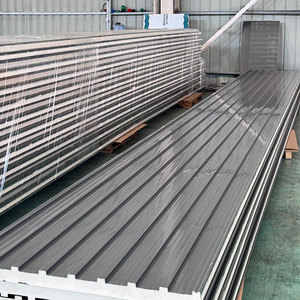
As a dedicated supplier and exporter delivering directly to the Port of Seattle and the Northwest Seaport Alliance (NWSA), Paneltech International LLC bridges the Pacific supply chain with systems engineered explicitly for high-humidity microclimates. Utilizing our continuous insulated metal panel technology—such as the PVR1000 360° Double Mechanical Fold Standing Seam—we deliver monolithic thermal envelopes that integrate factory-applied butyl sealant ribbons inside factory-formed seams, rendering joints completely impervious to hydrostatic pressure and wind-driven rain up to 120 mph.
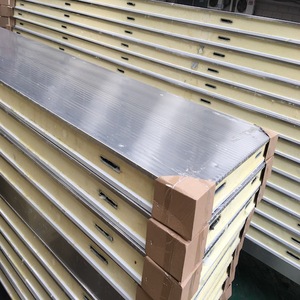
Kent, Auburn, and Sumner form Washington's primary logistics hub. Our thick-gauge PU/PIR insulated standing seam panels provide automated high-bay distribution facilities with uninterrupted thermal resistance, sub-zero cold room continuity, and UL 580 Class 90 uplift performance.
Covering maritime installations in Ballard, Fisherman’s Terminal, and Port of Tacoma docks. Utilizing heavy-gauge 5052-H32 aluminum alloys and zinc-aluminum substrates with specialized anti-corrosive back-coats to counter accelerated marine salt spray and brackish moisture fog.
Bellevue, Redmond, and South Lake Union commercial developments prioritize biophilic aesthetics and extreme energy performance. We supply crisp, shadow-line standing seam systems integrated with acoustic rock wool cores that dampen heavy rain impact noise down to NC-30 standards.
Projects spanning Issaquah, North Bend, and Snoqualmie experience significant wet, dense "Cascade Concrete" snow loads (50–90 psf). Our structural standing seam panels incorporate double-locked seams engineered to resist hydrostatic pooling caused by coastal ice dams.
| Performance Criterion | Industry Standard Snap-Lock (Field Assembled) | Paneltech PVR1000 Insulated Standing Seam (IMP) | PTI Rockwool Fire-Acoustic System | PNW/WSEC Code Benchmark |
|---|---|---|---|---|
| Air Infiltration (ASTM E1680 / E283) | 0.06 cfm/ft² @ 6.24 psf | < 0.001 cfm/ft² @ 12.0 psf | 0.002 cfm/ft² @ 12.0 psf | WSEC Max: 0.04 cfm/ft² |
| Water Penetration (ASTM E1646 / E331) | Static leakage observed @ 12 psf | No Leakage @ 20.0 psf (98 mph driving rain) | No Leakage @ 15.0 psf | Zero water penetration allowable |
| Wind Uplift Resistance (ASTM E1592 / UL 580) | UL Class 60 (Marginal in coastal squalls) | UL Class 90 / Uplift Capacity > 115 psf | UL Class 90 Certified | Structural engineer project-specific criteria |
| Continuous R-Value (Envelope Efficiency) | R-19 to R-25 (Subject to 30% thermal bridging) | R-32 to R-42 Continuous Core (Zero bridging) | R-28 to R-36 (Fire non-combustible) | WSEC 2021: R-30 to R-35 continuous |
| Acoustic Rain Dampening (ASTM E90 / STC) | STC 24 (High metallic drumming noise) | STC 34 (Polyurethane dampening) | STC 44 (Rockwool sound attenuation) | Acoustic comfort targets for office/institutional |
| Corrosion Resistance (ASTM B117 Salt Fog) | 1,000 Hours (Standard Polyester) | 3,000+ Hours (Kynar 500® 70% PVDF / AZ150) | 3,000+ Hours (PVDF Heavy Coat) | Elliott Bay maritime proximity requirement |
The City of Seattle Energy Code (SEC), amending the 2021 Washington State Energy Code, enforces some of the lowest permissible U-factors in North America. Commercial roofs must achieve continuous thermal insulation values equivalent to R-30 or R-35 without degradation from metal clip thermal bridging.
Traditional site-built roofs require multi-layer fiberglass batts, rigid polyiso boards, sub-girts, and membrane underlayments—an installation prone to weather delays during wet Seattle winters. Specifiers are shifting to factory-foamed insulated metal standing seam panels (IMPs), which provide air barrier, vapor retarder, continuous insulation, and finished metal roof in a single pass.
Driven by Washington’s Clean Buildings Act (HB 1257), building owners are maximizing rooftop solar installations. However, penetrating a metal roof membrane in the rainy Pacific Northwest introduces unacceptable leakage risks over a 30-year operational life.
Paneltech’s standing seam profiles feature a precise 25mm to 38mm vertical seam rib with standardized seam geometry. This enables the use of zero-penetration mechanical clamping systems (such as S-5! clamps) that secure photovoltaic brackets directly onto the folded seam without puncturing the weather-tight membrane, preserving roof warranties.
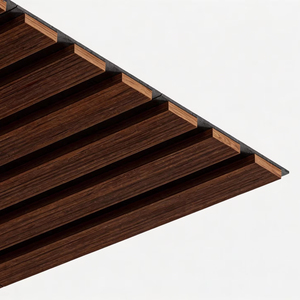
Cross-Laminated Timber (CLT) and heavy timber construction have surged across King and Snohomish counties, leaving timber ceilings exposed to interior occupants. However, falling PNW rain on uninsulated single-skin metal roofs creates significant acoustic reverberation, often exceeding 65 dBA inside occupied zones.
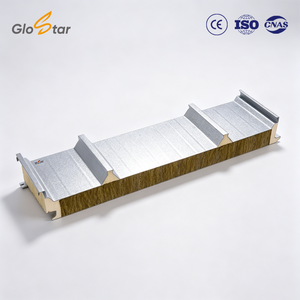
The architectural trend combines composite GloStar Rockwool sandwich roof assemblies with exposed timber structural beams. The continuous mineral wool matrix absorbs kinetic rain impact energy, dampening internal resonance and meeting municipal interior noise criteria without requiring dropped drywall ceilings.
Our Barka, Oman manufacturing plant operates multi-meter automated continuous polyurethane and high-density mineral wool laminating lines, guaranteeing uniform core density and superior shear bond strength without delamination.
Beyond standing seam panels, PTI manufactures the complete structural envelope package: cold-formed Z & C purlins, metal decking sheets, translucent daylight panels, matching custom flashings, and industrial roller shutter doors.
Export orders for the Pacific Northwest receive marine-grade export crating: vapor-barrier interleaving, VCI anti-corrosion sheets, edge protectors, and heavy timber bundles designed for open container destuffing in Seattle wet weather.
Every shipment is accompanied by complete mill test certificates (MTCs), ASTM tensile and yield strength certifications, coating thickness verifications, and flame-spread testing reports for expedited King County DDES plan approval.
Avoid site delays and mismatched color runs caused by procuring purlins from one vendor, insulation from another, and standing seam profiles from a third. Paneltech provides color-matched trims, matching ridge vents, fasteners, butyl mastic, and structural cold-formed girts in a single coordinated logistics container drop.
The 2021 WSEC requires commercial roofs to achieve minimum insulation levels of R-30 to R-38 continuous (c.i.). Traditional single-skin metal roofs with fiberglass blankets experience severe thermal bridging at purlins, degrading effective R-values by up to 40%. Our PVR1000 and polyurethane sandwich panels provide an unbroken closed-cell foam matrix across the entire structural plane, delivering true continuous R-values without secondary spacer assemblies.
For shoreline and port environments (Elliott Bay, Lake Washington ship canals, Tacoma Commencement Bay), we recommend either 0.032" / 0.040" marine-grade aluminum alloy (3004/5052) or AZ150 Galvalume® steel coated with a full 70% Kynar 500® / Hylar 5000® PVDF fluoropolymer paint system. Our PVDF systems meet ASTM D2244 color retention and ASTM D4214 chalk resistance standards, backed by a 30-year coastal warranty.
We manage CIF and DDP delivery terms directly to the Northwest Seaport Alliance (NWSA) terminals in Seattle and Tacoma. Panels are custom-cut to project length, bundled in moisture-impermeable shrink wrapping with desiccants and VCI corrosion inhibitors, and packed in heavy-duty open-top or 40ft HQ containers. We coordinate customs documentation, ISF filings, and regional flatbed trucking directly to your jobsite staging area.
Snap-lock standing seam is suitable for steep pitches (>3:12) in moderate climates. However, low-slope roofs (down to 0.5:12) common on Pacific Northwest industrial warehouses encounter slow drainage and risk water accumulation during heavy rainfall. The PVR1000 mechanically locked double seam folds the panel edges 360 degrees around a factory-injected butyl sealant, forming an airtight, watertight structural seam that resists hydrostatic head and severe negative wind uplift.
Yes. Foothill areas like Snoqualmie, North Bend, and Issaquah require roof design loads between 50 and 90 psf to withstand dense, saturated snow. Paneltech supplies high-yield 50,000 PSI structural steel substrates combined with heavy-gauge sliding stainless steel clips. Our engineering team provides custom purlin spacing load-span tables certified in accordance with AISI S100 specifications to prevent panel deflection under heavy snow accumulation.
Uninsulated single-sheet metal roofs can produce indoor sound levels up to 70 dBA during torrential downpours. Our composite sandwich panels incorporate rigid polyurethane or GloStar rockwool acoustic cores that decouple the outer metal skin from the interior ceiling plane. The acoustic damping effect achieves an STC rating of 34 to 44, significantly lowering drumming noise for office buildings, schools, and civic facilities.
We provide comprehensive architectural submittal packages for the Seattle Department of Construction and Inspections (SDCI) and King County permitting authorities. Packages include ASTM E1680 (air infiltration), ASTM E1646 (water penetration), ASTM E1592 (wind uplift), UL 790 (Class A fire rating), and factory production ISO 9001/14001 certificates alongside raw material mill test reports.
Custom fabrication takes 2 to 3 weeks following shop drawing and color sample approvals. Direct ocean transit to the Port of Seattle or Port of Tacoma averages 22 to 28 days. We advise commercial contractors to initiate procurement schedules 7 to 9 weeks prior to roof dry-in milestones, securing substantial material savings through factory-direct exporting.
Whether bidding on a Kent Valley logistics warehouse, an Eastside corporate campus, or a custom Puget Sound coastal residence, our structural engineering team will review your architectural drawings, prepare panel cut lists, and provide factory-direct container delivery pricing.