Structural Framing
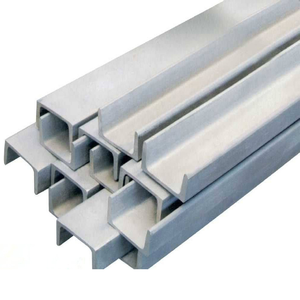

Industrial roller shutters depend on rigid framing, precision girts, and high-performance thermal skins. Explore our 8 core structural elements, cold storage sliding closures, and cold-formed profile systems optimized for Belgian building codes.
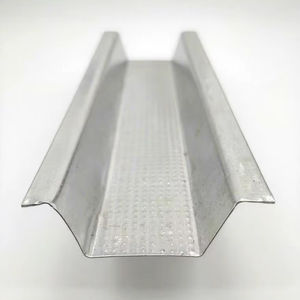
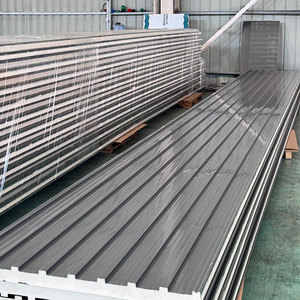
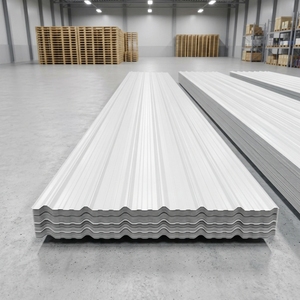
Positioned at the geographical heart of Western Europe's "Golden Triangle" (Brussels-Antwerp-Rotterdam), Belgium operates as one of the world's most concentrated logistics, chemical, and pharmaceutical crossroads. Sourcing steel roll doors in this market requires strict technical scrutiny beyond baseline aesthetic parameters.
Industrial access openings in Belgian facilities—spanning from the maritime container hubs of the Port of Antwerp-Bruges and North Sea Port Ghent to the pharmaceutical cold clusters of Puurs and Wallonia's aeronautic corridors—face intense environmental and mechanical operational strains. The Belgian maritime climate subjects external facade envelopes to persistent high relative humidity (averaging 80% to 88% throughout autumn and winter), driving rain cycles, and airborne chlorides along the coastal zones of Zeebrugge and Ostend.
Consequently, procurement managers cannot treat steel rolling shutter doors as standalone commodities. Slat curtains fabricated from standard commercial galvanized sheets without certified mass coating quickly fall prey to accelerated oxidation, zinc saponification, and hinge seam corrosion. High-performance industrial roll doors must utilize continuous cold-rolled concave galvanized steel laths with a minimum zinc coating mass of Z275 (275 g/m²) or high-grade Magnelis/aluzinc alloys, finished with anti-corrosive multi-layer polyurethane or PVDF fluoropolymer paint systems capable of withstanding ISO 12944 C4 and C5-M atmospheric corrosivity classifications.
Simultaneously, Belgian building codes strictly enforce European standard EN 13241-1 (Industrial, commercial, garage doors and gates) under the Construction Products Regulation (EU) No 305/2011. This requires documented third-party performance validation regarding wind load resistance (EN 12424), operational safety under mechanical fault (EN 12604), force limitation (EN 12453), and thermal transmittance (EN 12428). In Flemish energy regulations (EPB) and Walloon PEB frameworks, envelope thermal retention mandates insulated roll door slats filled with high-density polyisocyanurate (PIR) or polyurethane (PU) rigid foam to minimize thermal bypasses across large industrial portals.
| Engineering Parameter | Standard Market Offering | PTI Heavy-Duty Belgium Specification | Regulatory Standard |
|---|---|---|---|
| Wind Load Resistance | Class 2 (up to 450 Pa / 96 km/h) | Class 4 to Class 5 (≥ 1000 Pa / 145+ km/h) | NBN EN 12424 / Eurocode 1 |
| Slat Core Insulation | Uninsulated Single Skin (0.8mm) | Double-Walled 42 kg/m³ High-Density PU/PIR Core | EN 12428 (U ≤ 1.1 - 1.4 W/m²K) |
| Corrosion Protection | Commercial Galvanized Z120 | Hot-Dip HDG Z275 / Super-Durable PVDF 25μm | ISO 12944 / NBN EN 10346 |
| Cycle Life Rating | 15,000 – 25,000 Cycles | 50,000 to 100,000+ Industrial Duty Cycles | EN 12604 / Machinery Directive |
| Fire Barrier Integrity | Unrated / Flash Combustion | EI 60 – EI 120 with Automatic Gravity Fail-Safe | NBN EN 1634-1 / EN 13501-2 |
From Antwerp's marine quaysides to Wallonia's heavy fabrication basins, operational criteria vary drastically. Here is how our rolling steel door and structural systems are tailored to Belgium's dominant industrial ecosystems.
High-exposure quayside warehouses, container freight stations, and bulk chemical transfer facilities operate in severe marine atmospheres with violent North Sea wind squalls. Doors require deep wind-lock retaining guide profiles, C5-M anti-corrosive multi-coat finishes, and IP65-rated drive units to ensure uninterrupted operation during North Sea gales.
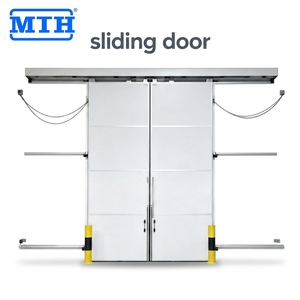
Belgium's fruit, vegetable, and processed food hubs mandate high-speed operational sequencing paired with robust thermal boundaries. Composite installations combine heavy-duty insulated rolling shutters with internal high-speed fabric or MTH automatic PU sliding doors, maintaining stable -25°C freezing zones and preventing condensation ice formation on guide rails.
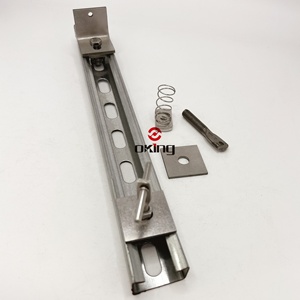
Historically centered on metallurgy, aerospace, and heavy equipment manufacturing, Walloon plants require immense aperture spans (up to 12 meters wide) capable of resisting forklift impacts, slag dust, and intense cyclic loads. Heavy cold-rolled slotted C-channels and reinforced structural purlins form the structural support architraves.
Belgian engineering consultants and facility developers are shifting toward low-carbon lifecycle footprints and automated building management systems. Our factory lines are aligned with these four macro-shifts.
Under revised European Energy Performance of Buildings Directives (EPBD), Belgian logistics warehouses must curb heat loss across building envelopes. Rolling shutters now feature thermal-break aluminum bottom rails, EPDM lateral weather seals, and insulated slat construction yielding significant savings in dock air-conditioning and heating.
Modern distribution hubs in Genk and Willebroek require roll door electronic controllers to communicate natively via Modbus or BACnet with central Facility Management platforms. Real-time cycle count monitoring, brake wear detection, and vibration profiling eliminate unplanned downtime during critical shipping windows.
Belgian architectural firms (such as VK Architects & Engineers and BINST) increasingly specify building components accompanied by third-party verified Environmental Product Declarations (EPD). Utilizing steel produced with recycled electric arc furnace (EAF) content reduces upstream scope 3 emissions on certified BREEAM "Outstanding" logistics builds.
Strict Belgian labor safety protocols (Algemeen Reglement voor de Arbeidsbescherming - ARAB) enforce zero-tolerance for kinetic door entrapment. Standard systems incorporate fail-safe anti-drop inertial braking mechanisms, optical light grid curtains integrated directly into the side guides, and pneumatic reversing bottom edges.
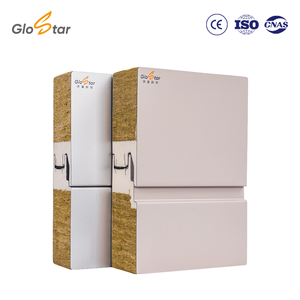
Paneltech International LLC (PTI) operates state-of-the-art continuous roll-forming lines, automated insulated sandwich panel laminators, and secondary steel manufacturing facilities. Unlike isolated door assemblers who outsource structural framing, PTI delivers a completely integrated, precision-machined portal enclosure package—from cold-formed C/Z structural purlins to fireproof rockwool wall cladding and insulated steel rolling shutters.
Clear, technically rigorous answers addressing compliance, installation, wind load design, and lifecycle maintenance for contractors across Belgium.
Every door manufactured for the Belgian market is produced under a Factory Production Control (FPC) system conforming to EN 13241-1. We supply the required Declaration of Performance (DoP), verifying mechanical safety under EN 12604, anti-drop braking integrity under EN 12605, operating force limitation under EN 12453, and certified wind load classes under EN 12424. All electrical drive components carry CE and TÜV certifications.
Under Eurocode 1 (NBN EN 1991-1-4 Belgian National Annex), coastal regions including Zeebrugge, Ostend, and Antwerp experience reference wind speeds of 26 to 28 m/s with substantial gust velocity pressure. We recommend and configure doors to EN 12424 Class 4 or Class 5 (withstanding test pressures ≥ 1000 Pa). This is achieved through end-fitted ductile iron wind-lock lugs sliding inside 3.0mm heavy-gauge cold-formed guide tracks.
Yes. As a primary manufacturer of cold-formed structural steel purlins (C and Z sections), slotted metal channels, and insulated wall panels, PTI designs the entire portal frame interface. This includes structural C-purlin jamb headers, side guide reinforcement studs, and custom folded galvanized flashings, ensuring perfect dimensional tolerances and eliminating field clashing on site.
Our raw coils feature heavy hot-dip galvanization (minimum Z275 according to EN 10346). For severe marine environments (ISO 12944 C4 / C5-M), we offer pre-painted steel coils treated with a 5μm corrosion-inhibiting primer and a 20μm - 25μm high-durability polyester, polyurethane, or PVDF topcoat, offering superior resistance against chalking, UV degradation, and chemical etching.
While sectional doors are common on standard loading docks, insulated steel roll doors offer distinct advantages: they eliminate horizontal ceiling track rails, preserving full vertical clearance for overhead crane tracks, fire sprinkler mains, and high-bay automated racking systems. The coiled roll barrel is compact and completely enclosed, significantly minimizing vulnerability to forklift mast damage.
Fabrication schedules for customized architectural orders range from 2 to 4 weeks depending on aperture volume. Components are packed in specialized heavy wooden ocean crates, with slat curtains wrapped in micro-foam protective films and steel barrel shafts secured with heavy transit brackets. Direct container shipments disembark at the Port of Antwerp or Zeebrugge for streamlined clearance and distribution.