
Engineered for immediate integration into Southern California commercial, industrial, and seismic retrofit applications. All structural sections feature verified Mill Test Reports (MTRs), dual-certified chemistries, and comprehensive third-party ultrasonic weld testing.
Designing and erecting multi-story, industrial, and infrastructure frameworks in the Los Angeles Basin necessitates an uncompromising approach to metallurgical compliance and ductile structural behavior. Sitting over a dense network of major strike-slip and blind-thrust fault systems—including the San Andreas, Newport-Inglewood, Sierra Madre, and Elysian Park Faults—the City of Los Angeles imposes structural engineering mandates that rank among the most rigorous globally. Sourcing imported structural steel sections into the jurisdiction governed by the Los Angeles Department of Building and Safety (LADBS) and the California Building Code (CBC Title 24, Part 2) requires absolute fidelity to AISC 360 (Specification for Structural Steel Buildings) and AISC 341 (Seismic Provisions for Structural Steel Buildings).
Unlike static-load dominated regions, steel sections specified in Seismic Design Categories (SDC) D, E, and F throughout Southern California must perform well into their plastic deformation zones during severe ground acceleration events without brittle fracture. Structural Wide-Flange (W-Shapes) columns and beams specified as elements of Special Moment Frames (SMF) or Buckling-Restrained Braced Frames (BRBF) demand tight control over the Yield-to-Tensile Ratio ($F_y / F_u \le 0.85$). This mechanical restriction guarantees that plastic hinge formation occurs predictably within the beam elements or designated shear links, rather than initiating sudden catastrophic column failure.
"In high-seismic California construction, mill certification is not merely a commercial record; it is a critical life-safety document. AISC 341 mandates that hot-rolled W-shapes intended for plastic hinge zones exhibit minimum Charpy V-Notch (CVN) impact toughness of 20 ft-lbs at -20°F (27 J at -29°C), with demand-critical joint penetrations executed per AWS D1.8."
Procurement teams coordinating transatlantic and transpacific supply chains for Los Angeles project sites frequently cross-specify global structural grades against domestic US designations. The table below delineates the essential metallurgical tolerances, tensile limits, and seismic compliance factors required for structural approval under LADBS standard plan checks:
| Structural Grade | Standard Specification | Min Yield ($F_y$) | Tensile Range ($F_u$) | Max $F_y / F_u$ Ratio | Seismic Class (AISC 341) |
|---|---|---|---|---|---|
| ASTM A992 | Dual Certified Wide Flange | 50 ksi [345 MPa] | 65 ksi [450 MPa] | 0.85 Max | SMF / IMF / OMF Approved |
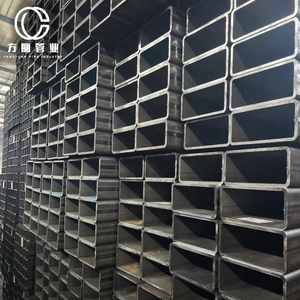
| ASTM A500 Gr. C | Cold-Formed Structural HSS | 50 ksi [345 MPa] | 62 ksi [427 MPa] | Specified by Design | SCBF / Bracing Systems |
| ASTM A1085 | High-Performance HSS | 50 ksi [345 MPa] | 65–90 ksi [448–620 MPa] | 0.80 Max | Mandatory CVN Tested |
| ASTM A572 Gr. 50 | High-Strength Plate & Channel | 50 ksi [345 MPa] | 65 ksi [450 MPa] | 0.87 Max | Gravity / EBF Stiffeners |
| EN 10025-2 S355JR | European Standard Structural | 51.5 ksi [355 MPa] | 68–91 ksi [470–630 MPa] | Equivalency Protocol | Approved with MTR Dual Stamp |
| GB/T 1591 Q355B/C | Micro-Alloyed Heavy Sections | 51.5 ksi [355 MPa] | 68–88 ksi [470–610 MPa] | Equivalency Protocol | Tested to ASTM A6 Standards |
When utilizing international structural shapes (such as metric European IPE/HEA/HEB profiles or Asian standard rolled sections), our engineering documentation provides comprehensive Section Modulus ($S_x, S_y$), Plastic Modulus ($Z_x, Z_y$), and Torsional Constant ($J$) cross-referencing against the AISC Steel Construction Manual (15th & 16th Editions). This eliminates engineering change orders (ECOs) during plan reviews at LADBS development centers in Metro Downtown, Van Nuys, or West Los Angeles.
From seismic rehabilitation in Downtown high-rises to sprawling mega-distribution centers along the Inland Empire goods movement corridor, our structural sections fulfill distinct engineering criteria across Southern California's commercial landscape.
High-density urban cores along the Wilshire Grand corridor, Bunker Hill, and Century City require heavy structural W-sections (W14x90 through W14x730 column profiles) integrated with custom welded box girders. These sections form the ductile lateral force-resisting systems designed to absorb high-energy cyclic loading without local flange buckling.
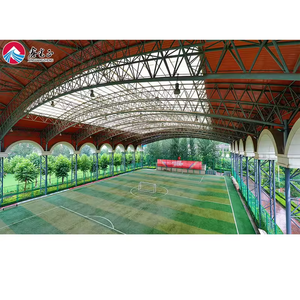
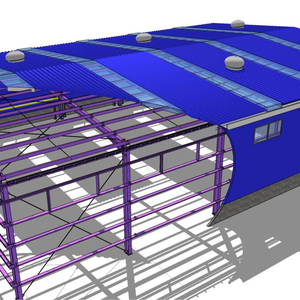
Adjacent to the San Pedro Bay Ports (POLA / POLB) and extending through Ontario, Fontana, and Moreno Valley, modern high-cube fulfillment centers require large-span portal frames and custom-engineered roof purlin networks capable of supporting intensive automated storage and retrieval systems (ASRS) and rooftop solar arrays.
Soundstage developments in Burbank, Hollywood, Studio City, and Culver City require high-clearance, column-free internal volumes with immense acoustic damping requirements. Steel roof framing must incorporate heavy steel box girders and structural tubing engineered to bear multi-ton lighting grids, rigging hoists, and catwalk infrastructures.
Under City of Los Angeles Ordinances 183893 and 184081, over 13,000 tuck-under parking wood-frame multi-family apartments require mandatory seismic retrofits. Sourcing prefabricated steel moment frames, cantilevered column systems, and grade-beam embedment plates enables general contractors to execute fast-track retrofits with zero structural failure during inspection.
Staying competitive in the California building sector mandates proactive alignment with state environmental laws, rapid modular erection methods, and streamlined transpacific freight management.
Under California Assembly Bill 262 and subsequent Department of General Services (DGS) directives, public infrastructure projects throughout LA County require facility-specific Environmental Product Declarations (EPDs). Structural steel imports must verify that the embodied carbon footprint does not exceed the state threshold of 1.01 MT CO₂e per metric ton for hot-rolled sections and 1.71 MT CO₂e for hollow sections, making electric arc furnace (EAF) recycling documentation a procurement prerequisite.
California structural engineering firms are systematically specifying ASTM A1085 over conventional ASTM A500 Grade B/C tubing in braced-frame construction. With strict mass tolerances (nominal wall thickness verified to within -3.5%), controlled corner radii, and mandatory Charpy impact testing at 40°F, this grade delivers superior seismic hysteretic energy dissipation across high-risk seismic fault zones.
Skyrocketing domestic structural steel lead times and regional mill capacity constraints have driven Southern California steel fabricators toward scheduled breakbulk and containerized ocean shipments. Direct calls into the Port of Los Angeles (Pier 400 / Trapac) and Port of Long Beach coupled with designated off-dock container yards allow structural packages to reach Inland Empire job sites within 48 hours of vessel discharge.
Built upon deep technical capabilities, high-capacity automated production lines, and unyielding quality inspection standards that mirror the rigor of North American fabrication codes.
Automated beam coping, 3D laser-tube cutting, high-speed carbide drilling, and milling ensure sub-millimeter bolt-hole precision across all bolted field connections.
Every structural bundle and plate girder arrives with comprehensive chemical ladle analysis, tensile, elongation, and CVN impact test certificates traceable to heat numbers.
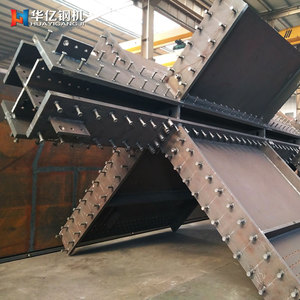
Full-penetration longitudinal welds on built-up box sections and plate girders executed using automated SAW, verified by certified CWI inspectors via 100% Ultrasonic Testing (UT).
In-house automatic wheel blast cleaning to SSPC-SP 10 (Near-White Metal) combined with inorganic zinc silicate primers, high-build epoxy, or hot-dip galvanizing to ASTM A123.
Clear, technically verified answers addressing building department approvals, welding inspection codes, shipping clearance, and domestic material comparisons.
Under Chapter 22 of the California Building Code (CBC) and LADBS Information Bulletin P/BC 2020-050, imported structural steel must be produced by a licensed mill and certified through complete heat-traceable Mill Test Reports (MTRs) confirming mechanical and chemical compliance with applicable ASTM standards (such as ASTM A992, ASTM A500, or ASTM A36).
For prefabricated welded assemblies fabricated outside the United States, structural elements require shop fabrication under an LADBS Certified Fabricator License or third-party continuous inspection by an approved independent quality control agency accredited under ISO/IEC 17020 / 17025. Our export documentation provides complete material test pedigrees, non-destructive testing (NDT) logs, and certified welding inspector (CWI) sign-offs that satisfy LADBS Special Inspection requirements during structural plan review.
In Seismic Design Categories D, E, and F throughout Greater Los Angeles, AISC 341-16/22 mandates that all hot-rolled structural shapes utilized in the Seismic Force Resisting System (SFRS) featuring flanges 1.5 inches (38 mm) thick or greater have Charpy V-Notch (CVN) toughness verified to at least 20 ft-lb at -20°F (27 J at -29°C).
Furthermore, all Complete Joint Penetration (CJP) groove welds classified as "Demand Critical" in moment-frame connections must adhere strictly to AWS D1.8 / D1.8M (Structural Welding Code - Seismic Supplement). Our fabrication lines utilize pre-qualified welding filler metals that achieve a minimum CVN impact value of 20 ft-lb at -20°F and 40 ft-lb at 70°F, backed by full Ultrasonic Testing (UT) in accordance with AWS D1.1 Clause 6.
We coordinate ocean freight shipments through direct transpacific container lines and specialized breakbulk vessels delivering straight into the Port of Los Angeles (POLA) or Port of Long Beach (POLB). Standard structural lengths (20-foot and 40-foot HSS profiles, channels, angles) are packed into open-top or high-cube containers with anti-corrosive VCI desiccant wrapping.
Long-span trusses, heavy wide-flange beams (up to 60-foot mill lengths), and custom plate girders are secured on flat-racks or loaded breakbulk under-deck to prevent sea-spray corrosion. Ocean transit typically ranges between 16 and 22 days. Through licensed US Customs brokerage partners, structural shipments are cleared through Automated Broker Interface (ABI) before vessel arrival, allowing immediate heavy-haul drayage across the I-710, I-110, or SR-91 corridors into local Los Angeles, Orange County, or Inland Empire laydown yards.
The Buy Clean California Act (BCCA, Public Contract Code Sections 3500-3505) mandates that state-funded construction projects (including university developments, state facilities, and public infrastructure) submit mill-specific, third-party verified Type III Environmental Product Declarations (EPDs).
Our structural steel sections are manufactured through modern, energy-efficient Electric Arc Furnace (EAF) production routes utilizing recycled scrap charges. Our comprehensive EPDs consistently document Global Warming Potential (GWP) metrics well below the California maximum limits (1.01 MT CO₂eq/MT for hot-rolled structural sections and 1.71 MT CO₂eq/MT for hollow structural sections), guaranteeing full compliance on state and institutional tenders.
Projects located in coastal zones within 5 to 10 miles of the Pacific shoreline—such as Santa Monica, San Pedro, Long Beach, and El Segundo—experience accelerated atmospheric corrosion due to high airborne chlorides and coastal marine fogs (C3 and C4 atmospheric corrosivity categories).
For exposed structural steel in these regions, we provide Hot-Dip Galvanizing per ASTM A123, delivering a minimum coating thickness of 3.9 mils (100 µm) with metallurgical zinc-iron alloy bonding. Alternatively, our shops apply two-coat or three-coat duplex paint systems conforming to SSPC-Paint 20 (Zinc-rich primer) coupled with an aliphatic polyurethane or epoxy mastic topcoat, engineered to resist solar ultraviolet degradation and salt-spray oxidation for over 25 years to first major maintenance.
Yes. Offsite steel prefabrication is one of our primary cost-reduction advantages for Southern California general contractors. Utilizing Tekla Structures and SDS/2 3D Building Information Modeling (BIM) data interchange (DSTV / NC1 file integration), our multi-spindle drilling lines and robotic coping systems pre-drill oversized or slotted bolt holes, cut web openings for MEP penetrations, and perform complex weld preps before surface finishing.
All base plates, shear tabs, continuity plates, and stiffeners are factory-fitted and welded under controlled environmental conditions. When components arrive at the job site, field crews execute simple bolt-up erection, drastically reducing costly field welding hours, crane standby charges, and high-wage local trade requirements.