
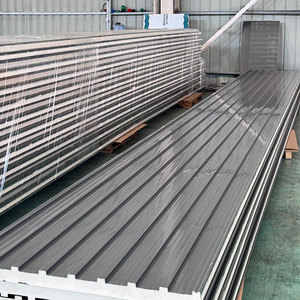
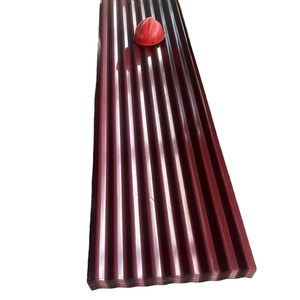
From heavy industrial standing seams to high-aesthetic PVDF pre-painted corrugated sheets, each profile is manufactured to withstand intense equatorial UV irradiance, tropical monsoon run-off, and coastal salt-spray fog.
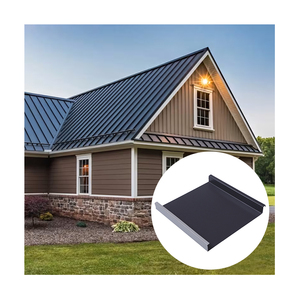
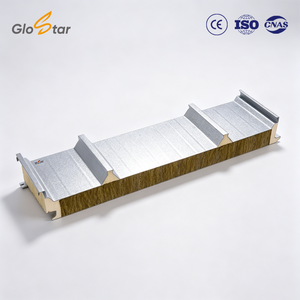
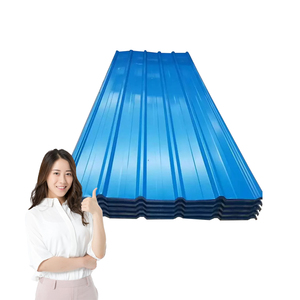
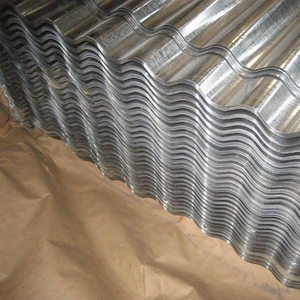
A complete technical breakdown of structural gauges, aluminum-manganese alloy behavior under equatorial heat, KEBS compliance enforcement, and procurement best practices for East African contractors.
Kenya’s commercial, residential, and infrastructural landscape is experiencing a fundamental metallurgical paradigm shift. For decades, the local building sector relied almost exclusively on light-gauge galvanized iron sheets—locally denominated as mabati—predominantly supplied in nominal Gauge 30 (0.25mm) or Gauge 32 (0.20mm). However, rapid industrialization under Kenya Vision 2030, the development of flagship Special Economic Zones (SEZs) such as Dongo Kundu in Mombasa and the Naivasha Industrial Park, coupled with international climate-resilience mandates, have rendered obsolete the old approach of selecting roofing purely on initial purchase price. Structural engineers, real estate developers, and civil contractors now prioritize life-cycle costing, thermal reflectance, acoustic insulation, and corrosion immunity.
Critical Engineering Principle: Aluminum roofing sheets (specifically Al-Mn alloys such as AA3004 and AA3003) do not rust when exposed to moisture or airborne sea salts. Instead, they spontaneously form an adherent, impermeable layer of aluminum oxide (Al₂O₃) that instantly seals the substrate from further atmospheric decay. In coastal environments like Mombasa, Kilifi, and Lamu, AA3004 aluminum sheets outlast standard galvanized iron by a factor of four to one, drastically reducing long-term lifecycle expenditures.
| Material Classification | Alloy / Metallic Coating | Nominal Thickness Range | Corrosion Resistance (C1 - C5-M) | Solar Reflectance Index (SRI) | KEBS Compliance Status |
|---|---|---|---|---|---|
| Al-Mn-Mg Structural Alloy | EN AW-3004 / AA3004 (H14/H16) | 0.70mm - 1.20mm | C5-M Very High Marine | 84 - 92 (High Thermal Block) | Exceeds KS EAS 414 |
| Commercial Aluminum Sheet | EN AW-3003 / AA1050 / AA1060 | 0.45mm - 0.70mm | C4 High Industrial | 80 - 86 (High Reflectance) | Complies with KS EAS 414 |
| Al-Zn 55% Galvalume (Zincalume) | 55% Al, 43.4% Zn, 1.6% Si (AZ150) | 0.40mm - 0.60mm (G26 - G24) | C3 - C4 Medium/High | 65 - 72 (Moderate) | Certified to KS EAS 11 |
| Prepainted Galvanized Steel (PPGI) | Hot-Dip Zinc Z120 - Z180 g/m² | 0.32mm - 0.50mm (G28 - G26) | C2 - C3 Urban/Inland | 45 - 60 (Requires Cool Pigments) | Complies with KS 06-02 |
| Standard Thin Galvanized Iron | Minimal Zinc Flash (< Z90 g/m²) | 0.18mm - 0.25mm (G32 - G30) | C1 Low Rural Only | < 40 (Rapid Solar Absorption) | Marginal / High Wear Risk |
An unvarnished B2B appraisal of domestic manufacturers, international mill roll-formers, and integrated supply networks serving East Africa’s building envelope market.
Operating state-of-the-art continuous roll-forming lines, automated decoiling, and inline continuous PIR/Rockwool insulation injectors. Engineered specifically for direct maritime delivery into Kilindini Harbour (Mombasa) or bonded inland transit to Nairobi ICD. Fully compliant with KEBS PVoC pre-inspection requirements.
The pioneer of coated metal roofing in East Africa, operating continuous Al-Zn coating and paint lines at Mariakani. MRM maintains widespread distribution across Kenya, offering prominent proprietary brands such as Dumuzas, Resicote, and Versatile stone-coated metal profiles.
Specializing in customizable residential and commercial corrugated and tile profiles, Royal Mabati has established rapid country-wide delivery protocols. Their roll-forming services cater extensively to home builders and medium-scale commercial roofing contracts.
A core subsidiary of industrial conglomerate Devki Group, operating high-tonnage cold-rolling and continuous galvanizing lines in Ruiru. Maisha Mabati supplies high-yield corrugated galvanized and color-coated steel sheeting geared toward institutional housing and warehouse developers.
A heavy-industrial aluminum rolling mill supplying premium 3000-series (AA3003, AA3004) and 5000-series marine sheets directly to engineering consortiums executing port terminals, airport canopies, and municipal stadiums across Sub-Saharan Africa.
With production heritage based in Mombasa, CSL specializes in corrugated roofing and light structural purlins. Their proximity to the Port of Mombasa gives them strategic operational insights into marine anti-corrosive coatings and heavy coastal sheeting requirements.
Part of the broader Safal Group network, ALAF operates high-capacity metal coating facilities in Tanzania, regularly supplying cross-border industrial and infrastructure projects in Southern and Coastal Kenya under EAC cross-border customs trade treaties.
A dominant force in heavy structural steel, rebar, and infrastructure supplies, Apex Steel offers integrated roofing and secondary steel solutions (including continuous C/Z purlins and composite metal deck sheets) for heavy industrial developments.
Known for decorative tile-profile roll-forming and matte-finish resin coatings. Imarisha Mabati serves private real estate developers, gated residential estates in Kiambu and Machakos, and institutional school and hospital building projects.
Representing direct-mill consortium channels that manufacture high-volume custom roll-formed aluminum coils, pre-insulated PIR panels, and 18-gauge cold-rolled corrugated sheets. Specializes in handling containerized multi-thousand metric ton orders for large-scale government housing projects, export processing zone factories, and private logistics developments across Kenya, Uganda, and Rwanda.
Kenya encompasses dramatically divergent environmental conditions—ranging from C5-M hyper-saline coastal humidity to high-altitude equatorial UV radiation and volcanic sulfur emissions. Selecting the correct metallurgical profile is an exacting engineering science.
Extreme saline sea spray, high relative humidity (above 85%), and ambient airborne chloride ions cause galvanic zinc degradation within 24 to 36 months on standard iron sheets. Requires AA3004 aluminum or high-build 70% PVDF finishes.
Recommended: 0.8mm AA3004 PVDFLocated at 1,600m to 2,200m altitude, experiencing intense UV radiation that breaks down cheap polyester paint resins, leading to premature chalking and color fading. Requires high solar reflectance (SRI > 80) and 360° standing seam systems.
Recommended: PVR1000 Standing SeamTea withering plants, horticulture pack-houses, and geothermal power zones emit airborne sulfur compounds and internal processing humidity. Uninsulated metal sheets condensate acidic moisture; pre-insulated PIR panels prevent interior drip and mold.
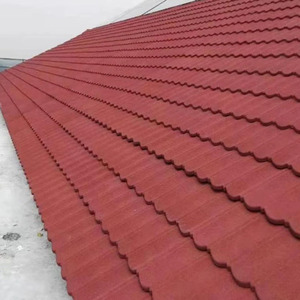
Recommended: 50mm PIR Composite PanelHigh daytime temperatures paired with torrential convective squalls and high wind uplift forces. Stone-coated aluminum-zinc tiles and deep-rib industrial sheets provide critical acoustic dampening (-28 dB rain noise) and superior mechanical fastening resistance.
Recommended: Stone-Coated Al-Zn TileFrom regulatory crackdowns on sub-gauge metal to the explosion of rooftop photovoltaic arrays in industrial parks, here are the dominant market forces driving procurement specifications.
The Kenya Bureau of Standards (KEBS) and the National Construction Authority (NCA) have intensified enforcement of standard KS EAS 414:2014. Non-compliant, wafer-thin G32 (0.20mm) and G30 (0.25mm) sheets are being rejected on institutional tenders in favor of true-decimal millimeter specifications (minimum 0.40mm for steel, 0.70mm for structural aluminum).
Industrial electricity tariffs in Kenya exceed $0.14 per kWh, driving factories in Athi River, Ruaraka, and Tilisi to install rooftop solar PV arrays. Pierced trapezoidal sheets risk severe water leakage around mounting screws. Consequently, non-penetrating 360° double-folded standing seam profiles (such as PVR1000) have become the mandated baseline for solar-ready buildings.
The IFC-backed EDGE (Excellence in Design for Greater Efficiencies) certification has been adopted widely by Kenya’s commercial developers and Affordable Housing Program (AHP) consortiums. Achieving the required 20% operational energy reduction demands thermally insulated building envelopes—driving massive procurement transitions from single-skin mabati to PIR and Rockwool composite sandwich panels.
From raw coil metallurgy to port-to-site bonded logistics, our fully audited manufacturing ecosystem delivers transparent quality standards, unmatched technical documentation, and certified structural warranties.
We do not outsource processing to unverified third parties. Our high-precision multi-stage continuous roll formers and chemical pretreatments ensure uniform paint adhesion, zero micro-cracking across tight bends, and absolute profile consistency across thousands of linear meters.
Equipped with 40-meter heated continuous double-belt laminating presses, we produce Class B-s1,d0 fire-rated PIR sandwich panels with closed-cell counts exceeding 95%, ensuring zero delamination, condensation-free interior envelopes, and superior structural rigidity.
Every export consignment undergoes mandatory Pre-Export Verification of Conformity (PVoC) by accredited international testing bureaus (SGS, Intertek, or Bureau Veritas). Certificates of Conformity (CoC) and mill test certificates (MTC 3.1) are issued promptly to ensure zero demurrage at the Port of Mombasa.
Detailed technical answers to common queries regarding standards, gauge conversions, customs duties, acoustic damping, and installation precautions in Kenya.
In Kenya, metal roofing products are governed by the Kenya Bureau of Standards (KEBS) under KS EAS 414:2014 (for profiled aluminum and aluminum alloy sheets) and KS 06-02 / KS EAS 11 (for galvanized and prepainted aluminum-zinc steel). A widespread practice in the informal retail market is "gauge inflation"—where sheets labeled as "Gauge 28" actually measure 0.28mm (true Gauge 30) or thinner. When specifying for engineering tenders, always mandate true decimal thickness in millimeters (TCT - Total Coated Thickness) measured with calibrated digital micrometers, and require a formal Mill Test Certificate (MTC) alongside an authenticated KEBS Certificate of Conformity (CoC).
While 55% Aluminum-Zinc (Al-Zn) coated steel delivers superior corrosion resistance compared to plain galvanized iron, it still retains a carbon steel core. In high-salinity marine environments (ISO 12944 Category C5-M), unsealed cut edges, scratch abrasions, or punctured fastener holes expose that internal steel core, initiating edge-creep rust and eventual structural delamination. Aluminum alloy AA3004 contains 1.0–1.5% Manganese and 0.8–1.3% Magnesium, making it entirely homogenous throughout its cross-section. Even if deeply gouged or field-cut, it cannot rust because it generates its own self-healing aluminum oxide patina instantly.
Importing factory-direct roofing coils or profiled sheets into Kenya requires an Import Declaration Form (IDF) logged via the Kenya TradeNet System, accompanied by a Pre-Export Verification of Conformity (PVoC) Certificate of Conformity (CoC) issued in the country of origin. Import duties under the East African Community Common External Tariff (EAC CET) typically range from 25% to 35% on finished corrugated sheets, plus 16% VAT, 2.5% IDF, and 1.5% Railway Development Levy (RDL). Cargo discharging at Kilindini Harbour (Mombasa) can be railed via the Standard Gauge Railway (SGR) freight service directly to the Inland Container Depot (ICD) at Embakasi, Nairobi, clearing customs inland within 48 to 72 hours.
During Kenya’s long rainy season (March to May), equatorial downpours hitting single-skin uninsulated metal roofing can generate internal sound pressure levels exceeding 78 dB(A), making normal speech in classrooms or hospital wards impossible. Sound attenuation can be engineered via three distinct solutions: (1) Installing stone-coated aluminum-zinc roofing tiles, where the natural volcanic basalt granules break kinetic droplet velocity, dampening sound by up to 28 dB; (2) Utilizing pre-insulated sandwich panels with a high-density Rockwool or PIR core; or (3) Applying an acoustic barrier underlayment (such as double-sided aluminum thermal foil with 5mm cross-linked closed-cell PE foam) directly over purlins prior to laying aluminum sheets.
Galvanic corrosion occurs whenever aluminum comes into direct physical electrical contact with plain carbon steel, copper, or lead in the presence of an electrolyte (such as rainwater or coastal morning dew). Aluminum has a high electrochemical oxidation potential and will sacrifice itself rapidly, dissolving around screw penetrations. To prevent this: (1) Always use Austenitic Stainless Steel (Grade 304 or 316) self-drilling screws or Ruspert-coated Class 4 screws; (2) Ensure each fastener is fitted with an integrated, weather-resistant EPDM rubber washer (vulcanized neoprene); and (3) Install non-conductive isolating bituthene tape or PVC barrier strips between aluminum sheets and mild-steel Z/C purlins.
Yes, and it is in fact the engineering standard across modern Kenyan commercial facilities. When using PVR1000 or standing seam 360° double-locked systems, solar panel mounting rails are secured using precision aluminum structural clamps (such as S-5! clamps) that grip the standing vertical seam mechanically. Zero penetrations or screw holes are introduced into the roof plane. This eliminates the primary cause of industrial roof leaks, allows unobstructed thermal expansion and contraction, and preserves the 25-to-30-year manufacturer waterproof warranty.
Aluminum has a lower modulus of elasticity ($E \approx 70 \text{ GPa}$) compared to structural steel ($E \approx 205 \text{ GPa}$). Consequently, to resist wind uplift and maintenance foot-traffic deflection without permanent denting, purlin spacing must be calculated carefully. For a standard 0.70mm AA3004 trapezoidal box-rib profile, maximum purlin spacing should not exceed 1.20m to 1.40m center-to-center. Conversely, a 0.50mm high-tensile G550 steel IBR sheet can span up to 1.50m to 1.70m under equivalent dead and live load criteria (0.75 kN/m²). For wide-span warehouses, our engineering division provides tailored structural deflection tables.
Whether you are tendering for an international infrastructure project, building an EPZ warehouse in Machakos, or specifying marine-grade roofing for a coastal resort in Kwale, our engineering consultants are available to provide project calculations, custom container packing plans, and CIF Mombasa pricing.