English | العربية
Doha Architectural & MEP Engineering Whitepaper

Top China Polyurethane Sandwich Panel Factories & Supplier for the Doha Market

High-Efficiency Thermal Envelope Systems, Civil Defense Fire-Rated PIR/PU Panels & Structural C/Z Framing Designed for Qatar's Hyper-Arid Climate

Strategic Sourcing & Engineering Synthesis

Next-Generation Building Envelope Solutions for Qatar's Vision 2030

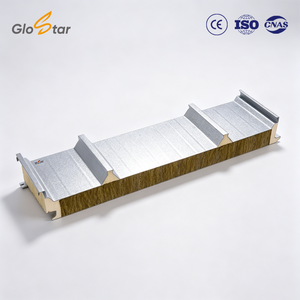
As Qatar intensifies its industrial modernization across the Doha Industrial Area, Ras Bufontas, and the Umm Slal logistics corridors, commercial real estate developers and general contractors require robust building envelopes that conquer ambient summer extremes exceeding 50°C and airborne marine salinity. China’s premier continuous double-belt polyurethane (PU/PIR) sandwich panel manufacturing infrastructure delivers an unparalleled synthesis of thermodynamic efficiency, QCDD (Qatar Civil Defence Department) fire-safety compliance, and structural value engineering.

0.019 W/m·K Core Conductivity (λ)
B1 / B-s1,d0 QCDD Fire-Class Standard
65% HVAC Energy Reduction
100% Hamad Port Direct Logistics
Export-Grade Architectural Portfolio

Specified Products for Industrial, Logistics & Civil Developments

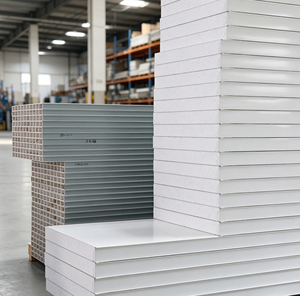
Every system engineered in our state-of-the-art facilities undergoes stringent non-destructive quality validation, ensuring seamless integration between structural steel purlins, cold-chain composite envelopes, and aesthetic architectural facades.

Get a Quote
Engineering Whitepaper Analysis

Thermodynamic & Fire Engineering in Doha’s Severe Microclimates

Designing envelope systems for Doha requires solving intense multi-physics challenges. Solar radiant flux in the Arabian Peninsula routinely pushes external metal skin temperatures above 78°C during peak July afternoons. Concurrently, interior environments—whether chilled pharmaceutical vaults maintained at 2°C or air-conditioned commercial spaces at 22°C—experience sustained vapor pressure differentials across building envelopes up to 3.8 kPa.

"Under Qatar Construction Specifications (QCS 2014) Section 10 and GSAS (Global Sustainability Assessment System) criteria, wall and roof U-values must consistently outperform 0.20 W/m²·K. Polyisocyanurate (PIR) and Polyurethane (PU) sandwich panels achieve this metric with 40% less thickness than traditional EPS or mineral wool assemblies, drastically decreasing dead loads on structural foundations."

PIR Chemical Ring Stability vs. Standard Polyurethane (PUR)

While conventional Polyurethane (PUR) delivers outstanding thermal insulation via closed-cell entrapment of eco-friendly blowing agents (Cyclopentane), advanced Polyisocyanurate (PIR) modifies the chemical formulation by introducing an elevated isocyanate index (MDI/Polyol ratio typically > 250). Through specialized trimerization catalysis during continuous double-belt laminating, cyclic isocyanurate rings are synthesized within the rigid polymer matrix. These isocyanurate linkages possess significantly higher bond dissociation energy (requiring temperatures exceeding 350°C to fracture), giving PIR superior char-formation kinetics that drastically arrest flame spread and smoke optical density.

Performance Characteristic Rigid PIR (Polyisocyanurate) Rigid PUR (Polyurethane) High-Density Rockwool Expanded Polystyrene (EPS)
Thermal Conductivity (λ at 25°C) 0.019 - 0.022 W/m·K 0.022 - 0.024 W/m·K 0.038 - 0.044 W/m·K 0.035 - 0.039 W/m·K
Core Density Range 40 - 45 kg/m³ 38 - 42 kg/m³ 100 - 140 kg/m³ 16 - 25 kg/m³
Fire Reaction (EN 13501-1) B-s1, d0 (QCDD Class A) B2 / B3 A1 Non-Combustible E / F (High Risk)
Water Absorption (Vol % @ 96h) < 1.0% (Closed-Cell > 95%) < 1.5% > 5.0% (Capillary Risk) 2.0 - 4.0%
Compressive Strength (10% def.) 160 - 220 kPa 140 - 180 kPa 80 - 120 kPa 70 - 100 kPa
Required Thickness for U=0.20 W/m²·K ~100 mm ~115 mm ~200 mm ~185 mm

For Qatari civil projects, selecting the appropriate core is critical. While non-combustible Rockwool remains mandated for primary fire separation walls (2-to-4 hour fire resistance ratings), PIR panels are preferred for external envelope roofing and wall systems because they weigh roughly 65% less, maintain superior thermal performance over decades, and eliminate structural sagging caused by airborne moisture absorption.

Contextual Architectural Engineering

Engineered Applications Across Doha's Strategic Hubs

Our building envelope packages are deployed across specialized industrial, medical, and agricultural zones throughout the State of Qatar.

Doha Industrial Area Logistics

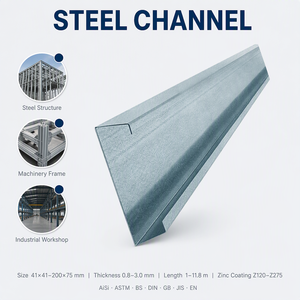
Heavy-duty warehousing, automated high-bay distribution depots, and e-commerce transit hubs require long-span roof systems. Pairing cold-formed structural C/Z purlins with PVR1000 concealed-fastener insulated panels ensures weather-tight performance across wide column layouts without deflection or water ingress during sporadic torrential winter rainstorms.

Ras Bufontas & Manateq SEZs

Precision manufacturing and electronics facilities located within free trade economic zones require high indoor air quality and strict climate control. Our flush-joint cleanroom sandwich panels feature anti-static coatings, chemical resistance against aggressive sanitizing detergents, and concealed service conduits that prevent particulate accumulation.

Umm Slal & Al Wakra Cold Storage

Critical national food security reserves, meat processing facilities, and blast freezers operating down to -35°C demand maximum vapor tightness. We supply 150mm to 200mm PIR panels manufactured with double tongue-and-groove labyrinths and integrated cam-locks that eliminate internal frosting and catastrophic ice bridging.

Lusail Commercial & Villas

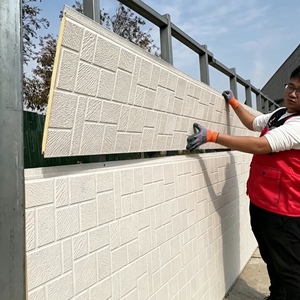
Modern residential compounds, municipal administrative centers, and temporary modular compounds in Lusail and The Pearl benefit from metal carved architectural PU siding panels. These systems provide high-end woodgrain or stone aesthetics with integrated continuous insulation, speeding up project handover by up to 50%.

Metallurgical Durability Science

C4/C5 Marine Atmospheric Corrosion Defense for Qatar Coastal Projects

Qatar’s geographical location on the Arabian Gulf exposes building facades to an intensely corrosive combination of high ambient temperatures, airborne marine chlorides, abrasive windblown sand, and relative humidity exceeding 85%. Standard pre-painted galvanized iron (PPGI) sheets with thin 15-micron polyester coatings degrade rapidly, exhibiting chalking, micro-cracking, and red rust within 36 months.

Our manufacturing operations utilize elite metallic substrate layers paired with advanced fluorocarbon finishes engineered specifically for severe C4/C5 marine atmospheric classifications:

🛡️

Substrate Passivation

Hot-dipped structural galvanizing (Z275 to Z350 g/m²) and Galvalume / Aluzinc coatings (AZ150 55% Al-Zn alloy) provide sacrificial cathodic protection, self-healing sheared cut edges and drilled pilot holes against rust creep.

🎨

PVDF & HDP Polymer Coatings

70% Kynar 500 / Hylar 5000 PVDF (Polyvinylidene Fluoride) coatings and High-Durability Polyester (HDP) applied at 25+5 micron thickness withstand high solar UV radiation without degradation, retaining colour consistency over a 25-year design lifespan.

🌪️

Sandstorm Abrasion Resistance

Surface hardness ratings exceeding F-2H pencil hardness ensure that continuous desert Shamal winds carrying fine silica dust do not scour the protective topcoat away, preventing premature corrosion across industrial building perimeters.

World-Class Chinese Industrial Scale

Integrated Manufacturing: From Steel Coils to Complete Envelopes

Unlike regional intermediaries or fragmented fabricators, top-tier Chinese manufacturers operate continuous, fully automated continuous double-belt production systems that integrate cold-roll forming, high-pressure pentane foaming, and inline packaging.

⚙️

High-Pressure Metered Injection

Utilizing Hennecke and OMS computer-controlled metering units, isocyanate and polyol formulations are mixed under 180-bar pressure. This guarantees a uniform microscopic cell structure with a closed-cell ratio exceeding 95%, optimizing thermal resistance and preventing void formation.

📏

Double-Belt Continuous Laminator

Our 40-meter heated continuous double-belt presses apply sustained, uniform pressure and controlled temperature curing across the panels. This produces flat surfaces, dimensional accuracy within ±1mm, and high bonding strength between the foam core and outer steel skins.

📦

Turnkey Supply Chain Consolidation

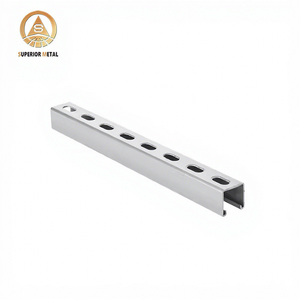
We bundle primary insulated panels with custom-formed cold-formed structural C/Z purlins, roof trusses, matching colour flashings, sealants, self-drilling fasteners, and translucent skylight profiles, packing entire building envelopes into optimized shipping containers delivered directly to Hamad Port.

Procurement Due Diligence

Frequently Asked Questions by Qatari Contractors & Engineers

Straightforward answers to the technical, logistical, and compliance questions asked by MEP consultants, EPC directors, and quantity surveyors in Doha.

Q. Are Chinese PIR sandwich panels compliant with Qatar Civil Defence Department (QCDD) standards?

Yes. Our PIR sandwich panels are tested and certified to ASTM E84 (Class A Flame Spread Index < 25, Smoke Developed < 450) and EN 13501-1 (Class B-s1, d0). Detailed third-party test reports from international laboratories (such as SGS, Intertek, and TÜV Rheinland) are provided with submittal dossiers to streamline civil defense and local municipal approvals across Qatar.

Q. How are panels packed to prevent damage during sea transit to Hamad Port?

Panels are stacked with protective peel-away polyethylene film on both steel faces, cushioned with high-density EPS sacrificial dunnage at the base, and vacuum shrink-wrapped in heavy waterproof polyolefin film. Pallets are systematically containerized in 40ft High Cube (40'HC) containers with heavy-duty lashing straps and corner edge guards to prevent shifting during maritime transit.

Q. What is the typical freight transit time from Shanghai / Qingdao / Tianjin to Doha?

Direct container line services from major Chinese ports to Hamad Port (Doha) generally require between 18 to 26 days of ocean transit. Factoring in factory production lead times of 10 to 14 days for bespoke project runs, complete envelope systems can be delivered to job sites in the Doha Industrial Area within 35 to 45 calendar days.

Q. How do you prevent thermal bridging at panel joints under 50°C summer conditions?

Our wall panels feature a double tongue-and-groove joint profile with a factory-applied closed-cell gasket. Roof systems utilize the PVR1000 concealed-clip standing seam, which isolates the external steel sheet from direct contact with internal structural purlins. This continuous thermal break prevents condensation dripping and cuts structural heat gain.

Q. Can you supply matched structural C/Z purlins in the same shipping containers?

Yes. We regularly supply combined packages containing both sandwich panels and high-strength galvanized steel purlins (ASTM A653 / Q345B with Z275 coating). Nesting cold-formed purlins alongside panel packs maximizes container volume and weight limits, helping reduce overall ocean freight costs per square meter.

Q. What specific coating is recommended for coastal projects in Al Wakrah or Ras Laffan?

For coastal installations within 5 kilometers of the shoreline, we mandate PVDF (Polyvinylidene Fluoride 70% Kynar) or SDP (Super Durable Polyester) with a minimum 25-micron topcoat over a 5-micron epoxy primer, applied over an AZ150 Galvalume or Z275 hot-dipped zinc steel core. This finish resists corrosion for over 1,500 hours under ASTM B117 salt spray testing.

Procurement Quality Assurance

Technical Verification Checklist for Qatari Quantity Surveyors

Before issuing Letters of Credit (L/C) or approving material submittals for Qatar construction projects, verify that your sandwich panel and structural steel manufacturer provides documented compliance across these six core criteria:

  • Mill Test Certificates (MTC): Verification of steel yield strength (EN 10025 S350GD, ASTM A653 Grade 50, or Q355B) and certified zinc-coating mass check (ASTM A90 / ISO 1460).
  • Foam Core Density Verification: Minimum 40 kg/m³ Core Density Test (ASTM D1622 / ISO 845) ensuring structural compressive integrity under cyclic negative wind loads.
  • Third-Party Fire Reaction: ASTM E84 Class A flame/smoke index or EN 13501-1 Class B-s1, d0 certificates from accredited laboratories (SGS, TÜV, Intertek).
  • Substrate Coating Integrity: Cross-hatch adhesion testing (ASTM D3359) and MEK rub solvent tests (ASTM D5402) confirming paint film polymerization and scratch resistance.
  • Dimensional Tolerance Guarantees: Panel length tolerance within ±5mm, cover width within ±1.5mm, and squareness deviation under 0.2% of panel width.
  • Blowing Agent Environmental Safety: 100% CFC, HCFC, and HFC-free Cyclopentane blowing formulations compliant with international ozone layer and global warming standards.
Get a Quote Explore PVR1000 Roof Systems

Ready to Accelerate Your Doha Project Envelope?

Partner with China's dedicated engineering manufacturer of insulated PU/PIR sandwich panels, purlins, and industrial roof structures. Request complete submittal packages, custom panel cutting lists, wind load calculations, and competitive FOB/CIF Hamad Port quotations today.

Get a Quote