
Continuous double-belt manufactured polyurethane (PUR/PIR) core panels, non-combustible mineral wool composites, structural cold-formed profiles, and sub-frame systems calibrated for seismic drift and thermal efficiency.
A comparative structural and thermodynamic breakdown for Japanese structural engineers, Tier-1 General Contractors (General Zenikons), and envelope specifiers navigating cold-chain thermal barriers and fire resistance boundaries.
Modern architectural and industrial development across the Kanto Plain—encompassing Tokyo, Kanagawa, Chiba, and Saitama—demands an exacting balance of extreme thermal resistance, low building dead-weight for seismic shear mitigation, and compliance with the Building Standards Act of Japan (BSL / 建築基準法). Our advanced continuous production lines formulate high-index polyisocyanurate (PIR) chemistries where the isocyanate-to-polyol index exceeds 250–300. This chemical architecture forms highly stable, trimerized isocyanurate ring structures, radically superior to conventional polyurethane (PUR) in thermal decomposition temperature (>350°C vs. ≈200°C) and flammability metrics.
| Engineering Property | PIR High-Index Core (Class B1) | PUR Rigid Core (Standard) | Structural Rock Wool Core | Tokyo Code / JIS Reference |
|---|---|---|---|---|
| Thermal Conductivity (λ) | 0.019 – 0.021 W/m·K Ultra-Insulative | 0.022 – 0.024 W/m·K | 0.038 – 0.044 W/m·K | JIS A 1412 / ZEB Standard |
| Core Density | 40 – 42 kg/m³ | 38 – 40 kg/m³ | 100 – 140 kg/m³ | JIS A 9511 Quality Verification |
| Reaction to Fire / BSL Rating | Quasi-Non-Combustible (準不燃材料) | Flame-Retardant B2 | Non-Combustible (不燃材料) | BSL Art. 2 Para 9 / Art. 64 |
| Closed Cell Content | ≥ 96% (Zero Vapor Diffusion) | ≥ 92% | Open Cell (Requires Barrier) | ASTM D2856 / JIS K 7220 |
| Compressive Strength (10% Def.) | ≥ 180 – 220 kPa | ≥ 150 kPa | ≥ 100 – 120 kPa | ISO 844 / JIS K 7221 |
| Blowing Agent Chemistry | Cyclopentane / Solstice HFO | Cyclopentane | N/A (Fiber Binding Resin) | Zero ODP, GWP < 1 (Tokyo Eco Mandate) |
| Joint Configuration | Double Tongue-and-Groove with EPDM | Single Shiplap / Tongue-Groove | Labyrinth Stepped Joint | Air-tightness JIS A 1516 (≤ 0.02 m³/h·m²) |
Industrial facilities in Tokyo Bay (Koto-ku, Ohi, Kawasaki, Ichikawa) endure constant exposure to marine saline drift and atmospheric sulfur oxides. We supply facing sheets conforming to JIS G 3312 (Pre-painted Hot-Dip Zinc-Coated Steel Sheets) with SuperDyma / ZAM (Zinc-Aluminum-Magnesium alloy coatings 275g/m²). Coated with 70% Kynar 500 PVDF (Polyvinylidene Fluoride) or fluoropolymer FEVE resin, our panel facings guarantee 25–30 years without chalking or micro-fissuring.
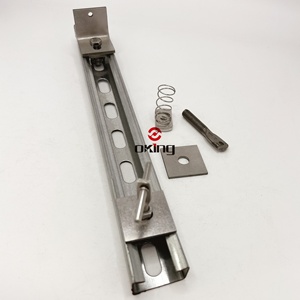
Japan's seismic coefficient requirements demand envelope systems that absorb significant lateral displacement without brittle structural fracture. Our panels incorporate concealed engineered fastener clips that permit controlled dynamic slip (allowing an inter-story drift angle of 1/200 to 1/120 under Level 2 earthquake simulations) preventing through-screw shear rupture and maintaining building enclosure hermeticity.
From waterfront logistics mega-hubs to automated robotic cold storages and mission-critical suburban data centers across the Kanto economic zone.
The concentration of consumer food hubs in Shinagawa, Ariake, and Yokohama requires continuous cold storage complexes operating from +5°C down to -35°C. Our 150mm–200mm continuous PIR panels feature an integrated air-vapor labyrinth seal and proprietary thermal gasket, preventing thermal bridging and surface condensation under Tokyo’s humid summer subtropical microclimates.
Chiba's Inzai Data Center park and West Tokyo facilities house high-density cloud compute nodes requiring strictly controlled indoor climates (PUE < 1.25) and certified acoustic dampening. Our PIR and Mineral-Wool composite wall systems block high external heat flux, suppress ambient transformer noise, and satisfy Tier III/IV facility structural compartmentalization guidelines.
In high-seismicity industrial zones, building deadweight directly correlates with the base shear force ($V = C_s \cdot W$). Replacing heavy autoclaved aerated concrete (ALC) panels with 50mm–100mm lightweight PIR sandwich panels reduces exterior envelope dead-weight by over 70%, drastically decreasing steel frame tonnage and foundation costs under Japanese seismic codes.
How the 2024 Japanese logistics labor reforms, Net Zero Energy Building (ZEB) policies, and fire prevention zone regulations are reshaping envelope engineering.
The Tokyo Metropolitan Government’s aggressive climate roadmap demands that all newly constructed commercial buildings attain ZEB-Ready or ZEB-Oriented energy conservation ratings by 2030. Achieving wall U-values below 0.15 W/m²K without excessive wall thickness requires the thermal density of continuous PIR foam, rendering traditional fiber-only insulation obsolete in space-constrained central Tokyo plots.
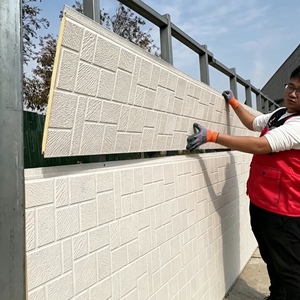
The enforcement of strict overtime caps on Japanese construction drivers and crane operators (the 2024 Logistics Overtime Limit) has created severe job-site labor shortages across Kanto. Our continuous sandwich panels arrive precision cut to length (±1mm tolerance) with factory-applied gaskets and pre-punched fastener clips, cutting on-site envelope assembly times by 55% compared to multi-layered built-up walls.
A major portion of urban Tokyo falls under Article 22 or Fire Prevention / Quasi-Fire Prevention Districts, mandating envelopes capable of preventing external flame spread for 30 to 60 minutes. Our export panels are engineered using fire-retardant polyisocyanurate formulation (B1) and non-combustible high-density mineral wool, matching the performance criteria of Ministry Notification No. 1399.
Operating high-precision European-engineered continuous double-belt conveyors over 40 meters in length ensures perfect chemical curing under controlled pressure and temperature. This eliminates micro-cavities, delamination risks, and thermal variation across wide-format panels.
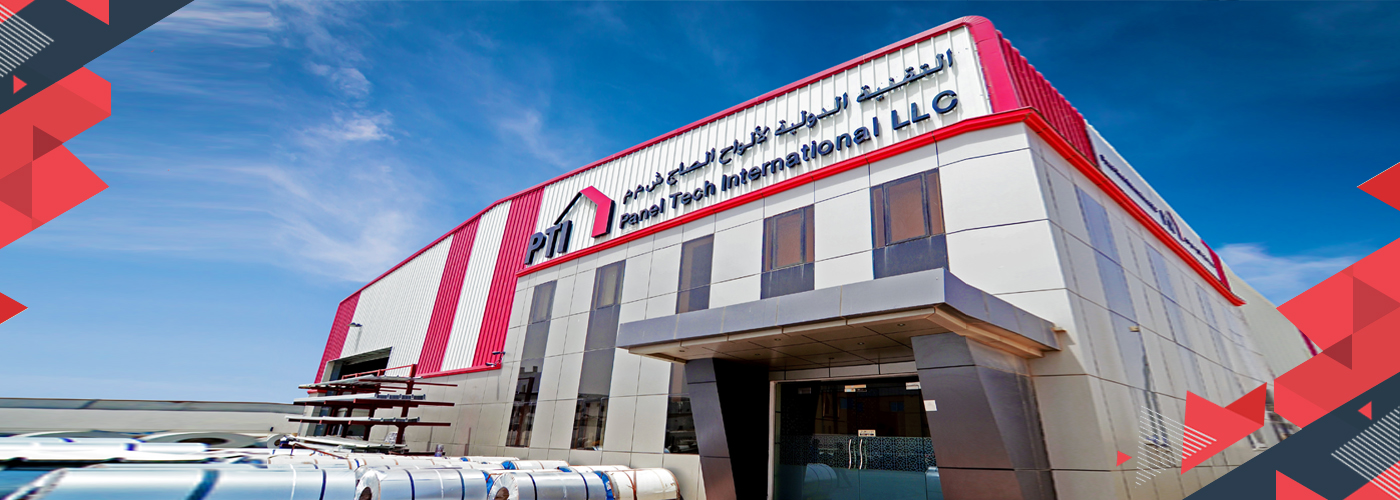
Demonstrated project performance across large-scale commercial, governmental, industrial, and infrastructure facilities operating in demanding climates.
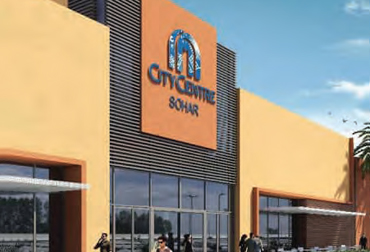
12,500 m² external insulated walling and hidden-fix standing seam roof envelope engineered for rapid retail park completion.
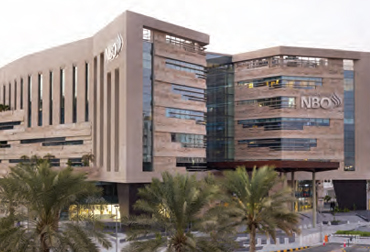
Architectural PIR insulated cladding panels with high-durability fluoropolymer coatings resisting high-UV surface degradation.
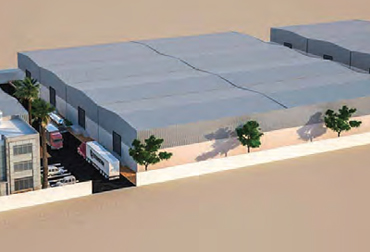
Heavy-duty trapezoidal sandwich roofing paired with galvanized C/Z purlins and composite metal decking for heavy manufacturing floor slabs.
Clear, definitive answers regarding JIS material verification, Japanese fire certifications, shipping logistics to Tokyo Bay, and structural compliance.
Yes. For exports to the Tokyo and Yokohama markets, we source certified prime steel coils from top-tier mills (Baosteel, Shougang) manufactured in strict accordance with JIS G 3312 (Prepainted hot-dip zinc-coated steel) and JIS G 3322 (Prepainted hot-dip 55% aluminum-zinc alloy-coated steel). Full Mill Test Certificates (MTC / ミルシート) with heat numbers, chemical composition analysis, and yield strength data are provided with every batch shipment.
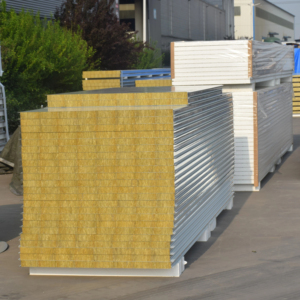
Our PIR sandwich panels are formulated with high isocyanate index chemistry achieving Class B1 flame retardancy under GB8624 and EN 13501-1 (B-s1, d0). For projects requiring formal MLIT Non-Combustible (不燃材料) or Quasi-Non-Combustible (準不燃材料) certification under BSL Article 2, we provide either structural Rock Wool core panels (which are inherently non-combustible) or coordinate with third-party Japanese testing agencies (such as JTCC or Center for Better Living) to supply requisite cone calorimeter (ISO 5660) test reports.
Our coastal factory is located near major container ports (Shanghai / Ningbo / Qingdao). Direct ocean transit time to the Port of Tokyo (Oi Container Terminal, Aomi Terminal) or the Port of Yokohama is only 3 to 5 calendar days. With a standard production lead time of 10 to 14 days for custom-cut panels, Japanese contractors benefit from a total procurement cycle of under 3 weeks, significantly shorter than European or North American alternatives.
Every panel is surfaced with a peelable UV-resistant protective PE film. Panels are packed in waterproof bundle stacks on reinforced EPS/wood-free composite skids with high-impact edge protectors and full heat-shrink shrink-wrapping. Bundles are systematically labeled in Japanese and English with building zone numbers, panel tags, lengths, and gross weights to enable direct Just-In-Time (JIT) crane lifting from container to roof/wall framing on congested Tokyo construction sites.
Under the Japanese Building Standards Act, wind pressure calculations ($q = 0.6 \cdot E \cdot V_0^2$) in coastal Tokyo require design wind velocities ($V_0$) of 34 m/s to 38 m/s. We provide structural wind load capacity tables verified through ASTM E72 and ISO transverse loading standards. Our panels feature heavy-gauge outer facings (0.5mm–0.7mm) and deep trapezoidal ribs that enhance section modulus, resisting negative suction pressures exceeding 4.5 kPa.
Absolutely. We formulate custom polyester (PE), High-Durability Polyester (HDP), and Polyvinylidene Fluoride (PVDF) coil coatings matched directly to JPMA (Japan Paint Manufacturers Association) color books, Munsell notations (e.g., 5Y 7/1, N-9.3), or standard RAL specifications. Spectrophotometer delta-E tolerance is maintained under 0.5 for flawless color harmony across panels and custom flashings.
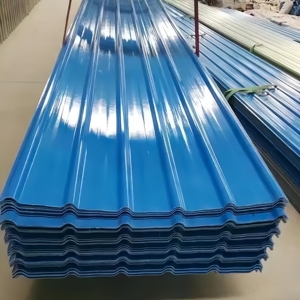
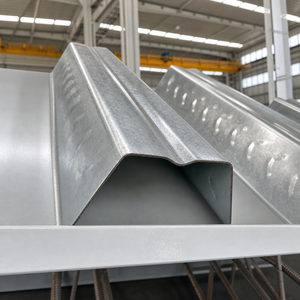
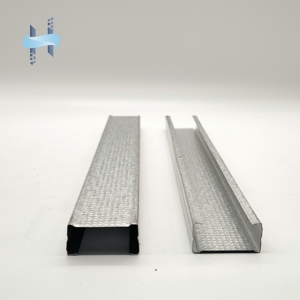
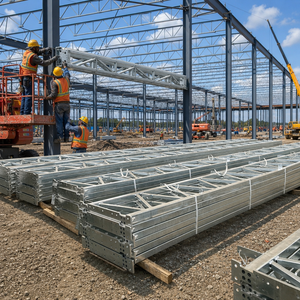
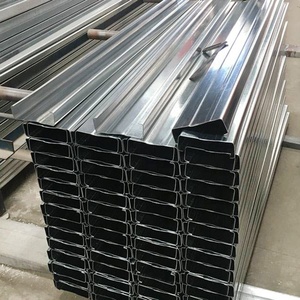
Yes. As an integrated manufacturer, we roll-form structural cold-formed C/Z purlins, precision open-rib metal decking, lightweight roof trusses, and profile-matched translucent FRP skylights. By consolidating panels with secondary steel framing in the same 40ft HQ shipping containers, general contractors optimize container fill rates (eliminating broken stowage) and dramatically lower freight charges per square meter.
Prior to shipment, our factory Quality Assurance department issues a comprehensive Inspection Dossier containing: raw material MTCs, continuous foaming density records, core-to-steel bond strength test data, coating dry-film thickness (DFT) measurements, dimensional variance checksheets (±1mm length, ±0.5mm thickness), and high-resolution container stuffing photos. We also welcome third-party inspectors (SGS, TÜV, Bureau Veritas) designated by Japanese buyers.
Collaborate directly with our structural and thermal envelope technical team. Receive full CAD typical joint details, structural span calculations, and quotation packages tailored for your upcoming project in Tokyo, Chiba, Kanagawa, or Saitama.