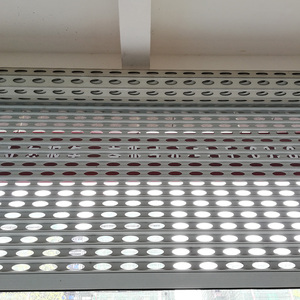
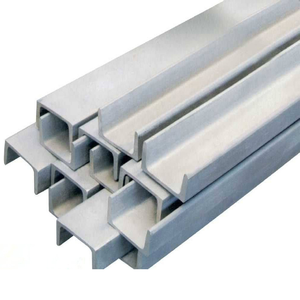
Precision-manufactured building systems engineered to satisfy the rigorous seismic, meteorological, and logistical demands of Mexico City and the surrounding Valley of Mexico industrial corridor.
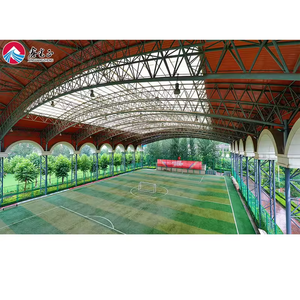
As the primary industrial, commercial, and financial epicenter of Latin America, the Metropolitan Area of the Valley of Mexico (ZMVM) imposes an extraordinary combination of structural, seismic, and climatic demands on architectural building envelopes. Industrial developers, civil engineering general contractors, and EPC consultants operating in Mexico City, Naucalpan, Tlalnepantla, Ecatepec, and Toluca face unique geographic realities. At an altitude exceeding 2,240 meters above sea level, structural envelopes are subjected to intense solar ultraviolet (UV) radiation, substantial diurnal temperature swings, and severe seismic acceleration profiles defined under the Normas Técnicas Complementarias del Reglamento de Construcciones para el Distrito Federal (NTC-RCDF).
Within this rigorous operating framework, profiled aluminium sheets have shifted from a specialized architectural alternative to an engineering baseline. Compared to traditional galvanized or painted steel panels (which add significant dead weight and are vulnerable to accelerated oxidation at cut edges), cold-rolled profiled aluminium provides a superior strength-to-weight ratio, exceptional natural corrosion resistance through passivating oxide layers, and significant thermal reflectivity. Sourcing these precision profiles requires a reliable supply partner capable of meeting exact metallurgical specifications, delivering structural verification, and handling cross-border maritime and intermodal customs logistics into central Mexico.
Structural Information Gain: Replacing standard 24-gauge corrugated steel sheeting with 0.9mm to 1.2mm structural alloy profiled aluminium reduces envelope dead weight by up to 65%. In Mexico City's Seismic Zones IIIa through IIIc (lacustrine soft-clay beds), this weight reduction directly diminishes inertial earthquake forces ($F = m \cdot a$), lowering required steel superstructure tonnage and foundation piling costs.
Proper specification of profiled aluminium sheets begins with alloy selection. In the high-altitude industrial corridors of Mexico City, mechanical performance under repetitive thermal expansion and wind shear is paramount. PTI manufactures and exports precision profiled sheets engineered from marine- and structural-grade non-heat-treatable aluminium-manganese and aluminium-magnesium alloys.
| Alloy & Temper | Tensile Strength (MPa) | Yield Strength (MPa) | Elongation (%) | Optimal CDMX Project Application |
|---|---|---|---|---|
| AA3003-H14 / H16 | 140 – 190 | 115 – 160 | 8 – 10% | Standard industrial siding, cold storage envelope facings, distribution roofing |
| AA3105-H16 / H18 | 150 – 210 | 130 – 175 | 5 – 8% | Pre-painted trapezoidal sheets, architectural facades, residential perimeter panels |
| AA5052-H32 / H34 | 210 – 260 | 155 – 215 | 10 – 14% | Heavy industrial plants, high-pollution chemical storage, airport hangars |
| AA5754-H22 | 220 – 270 | 130 – 180 | 12 – 16% | High-stress structural decking, heavy pedestrian-traffic canopies |
The structural load-carrying capacity of profiled sheets is governed by profile geometry rather than material thickness alone. Through precision continuous roll-forming lines, PTI manufactures profiles optimized for load-bearing and water evacuation:
1. Box Rib & Trapezoidal Profiles (PTI-TR32 / PTI-TR45): Featuring high crest ribs (32mm to 45mm) with integrated stiffening ribs across the pan, these configurations maximize the profile moment of inertia ($I_{xx}$). This enables extended purlin spans up to 1.8 meters without excessive deflection, making them the standard choice for manufacturing plants and logistics centers in Cuautitlán and Tlalnepantla.
2. Sinusoidal / Corrugated Profiles (PTI-Wave 18/76): Engineered with smooth cyclic wave geometries (18mm depth at 76mm pitch), these profiles distribute wind suction stresses uniformly. They are preferred in architectural envelopes, stadium fascias, and retrofit wall cladding across corporate facilities in Santa Fe and Polanco.
3. Standing Seam Concealed Fix Systems: Mechanical seaming eliminates through-fastener penetrations, accommodating thermal movement across long sheet lengths (up to 30 meters) without ovalizing screw holes or compromising waterproofing integrity during Central Mexico's torrential summer rainy season.
Procuring profiled aluminium sheets for the Mexican market requires careful consideration of local environmental conditions, urban topographies, and regional building codes.
The Vallejo-I industrial zone in Azcapotzalco is undergoing extensive modernization into a sustainable logistics and data hub. Profiled aluminium claddings with high Solar Reflectance Index (SRI > 82) reduce Urban Heat Island (UHI) effects and interior cooling loads, supporting operational energy efficiency standards.
At 2,240m elevation, UV radiation intensity is approximately 25% higher than at sea level. Standard polyester coil coatings tend to chalk and micro-crack within 36 to 48 months. PTI supplies sheets coated with 70% Kynar 500 PVDF fluoropolymer systems, backed by a 25-year warranty against fading and embrittlement.
Under Mexico City's stringent seismic code, dynamic inter-story drift can twist rigid facade structures. Profiled aluminium sheeting, attached via engineered sliding clips and slotted hat channels, absorbs lateral displacements without brittle cracking, preventing envelope failure during seismic events.
The convergence of industrial nearshoring, cross-border supply integration, and environmental sustainability has transformed metal envelope procurement across Central Mexico:
1. The Nearshoring Manufacturing Surge (T-MEC / USMCA Driven): Multinational tier-1 automotive suppliers, electronics assemblers, and logistics operators relocating manufacturing footprints to the Bajío region and the Mexico City periphery require rapid facility construction. Pre-engineered building envelope components—such as roll-formed profiled aluminium skins, cold-formed C/Z purlins, and PIR sandwich panels—enable project handovers within tight timelines, reducing construction schedules by up to 40% compared to cast-in-place concrete.
2. Decarbonization and LEED v4.1 Certification Demands: Major institutional REITs (FIBRAs) operating in Mexico—including FIBRA Uno, FIBRA Prologis, and FIBRA Macquarie—actively pursue LEED Gold and Platinum certifications for new warehouse inventory. Aluminium profiles feature high post-consumer recycled content, 100% end-of-life recyclability without downcycling, and low embodied carbon relative to lifespan. High-reflectivity coated surfaces reduce HVAC energy use, contributing direct points toward LEED Sustainable Sites and Energy & Atmosphere credits.
3. Resilience Against Extreme Atmospheric Phenomena: Central Mexico's hail storms (*granizadas*) and flash rain events demand dynamic water runoff designs. Modern industrial roof specifications require deep trapezoidal profiles and continuous length runs (eliminating end-laps) to prevent back-up flooding, while alloy tempers such as AA3003-H16 provide impact resistance against severe hailstorms.
Operating continuously since 2009, Paneltech International LLC (PTI) is a vertically integrated manufacturer of building envelope systems, supplying high-performance insulated sandwich panels, corrugated and trapezoidal profile sheets, structural purlins, and industrial door closures. Our engineering, fabrication, and export teams support international buyers with verified quality, documented technical specifications, and end-to-end logistics coordination.
Continuous roll-forming lines and fully integrated cut-to-length lines ensure dimensional tolerances within ±1.0mm, eliminating on-site cutting and field adjustments.
Every coil undergoes spectroscopic alloy verification, yield strength tensile testing, T-bend coating flexibility tests, and MEK rub solvent resistance checks per ASTM B209 and E8.
Interleaved protective polyethylene film, moisture-barrier wrapping, desiccant integration, and heavy-duty steel-banded seaworthy timber pallets prevent transit abrasion or corrosion.
PTI manufactures profile-matched ridge caps, eave gutters, custom flashing, self-drilling fasteners with EPDM washers, and translucent daylighting panels, providing a fully integrated single-source package.