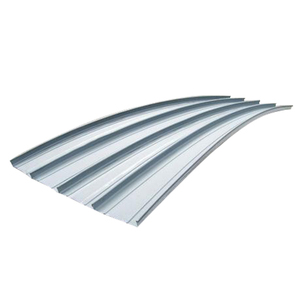

Engineered for torrential monsoon hydraulics, intense UV degradation in South Asia, and coastal corrosion resistance across Western and Southern Sri Lankan export zones.
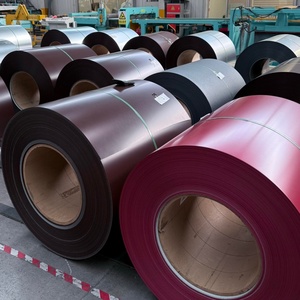
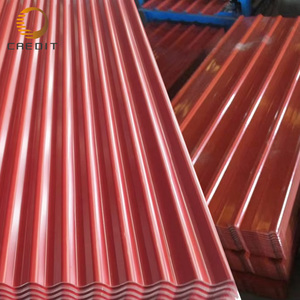
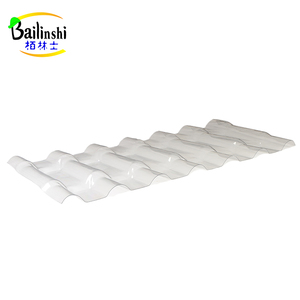
Sri Lanka presents one of the most demanding microclimates in South Asia for industrial roofing and exterior building envelopes. Spanning tropical wet zones in the Western and Southwestern lowlands to dry arid stretches in the North and Southeast, specifiers face concurrent structural hazards: continuous sea-spray salt deposition along coastal manufacturing clusters, torrential precipitation during the Southwest (Yala) and Northeast (Maha) monsoons, and high surface solar radiation driving severe thermal expansion cycles.
Industrial structural consultants designing pre-engineered steel buildings (PEBs) in the Katunayake Export Processing Zone, Biyagama, Mirigama, and Hambantota Port Industrial Park must reject generic commercial-grade steel profiles. Standard zinc galvanized coatings (such as regular Z60 or Z90 commercial corrugated sheets) fail prematurely in coastal Sri Lanka, frequently exhibiting red rust creeping along overlap lap joints and screw penetrations in less than 3 to 5 years due to galvanic failure.
To guarantee an engineered service life exceeding 25 to 30 years without catastrophic oxidation or water ingress, modern engineering specifications require Aluzinc/Galvalume substrates (55% Aluminum, 43.4% Zinc, 1.6% Silicon) conforming to ASTM A792 / AS 1397 with coating masses of AZ150 to AZ200. Combined with high-durability polymer topcoats—specifically Polyvinylidene Fluoride (PVDF / Kynar 500) or Super Durable Polyester (SDP)—these trapezoidal systems deliver exceptional barrier protection against sulfurous industrial fumes, saline marine aerosols, and UV color fading.
| Profile & Material Chemistry | Yield Strength (MPa) | Corrosion Category (ISO 12944) | Thermal U-Value (W/m²K) | Ideal Sri Lankan Operating Zone |
|---|---|---|---|---|
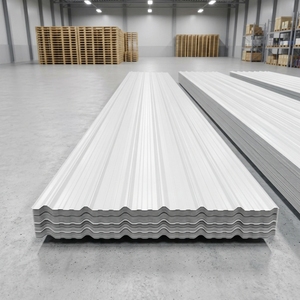
| PPGL Trapezoidal (AZ150 + PVDF) | G550 (550 MPa) | C4 - C5 (Severe Marine) | 5.8 (Single Skin) | Colombo Port City, Hambantota Maritime Zone, Negombo |
| PIR/PU Sandwich Trapezoidal | G300 - G550 Skins | C3 - C4 (Industrial) | 0.28 - 0.44 (50-100mm) | Pharmaceutical Cleanrooms, Cold Storage, Kandy Garments |
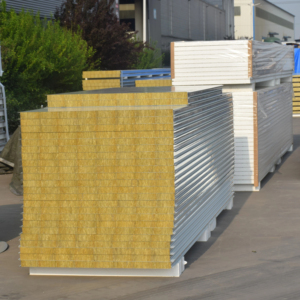
| Rockwool Sandwich Trapezoidal | G300 Facing Steel | C3 (Urban / Inland) | 0.38 - 0.52 (Non-Combustible) | Hazardous Warehouses, Rubber Processing, Free Trade PEBs |
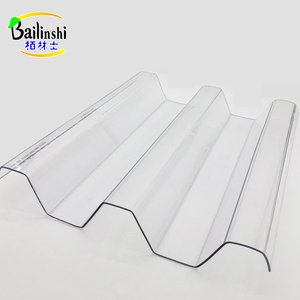
| Multi-Layer Anti-Acid UPVC (T1360) | High Impact Polymer | C5-M (Aggressive Chemical) | 2.2 (Inherent Insulation) | Coastal Salt Refineries, Fertilizer Plants, Aquaculture Sheds |
| 65-430 Zip-Lock Standing Seam | G350 - G550 Aluzinc | C4 - C5 (Watertight Concealed) | Variable / System Built-Up | Low-Slope Airport Terminals, Large Logistics Hubs (Monsoon Runoff) |
Furthermore, rainfall intensity in Sri Lanka frequently exceeds 100 mm per hour during monsoon convective storms. Trapezoidal profiles engineered with 32mm to 38mm deep structural crests and wide water channels prevent sheet overflowing and hydraulic backup. The inclusion of engineered capillary grooves on the underlapping side rib creates a physical pressure break, nullifying the capillary action that draws moisture upward and across side-lap fasteners.
Targeted envelope solutions engineered to solve specific operational constraints from coastal marine logistics to upland agricultural processing.
Sri Lanka's premier export apparel manufacturing plants (MAS Holdings, Brandix, Hirdaramani ecosystems across Katunayake, Biyagama, and Seethawaka) require stringent thermal stability and zero internal moisture dripping. Condensation dripping onto sensitive textiles, automated fabric laser cutters, or sewing floors damages export batches. Trapezoidal insulated panels with rigid PIR cores or composite profiles with anti-condensation fleeces eliminate thermal bridges and lower factory cooling HVAC loads by up to 34%.
Operating in the high-humidity, cool ambient temperatures of the Central Highlands (Nuwara Eliya, Kandy, Hatton, Ratnapura), CTC and orthodox black tea withering troughs emit significant warm, moisture-laden exhaust. Standard steel roofs corrode rapidly from the interior outward. Rockwool and UPVC trapezoidal profiles maintain consistent withering temperatures while completely resisting biological rot, mold development, and fungal spore formation inside the production facility.
Container Freight Stations (CFS) and bonded bulk warehouses located directly at the Port of Colombo and Hambantota Deep Sea Port operate within severe ISO 12944 C5-M marine atmospheric environments. Airborne salt spray combined with heavy cargo transport emissions requires high-strength G550 Galvalume trapezoidal sheets coated with 25-micron PVDF. Engineered high rib ribs provide unmatched load capacities, handling extreme cyclonic uplift pressures without sheet pull-through failure.
Sri Lankan structural standards (conforming to SLS and British Standard BS 5950 / BS 6399-2 wind loading criteria) require strict verification of sheet deflection limits under localized cyclone wind conditions. In maritime districts such as Galle, Batticaloa, and Jaffna, basic wind speeds can reach 45 m/s (162 km/h), generating localized negative suction pressures at the eaves and ridge zones that exceed -1.85 kN/m².
The table below provides recommended uniform distributed working loads (UDL in kN/m²) for our primary high-tensile (550 MPa yield stress) 1000mm cover trapezoidal profile (Profile PTI-30/250) based on an allowable deflection criterion of L/200 under continuous multi-span arrangements:
| Nominal Base Metal Thickness (BMT) | Total Coated Thickness (TCT) | Purlin Spacing 1.2 m | Purlin Spacing 1.5 m | Purlin Spacing 1.8 m | Maximum Overhang Span |
|---|---|---|---|---|---|
| 0.40 mm | 0.45 mm | 2.42 kN/m² | 1.58 kN/m² | 1.08 kN/m² | 200 mm |
| 0.45 mm | 0.50 mm | 3.15 kN/m² | 2.02 kN/m² | 1.39 kN/m² | 250 mm |
| 0.50 mm | 0.55 mm | 3.86 kN/m² | 2.48 kN/m² | 1.71 kN/m² | 300 mm |
| 0.60 mm | 0.65 mm | 5.12 kN/m² | 3.28 kN/m² | 2.28 kN/m² | 350 mm |
Note for Consulting Structural Engineers: For eaves and ridge edge strips experiencing localized vortex detachment, purlin spacing must be reduced by 20% or fastener density doubled using heavy-duty self-drilling Class 4 bi-metal fasteners equipped with 19mm EPDM vulcanized bonded washers. Never utilize carbon steel non-coated screws, as premature galvanic breakdown will breach the core metal in high-salinity Sri Lankan environments.
Technological shifts, renewable energy transitions, and regulatory developments reshaping procurement decisions for commercial developers.
Backed by the Ceylon Electricity Board's (CEB) rooftop solar net-metering initiatives, over 65% of industrial factories in Sri Lanka now retrofit or design their building envelopes specifically for photovoltaic arrays. This trend has drastically increased demand for high-crest trapezoidal profiles and standing seam systems that allow non-penetrating solar clamp mounting. Non-penetrating clamps eliminate leak vulnerabilities, while high-tensile 0.50mm - 0.60mm steel profiles carry additional dead loads (12-15 kg/m²) without rib flattening.
Historically, corrugated chrysotile asbestos-cement sheeting occupied widespread market share in Sri Lankan light commercial buildings due to perceived low cost. However, rigorous workplace safety mandates from multinational brands sourcing from Sri Lankan manufacturers, coupled with corporate sustainability goals and Green Building Council of Sri Lanka (GBCSL) standards, have catalyzed an irreversible transition to pre-painted Galvalume trapezoidal sheeting and non-combustible mineral wool insulated panels.
Following macroeconomic and currency exchange fluctuations in Sri Lanka, local asset owners have shifted toward Life-Cycle Cost Analysis (LCCA). Purchasing low-grade 0.35mm zinc-coated sheets results in recoating and roof replacement costs within 6 to 8 years, interrupting manufacturing operations. Conversely, specifying AZ150 Galvalume with thermosetting polyester or PVDF coatings extends capital maintenance intervals past 25 years, representing a 40% reduction in annualized building envelope lifecycle expenditure.
Decades of continuous manufacturing, international quality certifications, and integrated building envelope production capabilities.
Continuous automated roll-forming and composite panel laminating production lines eliminate manual dimension variance, guaranteeing uniform rib height, precise square cut edges, and micron-level coating tolerances.
Every coil batch is certified with authentic Mill Test Certificates (MTC), validating G550 yield strengths, AZ150/AZ200 coating densities, and salt spray exposure testing conforming to ASTM B117 standards.
Beyond trapezoidal sheets, we supply matching structural cold-formed Z & C purlins, galvanized metal decking, custom-bent perimeter flashings, translucent skylights, and insulated sandwich assemblies.
Engineered nesting bundles, heavy-gauge protective plastic wrapping, edge guards, and containerized sea freight direct to Colombo Port ensure zero transit deformation or salt corrosion prior to on-site installation.
Authoritative technical answers addressing import compliance, coating standards, condensation, and installation protocols.
For single-skin trapezoidal profiles (such as 30/250 or 35/200) without end laps, the absolute minimum recommended roof slope is 1 in 10 (approx. 5.7° or 10%) in Sri Lanka's wet zones. Where end laps cannot be avoided on very long rafters (>24 meters), the pitch must not be less than 1 in 8 (7.5°), and the overlap must be double-sealed with non-curing neutral butyl mastic tape accompanied by stitch screws on every rib crest to prevent hydraulic capillary backflow during monsoon downpours.
Aluzinc (55% Aluminum, 43.4% Zinc, 1.6% Silicon alloy) delivers four to six times longer service life than standard hot-dip galvanized steel of equivalent coating thickness in marine environments like Colombo or Galle. The aluminum forms an inert barrier oxide film that prevents uniform surface dissolution, while the zinc provides galvanic sacrificial protection at sheared edges and fastener drill penetrations. In salt-laden coastal conditions, pure zinc (GI) coats erode rapidly due to continuous chemical conversion into soluble zinc hydroxide.
Yes. Registered Board of Investment (BOI) enterprises operating under Section 17 of the BOI Act (e.g., export garment manufacturers, export food processors, large-scale industrial infrastructure developers) are eligible for direct duty and import tax exemptions on structural capital materials. We provide full trade documentation sets—including authenticated HS Code classifications (7210.49 / 7210.61 / 7308.90), certified packing lists, certificate of origin, and laboratory Mill Test Certificates—facilitating seamless green-channel customs clearance at the Port of Colombo.
Single-skin steel sheets absorb solar radiant heat rapidly, turning the roof into a massive overhead radiator that elevates indoor temperatures to 38°C–42°C. To control this, engineers can either specify factory-injected PIR or Rockwool core sandwich panels (thermal conductivity $\lambda \approx 0.022-0.038$ W/mK) or configure a double-skin site-assembled built-up system featuring an external trapezoidal sheet, a glass wool blanket insulation with an aluminum foil vapor retarder, and an internal steel liner tray. This combination isolates ambient heat, maintains indoor temperatures below 28°C without mechanical refrigeration, and prevents interior condensation.
Fastener specification is critical. You must strictly avoid standard zinc-electroplated carbon steel screws. Always specify AS 3566 Class 4 multi-layer ceramic coated self-drilling screws or 300-series stainless steel bi-metal screws. Every fastener must feature an integrated, non-conductive vulcanized EPDM washer (never plain black PVC or synthetic rubber that degrades under tropical UV). Fasteners must be driven into the crest of trapezoidal ribs for roof applications, or the valley for wall cladding, using depth-sensing screwdrivers to avoid compressing or destroying the elastomeric seal.
Standard 40-foot High Cube (40HC) ocean shipping containers accommodate straight-length steel sheets up to 11.85 meters. For projects in Sri Lanka requiring continuous rafter runs greater than 12 meters to avoid end laps completely, we can supply custom lengths packed on specialized open-top flat racks, or provide modular continuous standing seam profiles engineered for on-site portable container roll-forming directly at the construction site.
Partner directly with an established international envelope manufacturer. Whether you are finalizing a tender submission for a BOI textile factory, designing a port logistics facility, or replacing degraded corrugated sheets, our technical engineering team provides span calculations, bill of quantities (BOQ) optimization, and competitive CIF Colombo Port pricing.