Translucent White Flat FRP Glass Fiber Panels
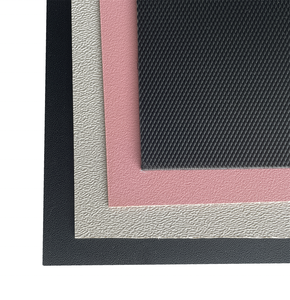
High-strength, non-yellowing composite GRP daylighting sheets engineered with anti-UV gel coats to resist intense New Zealand ozone radiation while matching industrial trapezoidal sheet profiles.
Factory-direct building envelope solutions roll-formed, tested, and consolidated for sea freight delivery directly into Ports of Auckland, Tauranga, Lyttelton, and Napier.
High-strength, non-yellowing composite GRP daylighting sheets engineered with anti-UV gel coats to resist intense New Zealand ozone radiation while matching industrial trapezoidal sheet profiles.
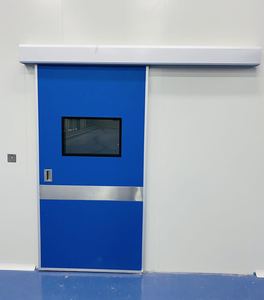
Airtight, flush-finish automatic steel sliding doors designed for clinical cleanrooms, pharmaceutical hubs, and dairy processing containment facilities across Hamilton and Canterbury.
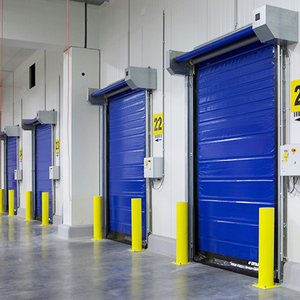
Rapid-cycle thermal insulated barrier doors for blast freezers and food processing warehouses, designed to minimize condensation and eliminate thermal loss under NZBC Clause H1.
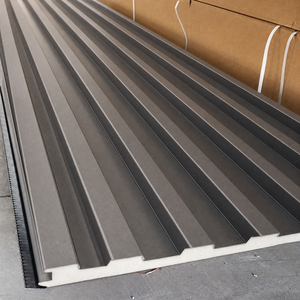
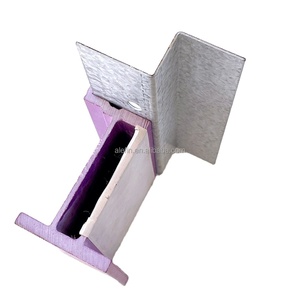
Continuous roll-bonded metal structural panels with non-ozone depleting polyisocyanurate cores. Engineered for high R-value exterior envelopes meeting stringent commercial fire codes.
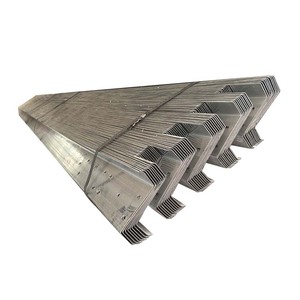
Cold-formed structural steel purlins and girts manufactured from continuous hot-dip galvanized strip (Z275/Z350/Z450) with precision prepunched slots for rapid bolt-up assembly.
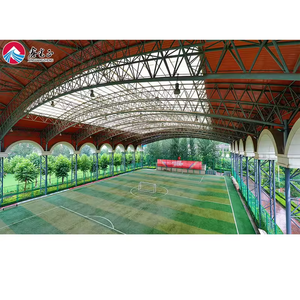
Engineered wide-span portal frames and truss structures optimized for agricultural clear-spans, aircraft hangars, and sports facilities subjected to high cyclonic and seismic loads.
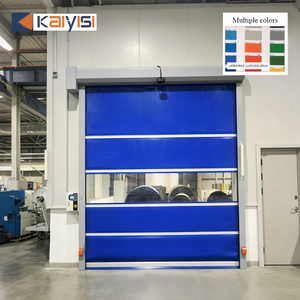
Heavy-duty roll-formed interlocking galvanized steel laths or reinforced PVC high-speed shutters engineered for wind-load resistance and heavy traffic logistics bays across NZ ports.
Continuous roll-formed galvanized structural Z-girts, eaves struts, and bespoke flashings ensuring complete moisture shedding and thermal break optimization under NZBC Clause E2.
Exporting structural roofing materials to New Zealand demands a fundamental metallurgical understanding of the South Pacific's aggressive atmospheric conditions. New Zealand is an oceanic nation where no geographical point is situated further than 130 kilometers from the coastline. The prevailing westerly winds propel saline aerosol mist across both the North and South Islands, while unique tectonic, alpine, and geothermal features create some of the world's most aggressive atmospheric corrosion zones.
Zinc has served as the baseline protective medium for New Zealand's iconic "wriggly tin" heritage since the 19th century. However, modern commercial specifications necessitate advanced alloy coatings. When comparing standard hot-dip galvanized (100% Zinc) coatings to 55% Aluminium-Zinc-Silicon alloy coatings (commonly identified in the Australasian market as Zincalume® or Galvalume®), the mechanism of boundary protection differs drastically:
1. Sacrificial Galvanic Protection: In raw galvanized steel, zinc sacrifices itself electrochemically to protect the underlying steel base at sheared edges and fastener penetrations. While effective in mild rural atmospheres (Zone B), marine chloride ions in coastal districts (Zones D and E) accelerate the consumption of pure zinc, producing white rust (zinc hydroxychloride) and rapid pitting.
2. Barrier Intermetallic Passivation: The 55% Aluminium-43.5% Zinc-1.5% Silicon alloy provides a composite microstructural barrier. As the alloy solidifies on the continuous coating line, dendritic aluminium structures form first, locking in zinc-rich phases. The zinc continues to provide sacrificial protection at cut edges, while the surrounding aluminium network oxidizes into an impermeable aluminium-oxide ceramic barrier, slowing atmospheric degradation by a factor of 2 to 4 times compared to conventional galvanizing.
Under NZS 1170.5 (Structural Design Actions - Earthquake actions in New Zealand) and NZS 1170.2 (Wind actions), roof diaphragms function as critical structural bracing elements. Our cold-rolled G550 high-tensile corrugated profiles provide exceptional strength-to-weight ratios, minimizing dead loads on foundations while resisting upward suction forces exceeding 3.5 kPa during severe weather events across the Canterbury Plains and Cook Strait wind tunnels.

Matching sheet metallurgy, protective coatings, and joint geometry to specific geographic exposure classifications per NZS 3604.
Locations: Auckland West Coast, Taranaki, Napier foreshore, Lyttelton Harbour.
Atmospheric Driver: Concentrated sodium chloride aerosol mist, relentless sea-spray wetting, and high salt deposition rates.
Recommended Solution: AZ200 high-build continuous coating with PVDF (polyvinylidene fluoride) exterior paint system, matched with marine-grade Class 4 or Class 5 sealed hex-head fasteners.
Locations: Waikato dairy sheds, Hawke's Bay viticulture storage, Rotorua geothermal plains.
Atmospheric Driver: Internal animal urea fumes, ammonia concentration, and airborne hydrogen sulfide (H2S) gases.
Recommended Solution: Heavy-gauge barrier-coated PIR sandwich panels with food-safe internal laminates, preventing unwashed internal condensation corrosion.
Locations: Central Otago, Queenstown Lakes, Southern Alps logistics corridors.
Atmospheric Driver: Sub-zero freeze-thaw thermal expansion cycles, high cyclic snow loading, and severe wind uplift pressures.
Recommended Solution: Trapezoidal deep-rib profiles with integrated anti-capillary breaks roll-formed into the side laps, ensuring zero water ingress under driving alpine rain.
Adapting overseas manufacturing pipelines to meet changing environmental codes and carbon disclosure requirements across New Zealand.
Recent revisions to New Zealand Building Code Clause H1 (Energy Efficiency) have dramatically increased minimum insulation R-values for roof systems (up to R6.6 for housing and large commercial roofs). Single-skin uninsulated sheeting is rapidly transitioning to continuous PIR sandwich panels or built-up double-skin acoustic roofs with continuous thermal breaks to stop dew-point condensation.
Commercial warehouses in South Auckland, Palmerston North, and Rolleston are increasingly mandated to support rooftop commercial solar photovoltaic arrays. Roofing sheets must feature higher rib heights (28mm to 38mm) and structural yield strengths (G550) to support bracket clamping systems without requiring intrusive structural deck penetrations.
With the New Zealand Green Building Council (NZGBC) Green Star standards driving commercial project tenders, structural steel products must provide transparent Environmental Product Declarations (EPD). Steel's infinite recyclability, coupled with continuous coil-coating efficiency, offers substantial lifecycle decarbonization advantages over short-lived composite membranes.
Detailed performance parameters for zinc and alloy coated roofing sheets exported to the New Zealand construction sector.
| Coating Designation | Coating Mass (g/m²) | Nominal BMT (mm) | Yield Strength | NZBC Durability Rating | Recommended NZS 3604 Zone | Minimum Pitch (E2/AS1) |
|---|---|---|---|---|---|---|
| Galvanized Z275 | 275 g/m² (total both sides) | 0.40 - 0.75 mm | G300 / G550 | 15 Years (Inland) | Zone B (Low Atmospheric) | 8° (Corrugated) / 3° (Trapezoidal) |
| Galvanized Z450 | 450 g/m² (heavy duty) | 0.55 - 1.20 mm | G350 / G450 | 25+ Years | Zone B & Zone C | 4° (Profile Dependent) |
| Al-Zn Alloy AZ150 | 150 g/m² (55% Al-Zn) | 0.42 - 0.55 mm | G550 High-Tensile | 30+ Years | Zone B, C & Moderate D | 3° with sealant |
| Al-Zn Marine AZ200 | 200 g/m² (55% Al-Zn) | 0.55 - 0.75 mm | G550 High-Tensile | 50+ Years | Zone D & E (Severe Marine) | 3° with continuous bead |
| PIR Composite Panel | AZ150 Exterior + PIR Core | 50mm - 150mm Core | Multi-Layer Rigid | 50 Years (Structural) | All NZBC Climate Zones | 2° with engineered lap |
Operating continuous industrial lines since 2009 with end-to-end quality controls matching Australasian structural standards.
Every batch undergoes mechanical tensile testing, coating thickness verification via magnetic flux, and neutral salt spray testing (ASTM B117 / AS 2331) to guarantee continuous corrosion resistance.
Our Barka manufacturing facility operates continuous high-speed multi-rib roll-formers and automated high-pressure polyurethane/polyisocyanurate injection lines for unmatched dimensional consistency.
Procure the complete building shell from a single source: matching zinc roofing sheets, structural C/Z purlins (AS/NZS 4600), custom folded flashings, and daylighting FRP panels consolidated in one container.
All ocean cargo is protected with waterproof synthetic wrapping, heavy desiccant packs, edge angle protectors, and fumigated ISPM-15 compliant timber dunnage to prevent trans-ocean transit oxidation.
Clear, definitive technical answers covering NZBC compliance, port handling, fastener compatibility, and ocean transit logistics.
Whether you require full container-loads of G550 Al-Zn corrugated roofing, structural cold-formed AS/NZS 4600 purlins, or complete insulated PIR cold-chain panels, our technical engineering team will review your project schedules and supply an all-inclusive FOB or CIF quotation tailored to New Zealand port requirements.
Get a Quote