Architectural
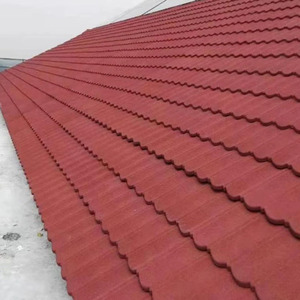

Procure fully certified roofing elements, structural purlins, and composite floor sections manufactured to exact European structural tolerances and marine-grade corrosion thresholds.
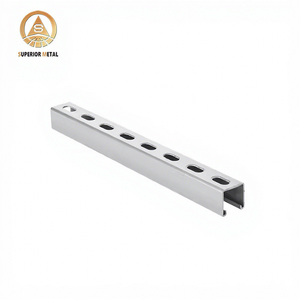
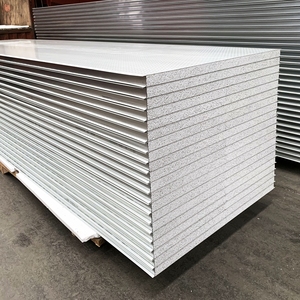
In modern industrial, commercial, and infrastructural architecture, the roof is not merely a weather shield—it is a dynamically reactive structural diaphragm. When sourcing from certified standing seam roof manufacturers, architectural engineers and commercial general contractors must demand verifiable compliance with European Harmonized Standards (EN 14782 for self-supporting metal sheets and EN 1090-1 for execution of steel structures). A standing seam profile's defining value lies in its concealed clip mechanical interlock, completely eliminating through-fastener penetrations that inevitably result in localized seal failure, micro-cracking, and thermal bridge losses.
Long continuous runs of metal cladding panels experience profound dimensional shifts dictated by diurnal thermal cycling. Aluminum alloys expand at approximately 24 × 10-6 K-1, while carbon steel expands at 12 × 10-6 K-1. On a 60-meter continuous standing seam run spanning an ambient swing of 45°C, a panel can expand and contract by up to 32 millimeters. Fixed through-fastener screws under such stress develop elongated slot fatigue, known in forensic facade engineering as "hole teardown."
CE-certified standing seam architecture addresses this through floating expansion sliding clips. The two-piece sliding base permits unrestricted axial sliding along the direction of thermal movement while preserving perpendicular uplift restraint. This mechanics protects the waterproofing seams from oil-canning and shearing forces across ambient operating ranges from -25°C to +85°C.
| Profile Category | Seam Height / Pitch | Minimum Pitch Slope | Uplift Resistance (EN 1991-1-4) | Recommended Commercial Applications |
|---|---|---|---|---|
| Double-Lock Mechanical Seam (360°) | 25mm / 38mm / 65mm | 0.5° (1:100) or 1.5° | High to Extreme (≥ 4.8 to 6.2 kPa) | Coastal hangars, chemical logistics, low-slope sports arenas, cyclonic zones. |
| Single-Lock Architectural Seam (90°) | 25mm / 32mm | 3.0° (1:20) | Moderate (≥ 2.6 to 3.5 kPa) | Commercial retail, steep-pitch institutional roofs, complex faceted facades. |
| Snap-Lock Concealed Fastener | 25mm / 38mm | 3.0° (1:20) | Moderate (≥ 2.2 to 3.2 kPa) | Distribution hubs, prefabricated modular buildings, commercial business parks. |
| Structural Trapezoidal Standing Seam | 65mm / 75mm | 1.0° (1:60) | Very High (≥ 5.0 to 7.0 kPa) | Heavy industrial facilities, long-span purlin spacing (up to 2.5m bays). |
When engineering roof durability in accordance with ISO 12944 (Corrosion Protection of Steel Structures), substrate chemistry is paramount. Unprotected cold-rolled sheets degrade rapidly in coastal environments. Our manufacturing lines implement three distinct continuous metallurgies:
Procurement teams for Tier-1 EPC projects are transitioning from simple unit pricing to whole-life carbon assessments, non-penetrating solar engineering, and digitized supply chains.
Commercial roof designs require integrated solar readiness. Modern procurement prioritizes standing seam trays designed for precision clamping blocks that hold PV modules without a single screw puncture, maintaining 100% manufacturer weatherproofing warranties.
Driven by the EU Corporate Sustainability Reporting Directive (CSRD), buyers require third-party audited Environmental Product Declarations (EPD). Demands center on Electric Arc Furnace (EAF) steel with ≥ 75% recycled scrap content to minimize Scope 3 carbon burdens.
To eliminate transverse lap joints on hyper-scale warehouse ridges exceeding 70 meters, global buyers increasingly mandate mobile containerized roll-formers delivered directly to job sites, roll-forming single unbroken panels from ridge to eave.
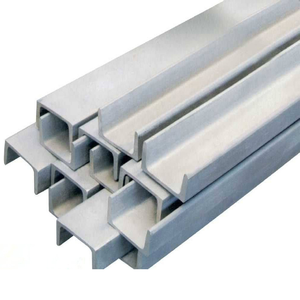
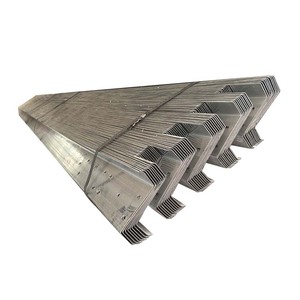
Leading project developers reject trading intermediaries, requiring direct mill verification with EN 1090-1 Factory Production Control (FPC) audit documentation and CE DoP (Declaration of Performance) for cold-formed C/Z secondary steel purlin packages.
Discover how progressive manufacturing lines integrate acoustic isolation, advanced polyisocyanurate formulations, and precision laser seaming.
Modern acoustic requirements for educational and pharmaceutical facilities integrate structured anti-drumming underlayments. By vulcanizing a high-density acoustic membrane beneath the metal tray, rain-induced sound transmission is damped by up to 14 dB across mid-frequencies.
Thermal bridging in standard metal roofing systems can degrade nominal U-values by 25% to 40%. The latest standing seam assemblies utilize structural glass-fiber reinforced polyamide thermal spacer halters, breaking thermal bridges between the cold-formed purlin and the exterior sheet.
Evolving past built-up site layers, leading manufacturing combines continuous insulated PIR/Rockwool sandwich core production with a factory-formed standing seam exterior skin. This enables single-pass installation while securing Euroclass B-s1,d0 or A1 non-combustible ratings.
Paneltech International LLC (PTI) operates an advanced manufacturing facility in Barka, Sultanate of Oman. Since 2009, our high-precision production delivers complete building envelopes for demanding regional environments.
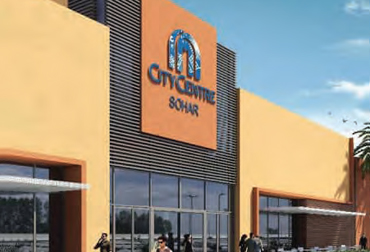 Commercial Retail Landmark
Engineered comprehensive structural roof profiles and insulated sandwich systems designed to maintain interior climate performance under desert thermal conditions exceeding 48°C ambient temperature.
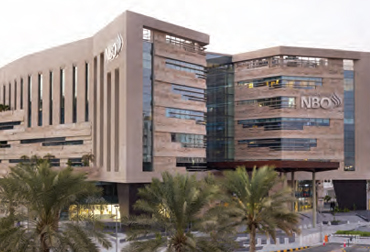 Financial Headquarters
Delivered high-precision structural secondary steel C & Z purlins, decking profiles, and architectural finishes fabricated to exact deflection limits and tight architectural tolerances.
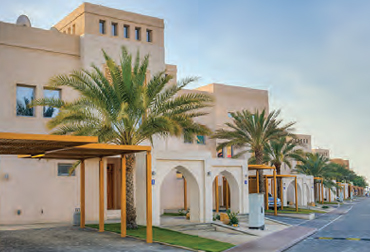 Masterplanned Residential
Provided complete weather-tight building envelope solutions, stone-coated systems, and insulated wall partitions engineered to meet coastal marine salinity challenges in Muscat.
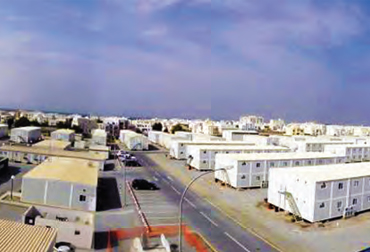 Aviation Infrastructure
Rapid prefabricated modular envelope deployment utilizing fast-track EPS and Rockwool panels to achieve acoustic insulation adjacent to major flight path zones.
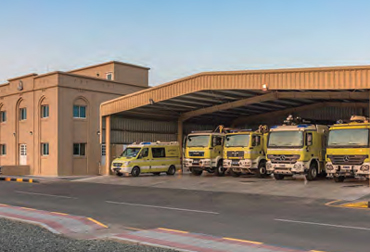 Government & Security
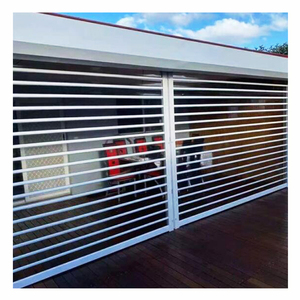
Manufactured heavy-duty cold-formed purlin steel substructures, corrugated protective sheeting, and secure galvanized perforated roller shutter systems adhering to state civil standards.
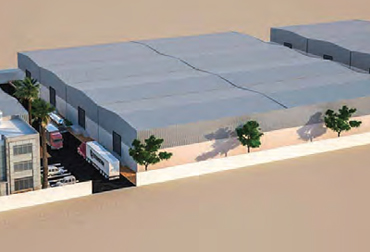 Industrial Contracting
Supplied wide-span structural decking, purlins, and industrial composite roof assemblies for heavy logistics hubs, providing uninterrupted factory floor space.
Critical structural, metallurgical, and certification queries addressed for procurement managers, structural consultants, and facade engineers.
External self-supporting metal sheets are certified under EN 14782, which verifies mechanical resistance, water permeability, air permeability, dimensional variations, and fire reaction performance. Structural secondary cold-formed members (C and Z purlins) are governed by EN 1090-1 and EN 1090-2 (Execution Class EXC2 or EXC3), requiring a third-party notified body to inspect Factory Production Control (FPC). Insulated sandwich systems must comply with EN 14509.
Oil-canning occurs when thermal expansion stresses are trapped by fixed fasteners, causing visible wave distortion along sheet flats. CE-compliant standing seam configurations deploy a two-piece slider clip. The base fastens into the structural purlin, while the tab interlocks inside the folded vertical seam, permitting up to 50mm of longitudinal float without creating transverse buckling stresses or pulling out fasteners.
Certified standing seam systems utilize CNC-machined anodized aluminum mounting clamps that grip the folded vertical seam mechanically via opposing set screws. The set screws compress the outer sheet folds against the inner vertical rib without puncturing the metal substrate. Uplift test data (ASTM E1592 / UL 580) confirms connection resistance exceeding 3.5 kN per clamp while safeguarding watertight integrity.
For locations within 5 km of an open coastline, standard 20µm polyester coatings degrade quickly. We specify a metallic substrate of ≥ 275 g/m² Hot-Dipped Galvanized or 150 g/m² 55% Aluminum-Zinc Alloy (AZ150), topped with a 50-micron high-build Polyurethane-Polyamide (PUR-PA) or a 25-micron 70% Polyvinylidene Fluoride (PVDF) coating system. This formulation surpasses 1,500 hours of continuous salt spray testing (ISO 9227).
Secondary purlin spacing (typically 1.2m to 1.8m centers) directly dictates roof tray wind uplift resistance. High-wind eaves and corner zones require reduced purlin centers or continuous multi-span nested Z-purlins with structural laps across portal frame rafters. Our Barka technical design team supplies complete structural deflection calculations compliant with Eurocode 3 (EN 1993-1-3) to eliminate flutter and unzipping.
Pre-profiled standing seam trays and composite panels are bundled with peelable UV-resistant co-extruded protective films, interleaved with moisture-resistant separators, and strapped with high-tensile composite banding onto custom timber skids. Crates are loaded into open-top or high-cube 40-foot shipping containers with reinforced corner blocking, preventing transit-induced edge distortion.
Collaborate directly with Paneltech International LLC's technical engineering team in Barka, Sultanate of Oman. Share your architectural drawings, required wind uplift values, and thermal ratings for a complete factory-direct proposal covering standing seam panels, purlins, and accessories.