
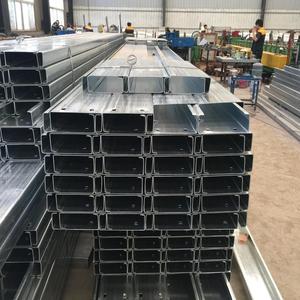
Direct from our advanced continuous roll-forming lines, explore our verified secondary framing components fabricated under stringent Factory Production Control (FPC) with standard hot-dip galvanizing, high tensile zinc-aluminum alloys, and customizable punching configurations.
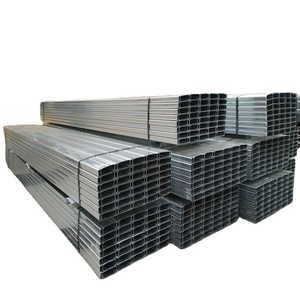
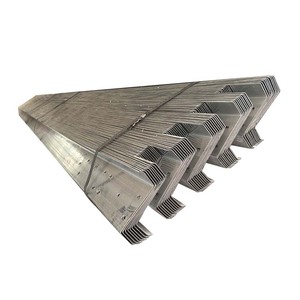
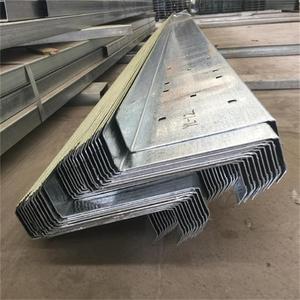
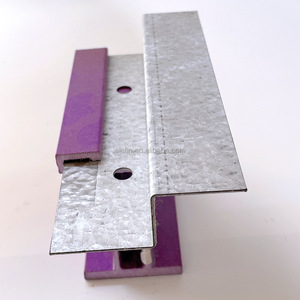
An in-depth structural overview detailing load path redistribution, torsional-flexural buckling resistance, Eurocode 3 compliance, and Factory Production Control protocols for modern building enclosures.
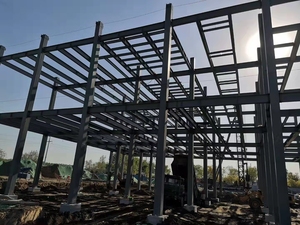
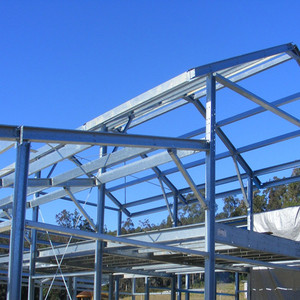
In structural steel engineering, secondary framing members—specifically horizontal wall girts and roof purlins—serve as the essential conduit transferring lateral wind loads, thermal reactions, and cladding dead weights onto the primary structural frames (portal frames, trusses, or multi-story structural columns). Under the mandatory European Construction Products Regulation (CPR 305/2011) and standard EN 1090-1 / EN 1090-2 (Execution of steel structures and aluminium structures), steel girts are load-bearing structural components requiring rigorous CE Declaration of Performance (DoP), comprehensive initial type testing, and verified Execution Class classification (typically EXC2 or EXC3 for high-consequence structures).
Designing an optimized building envelope requires a deep understanding of section symmetry and principal axes behavior. Cold-formed C-sections feature a singly-symmetric axis, positioning the shear center outward from the web. Consequently, transverse cladding loads not passing directly through the shear center induce simultaneous torsion and bending. In contrast, cold-formed Z-sections exhibit point symmetry, with their principal axes inclined relative to the web. When properly installed on perimeter wall frames, this inclination enables Z-sections to naturally counteract gravity dead loads while opposing suction wind forces.
| Structural Parameter | C-Section Girts (EN 1993-1-3) | Z-Section Girts (Continuous Lap) | Lysaght G450 Alternative Profiles |
|---|---|---|---|
| Primary Application | Simply supported wall spans, window headers, jambs, and door portals | Continuous multi-span perimeter cladding walls and large-span roofs | Heavy industrial warehouses, mining infrastructure, port logistics facilities |
| Bending Continuity | Single-span framing; requires structural bridging brackets at junctions | 10%–15% structural overlap creates rigid double-thickness moment continuity | Continuous nested splices over column cleats; minimizes mid-span deflection |
| Torsional Restraint | Requires sag rods or fly bracing when unbraced by exterior panels | High resistance to lateral-torsional buckling via panel diaphragm fasteners | Interlocking flange lips maintain structural stiffness under reverse cyclonic suction |
| Nominal Yield Strength | 350 – 450 N/mm² (S350GD / ASTM A653 Gr 50) | 350 – 500 N/mm² (S350GD / S450GD / S500GD) | ≥ 450 N/mm² (AS/NZS 4600 Grade G450 / AS 1397) |
| Coating Availability | Z140 – Z275 Hot-Dip Galvanized / Pre-painted | Z275, Z350, Z450, or Zn-Al-Mg (ZM310) Alloy | High-build Z350, Z450, or Al-Zn (AZ150) coating |
Cold-formed thin-gauge members are vulnerable to three distinct buckling modes under high wind velocities: local buckling (flange and web wrinkling), distortional buckling (flange-lip rotation around the web-flange junction), and global lateral-torsional buckling. Modern structural engineers calculate effective section properties using the Direct Strength Method (DSM) or effective width formulas outlined in Eurocode 3 Part 1-3.
To prevent façade cracking, water ingress through sandwich panel interlocking joints, or seal deterioration, serviceability limit states (SLS) mandate strict lateral deflection thresholds:
When sandwich panels or trapezoidal profile sheets are fastened directly to the exterior flange of C/Z girts at every crest or valley, the cladding functions as a rigid shear diaphragm. However, under high negative wind pressures (outward suction acting on perimeter corners and eaves), the inner, unfastened flange of the girt experiences compression. Without sag channels, fly braces, or bridging struts located at mid-span or third-points, the girt can buckle prematurely at just 42% of its theoretical section capacity. Paneltech International integrates automated web punching for anti-sag ties during continuous roll-forming, eliminating on-site cutting and drill-hole damage.
Established in 2009 in Barka, Sultanate of Oman, Paneltech International LLC provides a fully integrated building envelope manufacturing ecosystem—delivering cold-formed structural girts, insulated panels, and metal decking with complete single-source accountability.
We eliminate contractor finger-pointing by supplying the entire external envelope: CE-certified C/Z girts, PIR/PU/Rockwool insulated sandwich panels, corrugated cladding profiles, floor decking sheets, customized matching flashings, and industrial roller shutter doors fabricated in one centralized facility.
Our Barka manufacturing facility operates under rigorous ISO 9001, ISO 14001, and EN 1090-1 execution protocols. Every coil undergoes spectrographic chemical testing, tensile yield checks, zinc adhesion cross-hatch tests, and complete 3.1 Mill Test Certification per EN 10204.
Multi-stage computer-controlled cold roll-formers feature progressive tooling that minimizes residual bending stress in steel corners. In-line hydraulic punch banks punch slotted holes for column cleats, sag rods, and splice laps with a length tolerance of ±1.0mm, ensuring trouble-free site erection.
Located close to major Arabian Gulf and Indian Ocean maritime routes, we provide nested compact strapping, anti-friction wood dunnage, waterproof polyethylene wrapping, and corrosion-inhibitor interleaving. This allows maximum packing density in 40ft high-cube containers and breakbulk charters.
Our in-house technical department supports structural engineering consultants and steel detailers. We provide Tekla Structures components, Revit BIM families, member capacity tables, lap splice optimizations, and connection detailing tailored to local wind and seismic codes.
Our products have been installed on prominent regional landmarks including City Center Sohar, the National Bank of Oman Head Office, Royal Oman Police strategic hubs, airport infrastructure facilities, and extensive multi-span industrial logistics parks throughout Oman and the GCC.
Key technological shifts, decarbonization mandates, and engineering advancements transforming global steel framing procurement over the next decade.
Traditional hot-dip galvanizing (pure zinc) is rapidly being superseded by advanced ternary alloy coatings (Zn + 3.5% Al + 3.0% Mg). ZM coatings deliver up to four times higher corrosion protection in harsh industrial and marine C4/C5 environments. More importantly, ZM exhibits an active "self-healing" cut-edge passivation: when pierced, sheared, or slotted during roll-forming, magnesium hydroxide ions migrate across the exposed steel edge, preventing red rust formation without requiring manual cold galvanizing touch-ups on site.
With the European Union implementing the Carbon Border Adjustment Mechanism (CBAM) and global sustainability frameworks prioritizing Scope 3 emissions, corporate developers demand third-party verified Environmental Product Declarations (EPDs). Procuring cold-formed girts roll-formed from electric arc furnace (EAF) steel with high recycled content reduces the embodied carbon footprint by over 60% compared to traditional blast furnace (BF-BOF) steel coils.
As commercial energy conservation codes (ASHRAE 90.1, IECC, and European EPBD standards) enforce stricter overall wall envelope U-values, the thermal bridging of solid steel girts penetrating exterior insulation is heavily penalized. Future cold-forming lines utilize staggered micro-slotted webs in Z-profiles. These engineered air gaps reduce through-metal conductive heat transfer by up to 55%, allowing modular buildings to achieve strict insulation ratings with thinner sandwich panel cores.
The traditional workflow of 2D engineering drawings and manual fabrication shop tickets is giving way to direct BIM-to-Machine (BIM-CAM) workflows. Detailed 3D Tekla models export exact IFC and NC1 machine codes directly to the factory roll-former. Punch coordinates, cut lengths, ink-jet piece marking, and erection sequence grouping are handled automatically, eliminating human interpretation errors and cutting site assembly schedules by up to 25%.
Hot-rolled steel coil (HRC) commodities fluctuate significantly across London Metal Exchange (LME) and international indexes. Experienced procurement managers mitigate price volatility by executing quarterly index-linked contracts or partnering with integrated fabricators capable of holding raw master coil inventories. Sourcing directly from an established regional manufacturer like Paneltech International provides substantial buffer protection against fluctuating container freight rates, geopolitical shipping chokepoints, and raw material delivery bottlenecks.
Authoritative, practical guidance addressing structural standards, corrosion protection, connection methods, and international trade compliance.
Partner with a proven manufacturer established in 2009. From custom cold roll-forming and CNC slotted punching to integrated sandwich wall panels, we engineer complete building envelope packages delivered on schedule worldwide.