
Explore our export-certified architectural roofing materials, roll-formed substructures, insulated building envelope panels, and marine-grade safety systems designed for harsh climatic exposures.
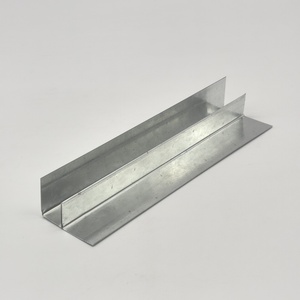
Continuous hot-dip galvanized cold-formed steel hat channels offering high structural rigidity, seismic stability, and custom dimensional tolerances for modern roofing substructures.
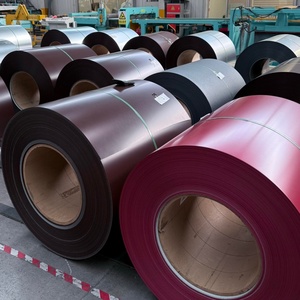
Premium 55% Aluminum-Zinc alloy coated coil with Kynar 500 PVDF fluoropolymer paint. Engineered for roll-forming trapezoidal roofing sheets with extreme UV and chalking resistance.
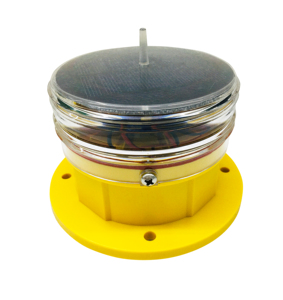
Self-charging IP67 waterproof 2NM optical beacon designed for coastal port installations, metal roof clearance signaling, industrial barge terminals, and marine safety perimeters.
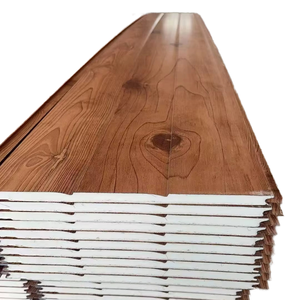
High-density Polyurethane/PIR composite panels faced with prepainted Galvalume skins. Superior U-value performance for commercial cold-chain facilities, logistics hubs, and cleanrooms.
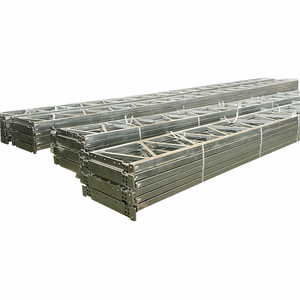
Heavy-duty structural roof framing fabricated from high-tensile steel, hot-dip zinc treated to ISO 1461 standards. Ideal for aircraft hangars, expansive distribution centers, and stadiums.
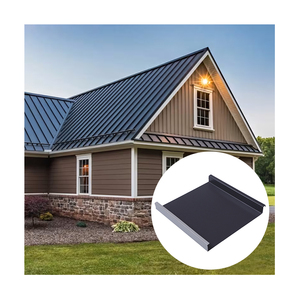
Concealed clip standing seam architectural profile offering continuous weather integrity, expansion-contraction compensation, and seamless geometric adaptation for iconic roofs.
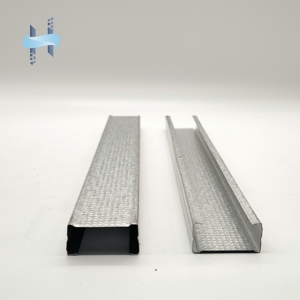
Precision roll-formed ceiling suspension battens engineered with knurled surface treatment for slip-resistant mechanical screw fastening in industrial interiors and marine terminals.
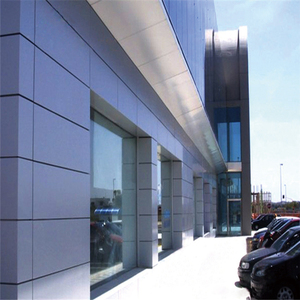
Heavy-commercial exterior cladding combining rigid mineral fire-resistant cores with fluoropolymer-coated skin foils, guaranteeing color retention and extreme flatness over multi-decade lifespans.
A rigorous examination of dendritic microstructure, electrochemical passive barriers, and long-term atmospheric durability compared to legacy zinc galvanizing systems.
How international steel price hedging, supply chain decarbonization, carbon border adjustments, and modular pre-engineered buildings are rewriting procurement strategies.
The European Union's Carbon Border Adjustment Mechanism (CBAM) and global Scope 1-3 environmental metrics are forcing EPC contractors to prioritize mills with Electric Arc Furnace (EAF) pathways or hydrogen-reduced Direct Reduced Iron (DRI). Tier-1 Chinese exporters are publishing mill-specific Environmental Product Declarations (EPDs) to prevent heavy carbon tariffs at European, Australian, and North American import ports.
Global procurement teams are moving away from piecemeal spot purchases. The leading strategy relies on consolidated building envelope procurement packages—bundling high-yield Galvalume trapezoidal sheets with cold-formed structural Z/C purlins, matching composite floor decking, and factory-assembled sandwich panels into coordinated breakbulk or 40-foot HQ container movements directly from Chinese ports.
Rapid industrialization across the GCC (Saudi Arabia Vision 2030, UAE logistics hubs), Southeast Asia, and Latin America has increased demand for custom-sheared, high-yield base steels (Grade 50 / Grade 80, 345 MPa to 550 MPa yield strength). Procurement contracts increasingly stipulate strict mill thickness tolerances of ±0.02mm to maximize roll-forming yields and profile structural compliance.
Continuous line innovations including chromate-free passivations, dynamic induction annealing, and multi-layer fluoropolymer coil applications.
Environmental standards (RoHS and REACH) have driven the adoption of non-toxic thin organic coatings (TOC) and Cr-free Anti-Fingerprint (AFP) resins. Applied via chemical coater rollers directly behind the galvanizing quench, this 1-2 micrometer polymeric barrier suppresses coil storage staining, prevents moisture black-spotting during ocean freight, and improves dry roll-forming slip without lubricant oils.
For architectural facades and trapezoidal roofs subjected to severe equatorial ultraviolet radiation, Chinese coating lines use 70% Kynar 500 / Hylar 5000 Polyvinylidene Fluoride (PVDF) and Silicone-Modified Polyester (SMP). These multi-layer paint configurations incorporate cool-roof ceramic infrared reflective pigments that keep roof surface temperatures up to 18°C cooler, lowering interior cooling loads.
Modern continuous coating lines use 4-roll skin pass mills combined with multi-roll tension levelers. By introducing controlled 0.5% to 1.8% plastic elongation, the processed strip achieves a uniform, spangle-minimized surface finish with near-zero residual stress, preventing oil-canning, edge-wave distortion, and fluting during severe down-gauge trapezoidal roll forming.
Combining primary steelmaking access, automated slitting facilities, certified QA/QC protocols, and dedicated global project support.
From molten steel substrate pickling and continuous cold-reduction tandem lines to dual-pot Galvalume hot-dipping and precision multi-rib roll formers, our integrated workflow eliminates intermediary margins and ensures tight quality control.
Every production heat undergoes automated inline eddy-current testing, optical emission spectroscopy (OES), 2,000-hour neutral salt spray (ASTM B117) validation, and 180° zero-T bend adhesion tests documented on formal Mill Test Certificates (MTC EN 10204 3.1).
Export coils and bundled profiled sheets are secured using multi-layer waterproof plastic film, anti-rust VCI vapor-phase paper, galvanized metallic outer and inner perimeter edge-corner protectors, and high-tensile radial steel strapping on treated wooden pallets.
In addition to Galvalume coils and profiles, we produce matching structural cold-formed C/Z purlins, galvanized composite metal floor decking, PU/PIR thermal insulated sandwich panels, aluminum standing seam panels, and architectural flashings.
Authoritative technical answers to common queries from structural engineers, project specifiers, and procurement managers.
Standard Galvanized steel (GI) relies on a nearly 100% pure zinc coating layer, which protects steel exclusively via sacrificial galvanic action. Galvalume (GL), in contrast, utilizes an alloy bath of 55% Aluminum, 43.4% Zinc, and 1.6% Silicon. The aluminum creates a continuous microscopic oxide barrier that resists oxidation and thermal breakdown, while the zinc prevents edge rust. In comparative ASTM B117 neutral salt spray trials and field atmospheric exposures, Galvalume demonstrates two to four times the lifespan of galvanized steel of equivalent coating thickness.
When Galvalume sheets are sheared or cut on site, the exposed steel core is in direct contact with the atmosphere. In the presence of moisture and ambient electrolytes, the zinc present in the surrounding zinc-rich interdendritic channels oxidizes preferentially, creating a protective patina of zinc hydroxychloride and complex aluminum-zinc compounds that migrate over the exposed edge. This galvanic bridge passivates the cut edge, suppressing deep creep rust and red oxide pitting.
Galvalume should not be placed in direct, uninsulated contact with wet mortar, uncured concrete, or agricultural livestock facilities containing high concentrations of wet animal waste and concentrated ammonia. Alkalis aggressively attack the amphoteric aluminum oxide film. For concrete floor connections, flashings must be separated by an asphaltic membrane or heavy polymer barrier. For livestock buildings, specialized high-build barrier paints or Zinc-Aluminum-Magnesium (ZAM) coatings are recommended.
Fastener compatibility is critical. Standard electro-galvanized carbon steel screws will corrode prematurely when paired with Galvalume, causing cosmetic rust staining and hole enlargement. Specifiers must mandate Austenitic 304 or 316 Stainless Steel bi-metal self-drilling screws or Class 4 coated alloy fasteners equipped with UV-stabilized, non-conductive, non-carbon EPDM sealing washers. Never use lead-headed nails or graphite-bearing neoprene washers.
For standard inland suburban and light commercial developments, an AZ150 coating weight (150 g/m² total both sides) is the global benchmark. For severe coastal microclimates (within 1 to 5 kilometers of breaking surf) or areas adjacent to chemical processing, we recommend an AZ180 or AZ200 designation, supplemented by a factory-applied 25/5-micrometer high-build Polyvinylidene Fluoride (PVDF) topcoat and polyurethane-modified primer to seal the surface against chloride intrusion.
Authentic Galvalume possesses a distinctive, finely distributed crystalline spangle pattern. Mechanical inspection should include portable electromagnetic coating thickness gauges calibrated according to ASTM A792 procedures. Additionally, inspect the ink-jet marking on the reverse of the sheet, which should indicate the coil number, steel grade, coating mass (e.g., AZ150), and standards compliance. Every shipment is accompanied by a certified EN 10204 3.1 Mill Test Certificate linking chemical composition directly to the coil ID.
Speak with our metallurgical and structural engineering export specialists to obtain tailored project quotes, CAD layout reviews, and third-party verified Mill Test Certificates.