
A precision-matched portfolio of architectural ridge flashings, structural cold-formed profiles, composite decking, and advanced insulated sandwich panels manufactured to ISO 9001 and ASTM benchmarks.
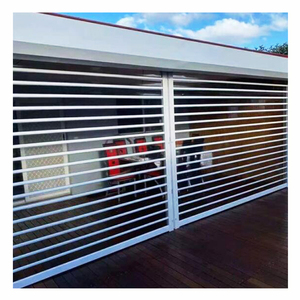
Cold-rolled micro-perforated steel security curtains providing 22% natural airflow, high impact resistance, and weather-sealed industrial plant protection.
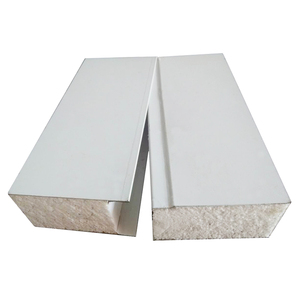
Composite thermal insulation panels featuring high-density flame-retardant EPS/PU cores bonded to anti-corrosive FRP or galvanized facing sheets.
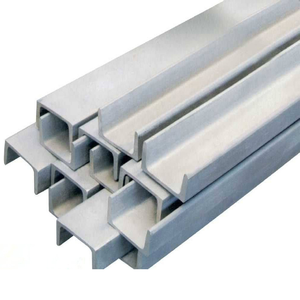
Continuous roll-formed high-tensile structural C and Z secondary framing members engineered to support ridge cap apex loads and heavy roofing spans.
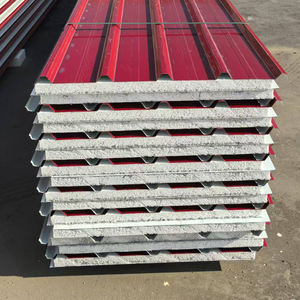
Superior joint interlock panels designed for weather-tight apex integration with ridge caps, delivering exceptional U-values and condensation control.
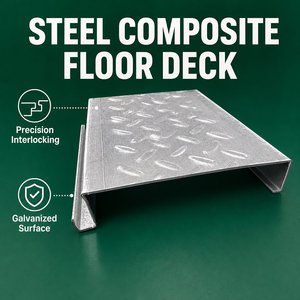
Z275 zinc-coated structural decking offering permanent formwork and composite slab action for multi-tier industrial mezzanine platforms.
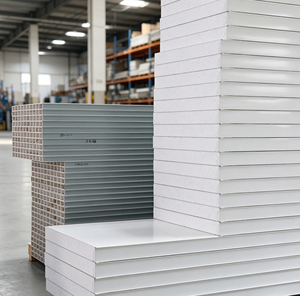
Aseptic, non-dusting partition panels engineered for pharmaceutical and clean manufacturing cleanrooms requiring high acoustic dampening.
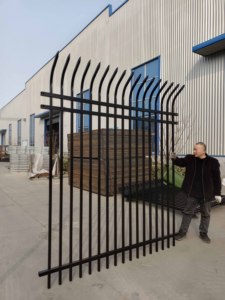
Heavy-gauge tubular steel security fencing with multi-layer thermoset architectural powder coating for extended external salt-air protection.
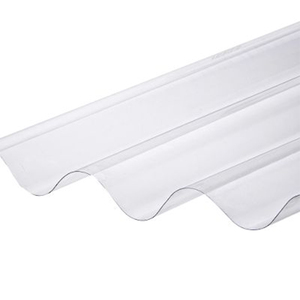
Shatterproof fiberglass reinforced polymer (FRP) translucent sheets calibrated to match metal roof corrugated profiles for optimal ambient daylighting.
In double-pitch pre-engineered metal buildings (PEB), the roof ridge cap serves as the critical junction preventing wind-driven capillary infiltration, accommodating thermal cycling, and resisting peak negative pressure uplift forces.
Roof ridge caps endure extreme UV radiation, severe cyclic thermal expansion, and concentrated airborne chlorides. As a premier China manufacturer, our production incorporates 55% Aluminum-Zinc alloy coated Galvalume (ASTM A792 AZ150) and cutting-edge Zinc-Aluminum-Magnesium (ZAM®) substrates. ZAM alloys form a dense, crystalline Simonkolleite passivation layer that exhibits automated cut-edge self-healing properties, dramatically mitigating corrosion along sheared fastener edges in coastal environments.
Industrial facility engineering dictates precise ridge geometry. Ventilated ridge capping systems utilize external wind-baffles to generate a localized Bernoulli low-pressure vortex that draws warm, moisture-laden air out of the building envelope without allowing driving rains to penetrate. For high-humidity refrigerated warehouses or cleanrooms, non-ventilated continuous ridge caps paired with closed-cell cross-linked polyethylene (XLPE) contoured foam closures provide an airtight, water-impermeable seal.
During severe atmospheric windstorms, the apex zone of a pitched roof experiences the highest negative static pressure (suction) according to ASCE 7-22 Zone 3 guidelines. Ridge flashings engineered with structural hemmed drip edges, heavy-gauge saddle brackets, and staggered carbon steel EPDM-washered stitching fasteners prevent fastener tear-through and flutter fatigue under sustained cyclical gusts exceeding 240 km/h.
| Alloy Substrate Specification | Protective Coating Mass | Yield Strength (MPa) | Recommended Coating Chemistry | Atmospheric Durability Category | Typical Industrial Application |
|---|---|---|---|---|---|
| Galvalume (GL) AZ150 | 150 g/m² (55% Al-Zn) | 350 - 550 MPa | PVDF / Kynar 500 (70/30) | ISO 12944 C3 - C4 | Logistics Warehouses, Manufacturing Hubs |
| Super ZAM® Alloy | 180 - 275 g/m² (Zn-Al-Mg) | 380 - 550 MPa | High-Durability Polyester (HDP) | ISO 12944 C4 - C5 (Industrial Marine) | Chemical Processing, Port Storage, Agricultural Sheds |
| Hot-Dip Galvanized (HDG) | Z275 (275 g/m² Pure Zn) | 250 - 350 MPa | Silicon Modified Polyester (SMP) | ISO 12944 C2 - C3 | Standard Pre-Engineered Steel Sheds, Workshops |
| Architectural Aluminum 3004 | Uncoated / Coil Coated | 180 - 240 MPa | FEVE Fluoropolymer | ISO 12944 C5-M (Marine Coastal) | Offshore Facilities, High-Saline Coastal Enclosures |
Global supply chain dynamics, regional carbon border taxes, and high-speed automated roll-forming are redefining how international procurement managers source metal flashing and roofing systems.
Procuring ridge caps separately from roof sandwich panels, daylighting FRP sheets, and cold-formed C/Z purlins introduces serious site risks: color mismatches, profile angle discrepancies, and split warranty disputes. The leading procurement trend among tier-1 general contractors is turnkey package sourcing. By purchasing the apex flashings, roof sheets, purlins, fasteners, and gutter assemblies from a single verified Chinese manufacturer, buyers eliminate fit-up rework, synchronize site deliveries, and consolidate customs clearances under unified Harmonized Tariff Schedule (HTS) codes.
Traditional galvanized flashings (Z120 to Z200) are rapidly being decommissioned in international specifications in favor of Zinc-Aluminum-Magnesium (ZAM) coatings. In standard atmospheric tests, ZAM displays 5 to 8 times superior corrosion resistance relative to standard galvanization. Procurement directors are securing 20- to 30-year operational life cycles for coastal port facilities and poultry farms by specifying ZAM ridge flashings, cutting life-cycle maintenance expenditure by over 45% compared to frequent repainting or early replacement cycles.
Legacy manual hydraulic press brake bending methods frequently cause angular variance (+/- 3 degrees) across 6-meter flashing lengths, creating gaps at panel ribs where water leaks under wind pressure. Advanced suppliers now operate fully synchronized continuous roll-forming lines paired with servo-controlled multi-station dies. This ensures precision angle matching (0.5-degree tolerance), consistent hem widths, and factory-applied peelable UV-resistant protective films that guarantee rapid, defect-free site assembly.
Operating dedicated production lines since 2009, our facility delivers end-to-end engineering excellence, rigorous metallographic laboratory verification, and unmatched global container logistics.
Our Barka and Chinese modern facilities run 16 continuous forming lines capable of producing standard arched, cranked, notched, and high-pitch custom ridge caps up to 12 meters continuously.
Every steel master coil undergoes 100% mechanical verification: 1,000-hr Salt Spray (ASTM B117), MEK Rub Resistance (ASTM D5402), and T-Bend Flexibility (ASTM D4145) to ensure zero micro-cracking.
We supply the complete structural envelope: insulated PIR/PU/Rockwool panels, composite floor decking, C/Z purlins, and translucent skylights, ensuring seamless cross-product dimensional alignment.
All flashings are inter-leafed with protective micro-foam, wrapped in waterproof synthetic kraft paper, and bundled inside custom steel-frame export crates that prevent transit deformations.
Continuous evolution in renewable energy integration, sound attenuation, and pre-engineered robotics is transforming how ridge caps function within the broader building envelope.
Building Integrated Photovoltaics (BIPV) is becoming standard on large logistics roofs. Next-generation ridge caps are being manufactured with dual-chamber structural conduit paths. These allow high-voltage DC string cables from roof solar panels to route cleanly through the apex protected from weather and bird damage, eliminating the need to pierce the roofing membrane with external conduit brackets.
Site installation labor represents an escalating portion of total building envelope construction costs. Emerging ridge cap roll profiles now incorporate pre-formed micro-recesses along both flanges equipped with factory-extruded synthetic butyl sealant tape covered by an easy-pull release liner. This eliminates manual mastic application on windy roofs, speeds up apex installation by 35%, and guarantees 100% sealant continuity across every corrugation crest.
Heavy rainfall on wide-throat metal ridge caps causes disruptive drumming noise inside pre-engineered facilities. Innovations in acoustic ridge design integrate micro-perforated lower baffle plates combined with hydrophobic acoustic mineral wool battens. This composite barrier achieves high noise reduction coefficients (NRC 0.70) while maintaining continuous attic ventilation and smoke exhaust capability.
In-depth, technically authoritative answers addressing design standards, metallurgy, installation procedures, and shipping logistics.
For standard industrial warehouses with roof purlin spans between 1.2m and 1.5m, the recommended minimum nominal thickness for Galvalume (AZ150) or galvanized (Z275) ridge flashings is 0.50mm to 0.60mm (26 to 24 Gauge). For severe wind zones (ASCE 7-22 design wind speeds exceeding 200 km/h) or coastal environments subject to cyclic storm buffeting, specifying 0.70mm to 0.80mm (22 Gauge) is essential to prevent fastener hole elongation and edge flutter fatigue.
Galvalume consists of an alloy coating of 55% Aluminum, 43.4% Zinc, and 1.6% Silicon by weight. In general industrial atmospheres, Galvalume delivers 2 to 4 times longer barrier protection than traditional Z275 galvanized steel because the aluminum component forms an inert aluminum oxide film. However, in environments with high ammonia concentrations (such as agricultural livestock facilities) or high continuous salt spray without rain washing, Zinc-Aluminum-Magnesium (ZAM) or heavy Z275 with thick PVDF coating is technically superior, as basic zinc-aluminum-magnesium salts prevent premature pitting.
Steel exhibits a thermal expansion coefficient of approximately 12 x 10⁻⁶ m/(m·K). On an 80-meter long pre-engineered roof experiencing a 50°C diurnal temperature swing, total envelope thermal shift exceeds 48mm. To prevent oil-canning and fastener shearing, ridge caps should be installed in modular lengths (typically 3 to 6 meters) with minimum 150mm laps. The laps must be sealed with two parallel beads of non-skinning butyl mastic and secured with self-drilling stitch screws inserted through slotted guide holes or using expansion slip joints every 24 meters.
Ventilated ridge caps are mandatory in uninsulated or single-skin pre-engineered buildings where warm air, moisture, and chemical vapors must exit naturally to eliminate condensation under the roof sheeting. Non-ventilated ridge caps are required in fully climate-controlled structures, cold storage facilities, cleanrooms, and buildings utilizing high-performance PIR/PU/Rockwool sandwich panels. In these structures, maintaining airtight building envelope integrity (blower-door test compliance) is critical to prevent thermal bridging and refrigeration system overload.
Yes. Our automated manufacturing utilizes precision digital profile contour gauges and CNC computerized slitting lines. We produce profile-notched ridge caps where the lower apron flanges are machine-stamped with the exact reverse silhouette of your roof's trapezoidal ribs (e.g., matching standard 35-130-780, 25-205-820, or custom sandwich panel rib layouts). Color finishes are precisely matched to RAL standard palettes using PPG, Beckers, or AkzoNobel PVDF, SMP, or Super-Durable Polyester paint formulations.
Export flashings are subjected to dynamic acceleration and vibration during maritime transit. Our packing protocol requires applying a 50-micron peelable protective polyethylene surface film to every single piece, interleaving layers with micro-foam cushioning, stacking units in nested batches of 25-50 pieces, strapping with plastic tension bands, and boxing the entire load inside welded heavy-gauge galvanized steel transport frames lined with moisture-barrier corrugated wrapping. This guarantees zero edge curling or finish abrasion.
Direct factory supply of Galvalume and ZAM ridge flashings, structural C/Z purlins, PIR sandwich panels, composite decking, and FRP skylights. Receive comprehensive project shop drawings, wind uplift calculations, and custom container-load consolidation proposals within 24 hours.