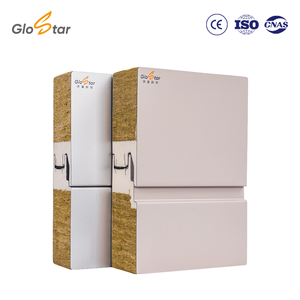
75mm PU Sealed Rock Wool Cladding Panel A1 Fireproof V-Groove 3D Effect External Wall System for Hotel Building
- Core: High-density basalt wool (120 kg/m³)
- Edges: Polyurethane closed-cell vapor barrier
- Aesthetics: Architectural V-groove shadow line

Designed for industrial complexes, cold logistics chains, commercial towers, and institutional projects requiring strict Euroclass A1/A2 or ASTM E84 Class A fire safety.
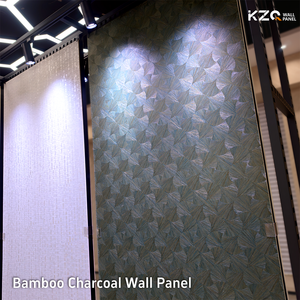
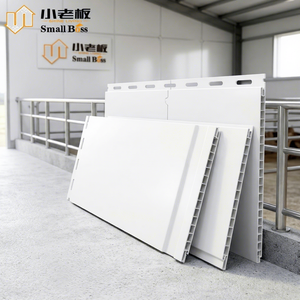
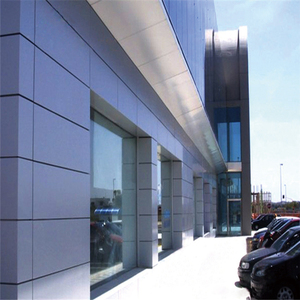
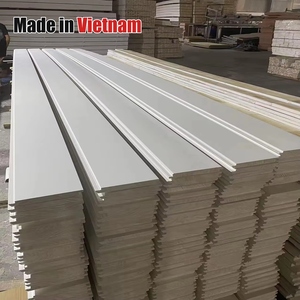
Since 2009, operating out of Barka, Sultanate of Oman, Paneltech International LLC (PTI) has engineered advanced building envelope solutions. Unlike pure trading exporters, we operate high-speed automated continuous roll-forming lines, computerized PU/PIR foaming stations, and heavy-duty structural purlin cold-forming mills.
Our Barka manufacturing complex eliminates sub-tier contractor margins. By integrating uncoiling, corona pre-treatment, precision roll forming, PUR/PIR high-pressure injection, and mineral fiber vertical reorientation in one continuous plant, we guarantee micron-level dimensional tolerances and on-schedule shipping.
Engineering specifications require verifiable validation. Our systems hold extensive international testing credentials, including Euroclass EN 13501-1 (A1 and B-s1, d0), ASTM E119 fire endurance up to 120 minutes, and ASTM E84 Class A flame spread ratings, supported by third-party mill test certificates (MTC).
Procuring isolated panels creates perimeter mismatch risks. We manufacture the complete structural integration: matching insulated roof panels, corrugated single-skin sheets, galvanized floor decking sheets, cold-formed Z & C purlins, matching color flashings, and heavy-duty industrial roller shutters.
We tailor skin thicknesses from 0.40mm to 0.90mm in Galvalume (AZ150), Hot-Dipped Galvanized (Z275), or Marine-Grade Aluminum (AA3003/AA5005). Paint systems include PVDF 70% Kynar 500, High-Durability Polyester (HDP), and Plastisol coatings designed to withstand severe desert UV or coastal salinity.
Evaluating insulating cores under combined thermal stress, structural wind-uplift pressures, and standardized furnace time-temperature curves according to ISO 834, ASTM E119, and EN 1363-1.
| Insulation Core Type | Reaction to Fire (EN 13501-1) | Fire Resistance Rating | Thermal Conductivity (λ) | Density Range | Acoustic Insulation (Rw) | Optimal Structural Application |
|---|---|---|---|---|---|---|
| Structural Basalt Rock Wool | Euroclass A1 Non-Combustible | EI 60 – EI 240 (Up to 4 Hrs) | 0.038 - 0.042 W/m·K | 100 - 140 kg/m³ | 32 - 36 dB | Fire separation walls, power plants, petrochemical units, high-occupancy public venues |
| PIR Edge-Sealed Rock Wool | Euroclass A2-s1, d0 | EI 60 – EI 120 | 0.032 - 0.036 W/m·K | 110 - 130 kg/m³ | 30 - 34 dB | Commercial exterior facades requiring premium airtightness without moisture absorption |
| Polyisocyanurate (High-Index PIR) | Euroclass B-s1, d0 / Class 1 | EI 15 – EI 45 | 0.020 - 0.023 W/m·K | 40 - 45 kg/m³ | 24 - 27 dB | Cold storage freezers, pharmaceutical cleanrooms, temperature-controlled distribution hubs |
| Architectural Mineral-Filled ACM | Euroclass A2 / ASTM E84 Class A | Pass NFPA 285 Full Scale | 0.150 - 0.220 W/m·K | 1600 - 1850 kg/m³ | 26 - 30 dB | High-rise curtain wall spandrels, ventilated rainscreens, aerodynamic airport canopies |
| Co-Extruded Bamboo Composite | GB 8624 B1 / Class B | Flame Retardant (Self-Extinguishing) | 0.080 - 0.120 W/m·K | 850 - 950 kg/m³ | 28 - 32 dB | Commercial office acoustic partitions, luxury hospitality lobbies, healthcare wall linings |
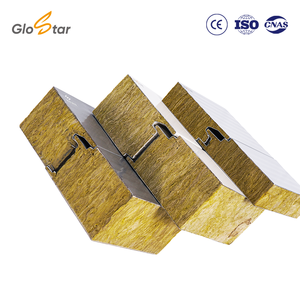
Standard mineral wool insulation possesses stratified horizontal planes susceptible to internal splitting under thermal shock. In our advanced automated lamination line, the cured rock wool slabs are dynamically slit into longitudinal strips (lamellas) and turned 90 degrees so that the fibers stand perpendicular to the steel facings. This fiber orientation elevates tensile bonding strength above 0.12 MPa and compressive resistance past 0.15 MPa, preventing delamination during positive-to-negative wind pressure reversals.
Wall envelope degradation rarely originates in the panel body; failure occurs at the tongue-and-groove interface. Our cold-rolled female-male interlocking joint profile incorporates an integrated capillary break, concealed fastening screws, and factory-injected continuous non-setting butyl mastic. Under differential building movement and torrential driving rain, this joint eliminates thermal bridging while maintaining Class 4 air permeability and Class 9A water tightness under EN 12155.
Where high thermal resistance (λ = 0.022 W/m·K) is non-negotiable, ordinary polyurethane (PUR) presents combustibility concerns. Our chemical blending system utilizes an Isocyanate Index (≥ 250) producing a heavily crosslinked polyisocyanurate (PIR) molecular network. When exposed to flames exceeding 400°C, PIR undergoes surface carbonization, forming a coherent, low-conductivity vitreous char barrier that halts oxygen penetration and stops interior thermal runaway.
Procurement directors and commercial developers must account for seismic shifts in building code compliance, carbon taxation, modular construction techniques, and global freight strategies.
Global insurance underwriters and municipal building regulators have moved beyond bench-scale combustibility testing (such as ASTM E84). Multi-story commercial building specifications now mandate full-scale multi-story assembly certifications—such as NFPA 285 and BS 8414. Sourcing strategies focus exclusively on OEM exporters whose wall systems demonstrate zero vertical or lateral flame propagation across cavity barriers.
Under European CBAM (Carbon Border Adjustment Mechanism) and LEED v4.1 frameworks, importers must document the cradle-to-gate carbon intensity of building panels. OEM factories are responding by utilizing scrap-recycled green steel coils, hydro-powered mineral fiber melting cups, and blowing agents with zero Ozone Depletion Potential (ODP) and Global Warming Potential (GWP) < 1.
Soaring on-site labor rates in North America, Europe, and GCC territories have made speed of erection the defining KPI. Large-format composite wall panels manufactured to millimeter-precise tolerances with integrated lifting sockets, prefabricated corner elements, and factory-installed gaskets allow installation crews to enclose up to 1,200 m² of exterior envelope per shift.
Projects located in aggressive industrial zones or within 1 km of maritime coastlines are turning away from basic polyester coatings. Current OEM procurement favors Super-Durable Polyesters (SDR), Polyvinylidene Fluoride (PVDF 70/30), and zinc-aluminum-magnesium alloy substrates (ZM Evolution / ZAM) that deliver up to 30 years of corrosion resistance under severe C5-M marine exposure.
To hedge against steep shipping surcharges and anti-dumping tariffs, international EPC developers are diversifying supply networks away from single-source hubs. Manufacturing centers situated along strategic sea-lanes—such as Barka, Sultanate of Oman—provide tariff-advantaged freight logistics into GCC, African, European, and North American distribution ports.
Detailed technical answers to common queries encountered during the structural design, material qualification, factory audit, and container packing stages.
Whether you require structural U-value optimization, ASTM/EN fire certification documentation, or custom OEM production for upcoming commercial or industrial tenders, our senior technical engineering team is ready to assist.