
Direct-from-factory prefabricated components, insulated partitions, structural channels, and access barriers manufactured to exacting geometric tolerances for industrial clean zones, pharmaceutical plants, and specialized enclosures.
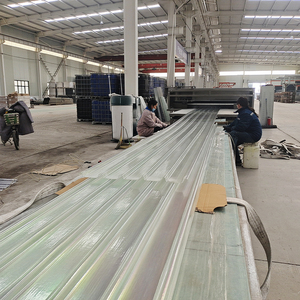
High-durability fiberglass-reinforced polymer translucent sheeting engineered with anti-UV surface resin, delivering diffuse cleanroom daylighting, chemical splash resistance, and seamless roof profile compatibility.
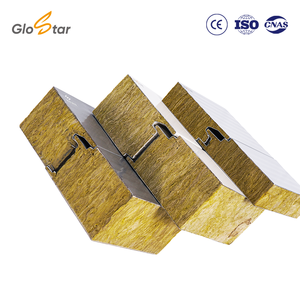
High-density structural basalt mineral wool core encased in micro-ribbed or flush galvanized steel, ensuring non-combustible A1 fire-barrier performance, acoustic attenuation, and zero smoke generation.
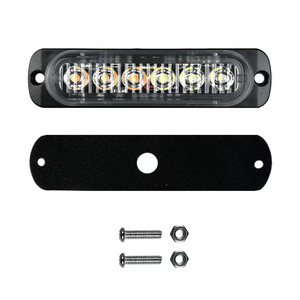
Ultra-bright multi-voltage LED perimeter strobe indication module for facility safety monitoring, logistics bay warnings, and cleanroom airlock interlock status signaling.
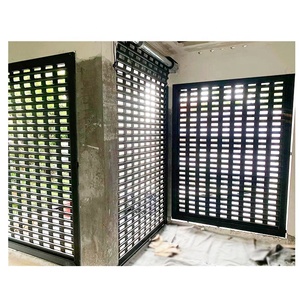
Precision-formed perforated steel rolling shutter assemblies providing balanced ventilation, physical barrier protection, and secure segregation between production halls and staging corridors.
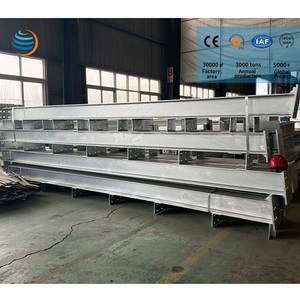
Engineered structural steel framing optimized to carry walkable cleanroom ceiling systems, interstitial technical service walk-plenums, and high-volume fan filter units (FFU).
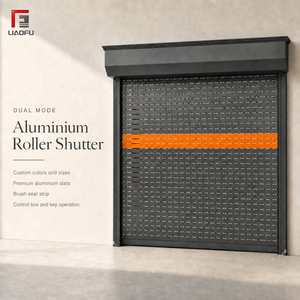
Corrosion-resistant anodized and powder-coated extruded aluminum roller closures with airtight brush seals, suitable for high-frequency cleanroom logistics locks and warehouse separation.
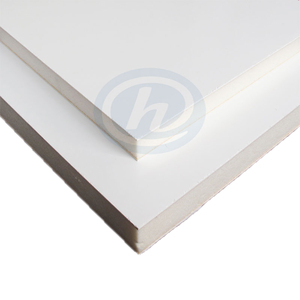
Seamless isophthalic gel-coat GRP composite panels with high chemical resistance, impervious to intensive sporicidal washdown, VHP sterilization, and extreme biological contaminants.
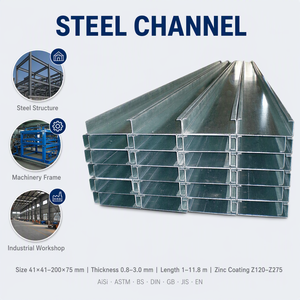
Cold-formed galvanized steel floor tracks, ceiling hangers, and wall base U-channels designed to maintain plumb stability and strict structural alignment across massive cleanroom partitions.
Selection of insulated core chemistry directly governs flame propagation, particulate outgassing, structural span limits, and thermal conductivity under ISO 14644 and cGMP validation protocols.
| Core Material Formulation | Density (kg/m³) | Thermal Conductivity (W/m·K) | Fire Classification (EN 13501-1 / ASTM E84) | Aseptic Washdown Rigidity | Recommended Cleanroom Application |
|---|---|---|---|---|---|
| PIR (Polyisocyanurate Foam) | 40 – 45 kg/m³ | 0.020 – 0.022 | B-s1, d0 / Class A | High Structural Resilience | Cold Rooms, High-Throughput Bio-Pharma, Vaccine Filling Suites |
| High-Density Rock Wool (Mineral Wool) | 100 – 140 kg/m³ | 0.038 – 0.044 | A1 Non-Combustible | Acoustic & Fire Barrier | Hazardous Chemistry Labs, Battery Production, API Synthesis Lines |
| Micro-Perforated Aluminum Honeycomb | 50 – 75 kg/m³ | 0.055 – 0.065 | A2-s1, d0 Non-Combustible | Ultra-High Modulus / Zero Sag | Semiconductor Fabs (ISO 1 to 4), Microelectronics, Nanotech Optics |
| Rigid PU (Polyurethane Foam) | 38 – 42 kg/m³ | 0.022 – 0.024 | B2 / B3 Class | Optimal Cost/Thermal Ratio | Medical Device Assembly, Nutraceutical Packaging (ISO 7–8) |
| MGO Glass Magnesium Board Core | 850 – 1050 kg/m³ | 0.14 – 0.18 | A1 Structural Barrier | Impact & Blast Resistant | High-Traffic Airlocks, Heavy Machine Walkways, Hospital OR Suites |
*All core formulations can be custom-bonded via two-component thermosetting polyurethane adhesives in our continuous high-speed hot-press laminating production line in Barka, Oman.
Since our establishment in 2009 in Barka, Sultanate of Oman, Paneltech International LLC (PTI) has built an integrated manufacturing footprint delivering high-precision sandwich panels, structural cold-formed purlins, and specialized architectural systems for landmark infrastructure across the Middle East, Africa, and global territories.
Our manufacturing facility features modern continuous sandwich panel production lines, combining automated decoiling, precision roll-forming, high-pressure polyurethane/PIR chemical metering, and automated cross-cutting up to 15-meter lengths.
From metallurgical testing of hot-dipped galvanized and stainless coils to internal tensile adhesion and compressive strength tests (ASTM C273 / EN 14509), our factory maintains audited ISO 9001, ISO 14001, and ISO 45001 workflows.
Beyond partition panels, we fabricate cold-formed structural Z & C purlins, metal floor decking, matching flashings, translucent daylighting assemblies, and industrial roller shutters for unified, single-source procurement.
Our envelope systems are proven on critical civil, defense, and healthcare landmarks including City Center Sohar, the National Bank of Oman Head Office, Royal Oman Police strategic hubs, and heavy industrial facilities.
Air leakage, microscopic particle entrapment, and chemical degradation at panel intersections represent 80% of cleanroom envelope failures. Discover how our engineered joints eliminate thermal bridging and biocontamination.
Our modular cleanroom wall panels incorporate roll-formed male-female interlocking joints secured with continuous internal aluminum splines. This creates a flush micro-gap (less than 1.5mm) suitable for sterile medical-grade neutral silicone or extruded EPDM dry-gaskets, completely eliminating dust-trapping ledges.
Surfaces are roll-coated with multi-layer PVDF (Polyvinylidene Fluoride), Anti-Static PE, or Anti-Bacterial Nano-Titanium Dioxide coatings. Designed to endure weekly wipe-downs with chlorine dioxide, caustic peracetic acid, and repeated cycle Vaporized Hydrogen Peroxide (VHP) fumigation.
System architecture relies on radiused extruded aluminum alloy coving (R50 / R70) at wall-to-wall, wall-to-floor, and wall-to-ceiling junctions. Floor tracks feature concealed leveling shims and chemical anchor channels that integrate seamlessly with epoxy or polyaspartic self-leveling floors.
The next decade of pharmaceutical manufacturing, advanced semiconductor packaging, and gigafactory battery cleanrooms will transform procurement standards from commodity purchasing to high-spec integrated engineering.
EPC contractors are aggressively moving away from field-drilled partitions. Modern project tenders demand wall panels with factory-embedded vertical conduit channels, airtight cutouts for differential pressure gauges, pass-through boxes, and interlocked maglock interfaces. Procurement specifications now favor manufacturers capable of 3D BIM integration (LOD 400 models) directly into pre-fabrication workflows.
Sustainability criteria are no longer secondary. Cleanroom owners are assessing the Embodied Carbon of wall systems. Procurement teams are specifying zero-ODP, low-GWP blowing agents for PIR chemistry (such as advanced cyclopentane blends) and demanding EPD (Environmental Product Declarations) alongside REACH and RoHS chemical certifications for all interior skin coatings.
With the enforcement of the revised EU GMP Annex 1 guidelines for sterile medicinal products, regulatory audits are penalizing traditional drywall and semi-flush modular systems. Procurement departments in biopharma are requiring zero-shedding partition systems certified to survive harsher automated sporicidal misting regimens without micro-fissuring or joint seal delamination.
Accelerated by advanced lithium-ion dry rooms (requiring dew points below -50°C) and sub-2nm semiconductor fabrication, cleanroom materials are experiencing profound technological advances.
Lithium-ion battery dry rooms demand vapor barrier permeance values nearing 0.000 g/m²·day. Wall systems are adopting laser-welded stainless skins and butyl-jacketed joint interlocks to prevent ambient moisture migration into ultra-low humidity dry rooms.
In wafer fabs, Airborne Molecular Contamination (AMC) causes wafer wafer defectivity. New wall panel core adhesives must exhibit zero volatile organic compound (VOC) outgassing, verified through thermal desorption gas chromatography (TD-GC-MS).
To shorten downtime during line retooling, modern facility managers avoid single-use sealed walls. Progressive snap-lock and magnetic clip systems allow independent removal and replacement of a single wall panel without affecting adjacent modules.
Hand-laminated batch panels have high defect rates. The industry has shifted towards fully automated 80-meter continuous double-belt lamination lines that apply uniform heat and pressure, guaranteeing zero core-to-skin delamination over a 30-year lifecycle.
Detailed technical answers addressing core selection, regulatory validation, testing standards, packaging, and international freight logistics.
The primary decision drivers are local fire codes, structural span requirements, and thermal/hygrometric control. Rockwool (density 100–140 kg/m³) is specified whenever strict non-combustibility (EN 13501-1 Class A1/A2, ASTM E84 Class A) and 1 to 4 hours of passive fire barrier compartmentation are mandatory, such as chemical processing and battery cell production.
PIR (Polyisocyanurate) delivers the world's best thermal insulation (λ = 0.020 W/m·K), making it the prime choice for pharmaceutical walk-in stability chambers, cold storage cleanrooms, and energy-conscious HVAC zones. Aluminum Honeycomb is chosen where non-combustibility must be paired with extreme flatness, high strength-to-weight ratio, and zero particle/moisture retention, specifically in ISO Class 1 to 4 microelectronic fabrication facilities.
Our pharmaceutical-grade panels utilize specialized 25-micron to 35-micron PVDF (fluorocarbon) or heavy-duty Anti-Static HDP (High Durable Polyester) organic coatings applied on continuous coil coating lines. During VHP bio-decontamination cycles, gas-phase H2O2 concentrations reach 300–1200 ppm.
Standard polyester paints suffer from yellowing, micro-blistering, and embrittlement within 12 months. Our PVDF formulation is molecularly inert, exhibiting zero gloss loss, no chalking, and zero color shift (ΔE < 0.5) after 500+ accelerated VHP sterilization cycles, meeting cGMP and FDA requirements.
Yes. As a direct OEM/ODM manufacturer, we operate high-precision roll-forming machines and computerized CNC routing tables. While standard cleanroom module widths are 980mm, 1000mm, and 1180mm, we can manufacture custom widths from 500mm to 1200mm. Panel heights can reach up to 15,000mm continuously without horizontal spliced seams.
For smart cleanrooms, our factory can embed internal electrical conduit channels, pre-box mounting positions for differential pressure sensors, cleanroom intercoms, and supply precision-cut window apertures lined with internal aluminum frame extrusions.
Every international shipment includes complete technical submittal dossiers required by engineering consultants and inspection authorities. These include:
1. CE Certification according to EN 14509 (Self-supporting double skin metal faced insulating panels);
2. Fire test certifications (EN 13501-1 Reaction to Fire: A1, A2-s1,d0, B-s1,d0; ASTM E84 Flame Spread and Smoke Developed Index);
3. Mill test certificates (MTC) for steel substrate zinc mass (Z120 to Z275 / AZ150) and coating thickness;
4. Sound transmission loss testing reports (ASTM E90 / ISO 717-1);
5. ISO 9001, ISO 14001, and ISO 45001 factory management accreditation.
Cleanroom panels require clinical aesthetic perfection. Both faces are protected by a UV-resistant peel-off protective polyethylene film (50–70 microns). Panels are stacked on heavy-duty rigid EPS/foam support cradles, wrapped with multi-layer waterproof stretch film, and encased in high-density corrugated edge protectors on all four corners.
Bundles are bundled with high-tensile plastic strapping and loaded directly into 40ft High Cube (40HQ) containers or open-top shipping frames utilizing specialized long-fork transport gear to prevent joint tongue or groove crushing during international sea voyages.
Our daily factory production capacity exceeds 3,500 square meters on continuous sandwich lines. For an average 10,000 square meter project with standard colors (RAL 9002 Grey White, RAL 9003 Signal White, or RAL 9010 Pure White), shop drawing sign-off to container loading typically takes 14 to 21 business days.
Custom colors, non-standard skin gauges (e.g., 0.8mm or 1.0mm 316L stainless steel), or complex embedded raceway configurations typically require 25 to 30 days. We also offer rolling production dispatch schedules to match your on-site erection phases.
Yes. That is one of our most decisive strategic advantages. In addition to cleanroom and thermal sandwich panels, our Barka, Oman manufacturing hub roll-forms structural cold-formed galvanized Z & C purlins, galvanized composite metal floor decking, pre-engineered steel roof trusses, and precision folded sheet metal flashings.
By consolidating your order with a single audited manufacturer, you eliminate site compatibility mismatches, ensure identical coating warranties, and drastically lower ocean freight costs by consolidating heavy structural steel profiles with lighter sandwich panel bundles in paired shipments.
Our standard 50mm, 75mm, and 100mm cleanroom panels are tested to withstand internal positive and negative differential pressures ranging from ±30 Pa to ±150 Pa without exceeding an L/250 deflection limit.
For ceiling systems, our walkable panel series—supported by internal hidden aluminum tees or heavy steel threaded tie rods attached to structural steel roof trusses—supports point loads of 150 kg (maintenance personnel plus tools) and continuous uniform live loads of 1.0 kN/m² without permanent structural deformation.
Connect directly with our senior application engineers for CAD shop-drawing reviews, free material sample kits, fire certificate dossiers, and competitive OEM/ODM factory-direct quotations.
Inquire Now