
From double-folded architectural standing seams to high-yield galvanized purlins and fire-resistant mineral wool cores, every element is manufactured to international building codes (ASTM, EN, AS/NZS) for harsh coastal, industrial, and desert microclimates.
Concealed-fastener architectural roof panel with continuous 360-degree mechanical double-folded seam. Eliminates through-roof penetrations, providing superior uplift resistance (UL 580 Class 90) and uncompromised waterproofing for low-slope commercial roofs.
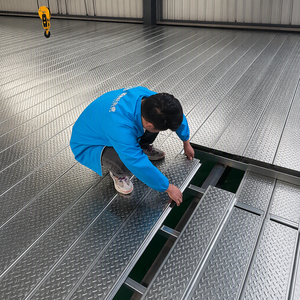
Engineered cold-rolled profiled deck featuring embossed mechanical ribs for optimal shear bond action with concrete. Acts as high-strength permanent formwork and tensile reinforcement for multi-story warehouses, shopping centers, and commercial high-rises.
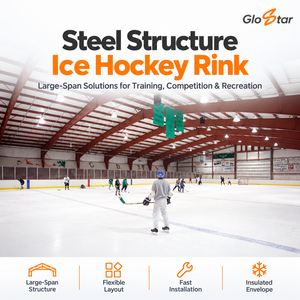
Micro-perforated structural sandwich panel lined with non-combustible high-density basalt fiber. Achieves exceptional acoustic absorption coefficients (αw up to 0.85) and 4-hour fire resistance integrity, purpose-built for ice rinks, convention facilities, and noisy production plants.
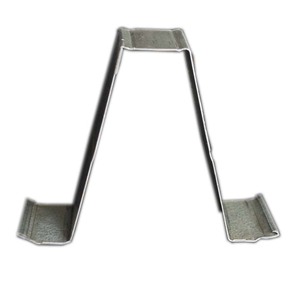
Precision cold-formed high-tensile steel roofing battens featuring textured flanged edges for screw-grip safety. Replaces timber battens with non-combustible, termite-proof dimensional stability that prevents roof sagging and tile dislodgement under cyclic wind loads.
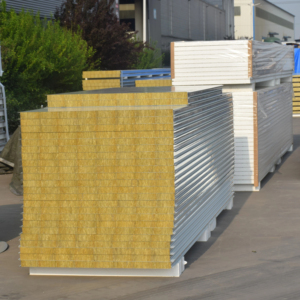
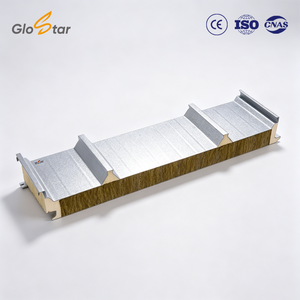
Multi-rib trapezoidal exterior profile bonded to an oriented structural stone wool core. Provides robust span capacities, continuous insulation without thermal bridges, and critical fire compartment barrier protection (up to 240 minutes rating) for hazardous production workshops.
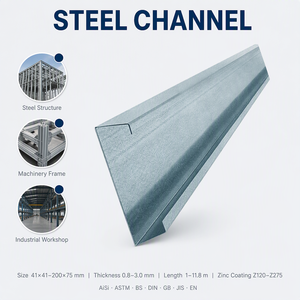
Heavy hot-dip galvanized C-channel sections manufactured to GB/T 706 and ASTM A36 standards. Engineered for primary framework columns, equipment support platforms, heavy purlin headers, and industrial gantry tracks requiring superior torsional rigidity.
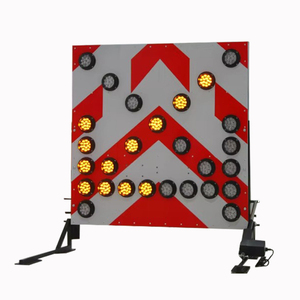
Heavy-duty aluminum-encased optical directional sign with vehicle mounting actuators. Built to EN 12966 standard with high-output IP67 amber LEDs, automatic dimming photocells, and rugged weatherproofing for highway maintenance trucks and perimeter construction zones.
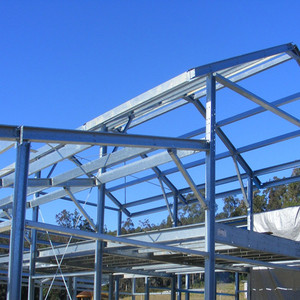
Ultra-high-strength G450 (450 MPa yield) cold-formed Z & C purlins with precision pre-punched web and flange holes. Provides optimal span-to-weight ratios, lapped continuity over structural bays, and full drop-in interchangeability with Tier-1 international PEB systems.
Paneltech International LLC (PTI), operating out of Barka, Sultanate of Oman since 2009, commands extensive continuous production lines engineered to eliminate international project risks. We deliver complete architectural envelope synergy from prime coils to cold-formed purlins.
Our Barka production facility is fitted with multi-station CNC roll-formers capable of profiling cold-rolled steel, galvanized iron (PPGI), and pre-painted Aluzinc (PPGL) from 0.30mm up to 1.20mm thickness, guaranteeing micron-accurate rib geometry and tension-free profiles.
We operate dual-stream continuous polyurethane (PU), polyisocyanurate (PIR), and oriented mineral Rockwool laminators. Our PIR formulations deliver an index >250 for superior reaction to fire (EN 13501-1 B-s1, d0), while our Rockwool panels utilize 100-120 kg/m³ non-combustible fiber cores.
Coil inspection verifies substrate tensile properties, zinc/AZ mass adherence, cross-hatch adhesion (ASTM D3359), impact resistance, and MEK solvent resistance. Full batch traceability accompanies every shipment, satisfying stringent Third-Party Inspection (TPI) agencies.
By producing sandwich panels, single-skin profiled sheets, composite metal decking, cold-formed C/Z purlins, customized flashing trims, and heavy industrial roller shutter doors, we ensure matched coating warranties, zero inter-system clash, and unified project schedules.
Selecting the correct protective paint system and base metallic alloy is critical to prevent premature chalking, color fading, and cut-edge galvanic corrosion in high-salinity marine or extreme UV desert zones.
| Coating System | Resin Chemistry | Dry Film Thickness (DFT) | UV Durability (RUV) | Corrosion Class (ISO 12944) | Target Operational Environment |
|---|---|---|---|---|---|
| PVDF 70/30 (Kynar 500) | Fluoropolymer + Acrylic Primer | Top: 20-25μm | Back: 5-8μm | RUV4 (Highest) | C4 - C5 Marine / Industrial | Coastal airports, offshore installations, extreme tropical & Gulf UV zones. |
| SMP (Silicone Modified) | Silicone Modified Polyester | Top: 20-25μm | Back: 5-8μm | RUV3 (Superior) | C3 - C4 Industrial | High abrasion environments, logistic hubs, heavy industrial roofs with solar arrays. |
| HDP (High-Durability PE) | Stabilized High Molecular Weight | Top: 25-30μm | Back: 7-10μm | RUV4 (Excellent) | C3 - C4 High Humidity | Agricultural livestock buildings, chemical storehouses, regional commercial malls. |
| Regular Polyester (PE) | Standard Thermosetting Resin | Top: 15-20μm | Back: 5-7μm | RUV2 (Standard) | C1 - C2 Mild Urban | Standard inland industrial storage, temporary construction, interior partitioning. |
| ZAM (Zinc-Al-Mg) | Alloy: 6% Al, 3% Mg, 91% Zn | Coating: 120-275 g/m² | Self-Healing Edge | C5-M Severe Marine | Chemical processing plants, fertilizer sheds, coastal ports with exposed cut edges. |
Metallurgical Insight: While standard Pre-painted Galvanized Iron (PPGI) utilizes pure zinc ($Z120 - Z275$), Aluzinc/Galvalume ($55\%\text{ Al}, 43.4\%\text{ Zn}, 1.6\%\text{ Si}$, rated $AZ150$) offers up to 4 times the barrier resistance of standard galvanizing in exposed atmospheric testing. For standing-seam roofs operating under coastal desert conditions (such as the Arabian Gulf and Red Sea corridors), pairing an $AZ150$ substrate with a $70/30\text{ PVDF}$ fluoropolymer topcoat prevents micro-fissuring and microscopic pigment detachment over decades of thermal cycling.
Global EPC contractors, sovereign wealth developers, and structural engineers are recalibrating their procurement frameworks. Here are the macro shifts shaping high-volume steel envelope acquisition through 2030.
Global supply chains require third-party verified Environmental Product Declarations (Type III EPDs). Procurement contracts increasingly stipulate electric arc furnace (EAF) scrap-based substrates or hydrogen-reduced iron cores to meet strict Scope 3 greenhouse gas caps on green-certified builds.
Developers are moving away from fragmented purchasing where sheets, purlins, fasteners, and flashings are bought from separate vendors. Single-source delivery guarantees that electrolytic reactions between dissimilar fasteners and coated substrates are completely eliminated under a singular factory warranty.
Modern B2B procurement leverages IFC/Revit modeling directly to the factory roll-forming lines. Every C/Z purlin and insulated panel is delivered with pre-punched web holes, factory-notched standing-seam laps, and laser-etched bay numbering, slashing on-site erection schedules by up to 35%.
Structural engineers are replacing low-grade mild steel purlins ($235\text{ MPa}$) with high-tensile cold-formed steel ($450\text{ to }550\text{ MPa}$). This upgrade allows a 15-22% reduction in secondary framing tonnage while increasing permissible wind uplift and purlin span distances over structural portal frames.
Geopolitical logistics bottlenecks have accelerated nearshoring and direct-from-mill containerized deliveries from regional manufacturing hubs like Oman. Direct maritime access to GCC, East African, and European ports minimizes lead times and eliminates port transshipment delays.
Underwriters are imposing strict compliance mandates for industrial building envelopes. Standard combustible foam (EPS/XPS) is being systematically decommissioned in favor of FM-approved PIR cores and Euroclass A1 non-combustible Rockwool panels to safeguard asset valuation and lower annual premiums.
From micro-encapsulated thermal barrier pigments to self-healing metallurgical alloy layers, building envelope technology is undergoing rapid evolution to solve climate-resilience challenges.
Infrared-reflective ceramic pigments embedded in PVDF coatings reflect the near-infrared solar spectrum while maintaining deep architectural color. This reduces roof deck surface temperatures by up to 28°C and slashes interior HVAC chill loads by 15-20%.
Zinc-Aluminum-Magnesium alloy coatings feature magnesium ions that migrate across freshly sheared edges and screw penetrations upon rain exposure, forming a dense alkaline zinc hydroxy-carbonate film that permanently seals exposed steel against corrosion.
Next-gen standing seam profiles incorporate factory-laminated thin-film CIGS or frameless monocrystalline photovoltaic ribbons within the standing seam pans. This eliminates ballast weight and clamp penetrations while generating renewable onsite solar energy.
Advanced panel joinery utilizes concealed tongue-and-groove profiles with internal compressible EPDM or mastic vapor seals. Thermal performance is continuous, entirely eradicating condensation risks and cold-joint interstitial dew-point moisture accumulations.
Comprehensive engineering guidance to assist procurement managers, quantity surveyors, and structural consultants during project specification and bid analysis.
PPGI utilizes a 100% Zinc coating (typically Z180 to Z275 g/m² under ASTM A653). PPGL uses an Aluzinc alloy consisting of approximately 55% Aluminum, 43.4% Zinc, and 1.6% Silicon (AZ150 under ASTM A792). PPGL provides substantially greater barrier protection and heat reflectivity in atmospheric exposures. However, PPGI is preferable in heavily alkaline or animal-housing environments where aluminum degrades rapidly upon contact with ammonia.
Coil coating verification is conducted according to ASTM D7091 using calibrated electromagnetic or eddy-current dry film thickness (DFT) gauges. Paint adhesion is verified via the cross-hatch tape test (ASTM D3359) and rapid MEK solvent rub testing (ASTM D5402, exceeding 100 double rubs for PVDF). Zinc or Aluzinc metallic mass is officially validated via the triple-spot weigh-strip-weigh laboratory method (ASTM A90).
Standing seam systems (like our PVR1000) are required whenever roof slopes drop below 1:20 (3° / 5%) or when severe cyclic wind uplift demands zero penetrations. Standard trapezoidal through-fastened panels rely on exposed self-tapping screws with EPDM washers which experience cyclic elongation and micro-leakage over 10-15 years. Standing seam systems float on hidden clips, accommodating thermal expansion without roof fatigue.
G450 cold-formed purlins possess a minimum yield stress of 450 MPa, compared to approximately 235 MPa for standard structural merchant bar steel. This higher yield capacity allows structural engineers to reduce profile gauge thickness while delivering equivalent or higher section modulus ($Z_x$) and moment resistance ($M_{cx}$), reducing dead load on foundation footings and saving shipping freight weight.
Polyisocyanurate (PIR) foam offers the optimal thermal conductivity ($\lambda \approx 0.020 - 0.022\text{ W/m}\cdot\text{K}$), meaning lower panel thickness satisfies building energy codes (such as ASHRAE 90.1). However, where local civil defense mandates strict non-combustibility or fire barrier walls separating hazard bays, structural Rockwool ($\lambda \approx 0.040\text{ W/m}\cdot\text{K}$, Class A1) is required to stop fire transmission up to 240 minutes.
All finished panels, cold-formed profiles, and decking packs receive heavy protective polyethylene strippable film (50-80 microns) to prevent surface abrasion during handling. Bundles are packed with EPS bottom dunnage runners, wrapped in moisture-resistant vapor barrier film, steel-strapped, and edge-protected with heavy metal angles to survive ocean container transit and port break-bulk rigging.