
English | العربية

Top Trusted Foam Sandwich Panel Factory & Suppliers

Engineering-Grade PIR, PUR & Composite Insulated Building Envelope Solutions: Direct Factory Manufacturing, ASTM/EN Certified Thermal Performance, and Turnkey Cold Chain & Industrial Cladding Systems.

Factory Direct Catalog

Engineered Foam Sandwich Panel Product Lineup

Continuously laminated using high-pressure cyclopentane-blown rigid polyurethane and polyisocyanurate formulations, our sandwich panels deliver superior thermal resistance (λ ≤ 0.022 W/m·K), Class B1/Class A fire safety, and structural integrity across cold storage, industrial roofing, and modular cleanroom architecture.
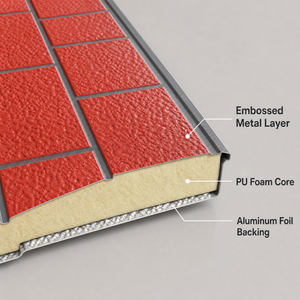
Architectural
16mm Thickness Decorative Metal Sandwich Board PU Foam Core Exterior Wall Panel

16mm Decorative Metal Siding PU Foam Board

Carved galvanized-aluminum facings backed by high-density rigid polyurethane foam and aluminum-foil vapor retarder for premium exterior retrofits.
Core: 40 kg/m³ PUR Thickness: 16mm Facing: 0.27mm Al-Zn
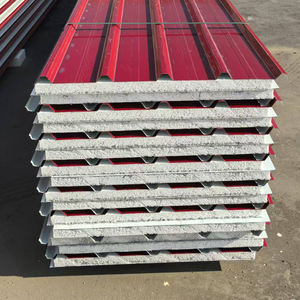
Industrial Envelope
Wall and Roof Foam Insulation Pu EPS Sandwich Panel Wall Sandwich Panel

Wall & Roof Foam Insulation PU/EPS Panel

Dual-rib corrugated trapezoidal profile engineered for industrial warehouse roofing, weather-tight lap joints, and large-span steel structures.
Core: PIR / EPS Foam Span: Up to 6.5m Steel: 0.4 - 0.7mm
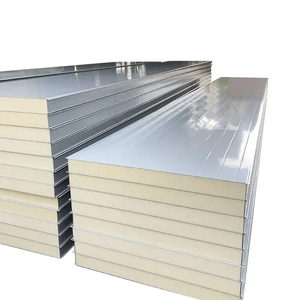
Cold Chain
PU Sandwich Panels Polyurethane Foam PUR PIR PUF Cold Room Storage Warehouse Insulation Sandwich Panels/boards

Cold Room PU/PIR Cam-Lock Storage Panel

Ultra-low thermal conductivity insulation panels with eccentric cam-lock interlocking mechanisms designed for blast freezers (-40°C) and food distribution.
Thickness: 50-200mm λ: 0.021 W/m·K Food-Grade PVC/SS
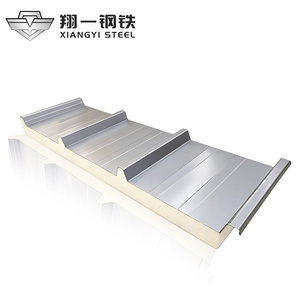
Commercial Wall
Polyurethane Foam Sandwich Panel for Building Wall and Roof Insulation PU Sandwich Panels

Polyurethane Foam Building Wall & Roof Panel

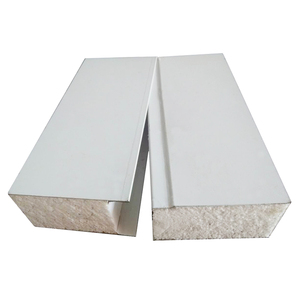
Secret-fix concealed fastener architectural wall cladding with micro-ribbed aesthetics, minimizing thermal bridging and eliminating water penetration.
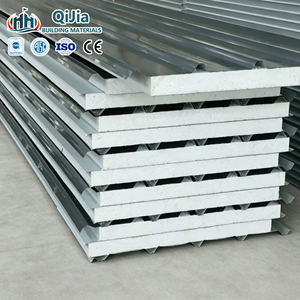
Concealed Fastening Fire: B-s1,d0 Effective: 1000mm
Heavy Duty
Zinc Aluminum Polyurethane PU Foam Sandwich Panel for Roof Insulation Ceiling Decoration Cold Room Exterior Wall-Fireproof

Zinc-Aluminum PU Foam Fireproof Panel

AZ150 Galvalume coated steel facings fused with a polyisocyanurate (PIR) fire-resistant core, optimized for marine, tropical, and severe chemical exposure.
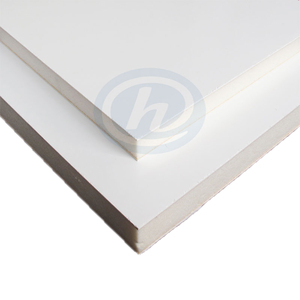
Coating: AZ150 / PVDF Core: PIR Index > 250 Class B1 Fire
Transport Logistics
Gel Coated GRP FRP Plywood/XPS/Polyurethane PU Foam/PP Honeycomb Sandwich Panel for Truck Body and Wall Panels

Gel-Coated FRP PU/XPS Truck Body Panel

High-strength fiber-reinforced plastic (FRP/GRP) composite skins with rigid foam cores offering ultra-lightweight structural strength for reefer transport boxes.
Skin: 1.5 - 3.0mm FRP High Impact Strength Corrosion Proof
Acoustic Shield
Wholesale Construction Site Foam Sandwich Panels Temporary Noise Barriers Colorbond Panel Fence Sticky Board Steel Frame Fence

Site Acoustic Foam Noise Barrier Panel

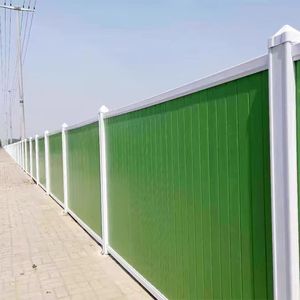
Colorbond steel fencing panel with high-damping foam interior providing fast perimeter containment, sound attenuation, and site wind load resistance.
Acoustic: Rw 30dB Modular Demountable Colorbond Finish
Hybrid Enclosure
EPS Sandwich Panel Frp and Polyurethane Foam Sandwich Panels Fireproof and Insulated Wall Sandwich Panel

Insulated EPS/FRP & PU Modular Wall Panel

Versatile interior partition and ceiling panel balancing fire performance, extreme lightweight transport properties, and zero-rot hygroscopic resistance.

Self-Extinguishing Hygienic Cleanroom Washdown Proof
2009+
Operational Factory Heritage
0.021W/m·K
Ultra-Low PIR Thermal Lambda
100%
Continuous In-Line Bonding
500K+ m²
Annual Continuous Production Capacity
Material Science Matrix

Core Insulation Comparison: PIR vs. PUR vs. Mineral Rockwool vs. EPS

Specifying the correct foam core formulation dictates building life-cycle cost, fire compartmentation approval, and mechanical span deflection limits. Review verified engineering metrics below.

Thermal & Mechanical Metrics Polyisocyanurate (PIR) Polyurethane (PUR / PU) Structural Rockwool Expanded Polystyrene (EPS)
Thermal Conductivity (λ in W/m·K) 0.020 - 0.022 0.022 - 0.024 0.038 - 0.044 0.034 - 0.038
Fire Reaction (EN 13501-1 / ASTM E84) B-s1, d0 / Class A B2 / B3 (Self-Extinguishing) A1 / A2 Non-Combustible Class B / E (Melting Drop)
Density Range (kg/m³) 40 - 45 kg/m³ 38 - 42 kg/m³ 100 - 140 kg/m³ 15 - 25 kg/m³
Compressive Strength (at 10% Strain) ≥ 140 - 180 kPa ≥ 120 - 150 kPa ≥ 80 - 100 kPa ≥ 70 - 100 kPa
Closed Cell Content Ratio > 95% (Moisture Impervious) > 92% Open Fibrous Matrix 85 - 90%
Primary Project Applicability Cold Storage, Critical Logistics, High-Fire Envelopes Standard Freezers, Commercial Industrial Roofs Firewalls, Data Centers, Acoustic Boundaries Temporary Enclosures, Cost-Sensitive Sheds
Why Tier-1 EPCs Specify Us

Paneltech International: Complete Building Envelope Authority

Since establishing operations in Barka, Sultanate of Oman in 2009, Paneltech International LLC (PTI) has bridged the gap between advanced polymer foam chemistry and integrated structural steel manufacturing.

Integrated Envelope Ecosystem

Unlike standard panel converters, PTI manufactures insulated panels alongside cold-formed Z & C structural purlins, corrugated roofing sheets, metal floor decking, and customized flashings. One source, total structural compatibility.

Rigorous In-House Quality Labs

Continuous double-belt automation features synchronized coil tensioners and high-pressure chemical metering. Every batch undergoes density pycnometry, peel strength adhesion tests, and thermal conductivity verification per ASTM C518.

Harsh Climate Engineering

Manufactured to withstand severe Gulf atmospheric conditions (+50°C summer ambients, intense UV radiation, and high coastal humidity) utilizing AZ150 zinc-aluminum coatings and PVDF exterior paint finishes that resist delamination.

Consultant & Site-Ready Support

Our engineering division provides complete shop drawings, statical wind calculation analysis, span-deflection tables, and certified installation guidance for seamless consultant sign-off and civil defense licensing.

Technical Whitepaper: Industry Trajectory

The Evolution of Foam Sandwich Core Chemistry & Continuous Lamination

The global insulated sandwich panel industry is undergoing an unprecedented technological transition driven by decarbonization mandates, stricter fire code enforcement, and advancements in chemical lamination mechanics. Structural engineers and major industrial asset owners no longer view sandwich panels merely as passive cladding; they are evaluated as integrated composite building skins that dictate whole-life building energy consumption and structural resilience.

"Thermal performance optimization is not simply a matter of foam thickness; it relies on the polymer chain alignment, isocyanate-to-polyol index balancing (>250 for PIR), microcellular bubble density, and high-pressure blowing agent retention over a 30-year operational span."

1. High-Index Polyisocyanurate (PIR) Ring Stability

Standard polyurethane uses a 1:1 isocyanate-to-polyol index, rendering it susceptible to early thermal decomposition around 200°C. Modern continuous production utilizes an isocyanate index exceeding 250 to form stable six-membered isocyanurate ring structures. When exposed to open flame, PIR forms a self-passivating carbonaceous char layer that insulates the core, drastically curtailing flame spread and smoke release in accordance with EN 13501-1 (B-s1, d0) and ASTM E84 Class A.

2. Ultra-Low GWP Blowing Agent Transition

In adherence to the Kigali Amendment, first-tier manufacturers have eliminated HCFCs and HFCs, migrating through cyclo-pentane blowing technology toward 4th-generation Hydrofluoroolefins (HFOs). HFO-blown foams feature a Global Warming Potential (GWP) < 1 and zero Ozone Depletion Potential (ODP), simultaneously shrinking average cell diameter below 120 microns, which suppresses thermal radiative transfer and optimizes initial Lambda values down to an unprecedented 0.019 W/m·K.

3. Precision Double-Belt Automated Lamination

Discontinuous, manual press production causes foam density variances, surface blistering, and inconsistent adhesion. Modern industrial standards dictate continuous heated double-track caterpillar laminators up to 40 meters long. Constant pressure and temperature control during the critical exotherm reaction guarantee uniform 40–42 kg/m³ density distribution, eliminating micro-voids and preventing steel skin delamination under heavy thermal shock.

Strategic Procurement Outlook

Future Procurement Trends in Insulated Panels

How international procurement directors, cold logistics operators, and commercial developers are future-proofing their supply chains through 2026–2030.

1. Embodied Carbon & Third-Party EPDs

Global real estate developers and LEED/BREEAM consultants now require verifiable Environmental Product Declarations (EPDs) covering Cradle-to-Grave Life Cycle Assessments (LCA). Suppliers utilizing scrap-reduced steel coil recycling, bio-attributed polyols, and green electricity during roll-forming gain a decisive competitive advantage in international public tenders.

2. BIM Object Integration & Digital Prefab

Modern fast-track construction contracts favor suppliers providing rich Building Information Modeling (BIM) objects with native Revit families. Pre-engineered panel packages arrive on site cut to millimeter tolerances with pre-formed tongue-and-groove joints, factory-routed cable conduits, and cutback eaves, reducing on-site installation labor by up to 45%.

3. Single-Source Envelope Procurement

Contractors increasingly bypass fragmented purchasing—where panels come from one vendor, secondary steel (Z & C purlins) from another, and flashings from local sheet shops. Procurement consolidation through full envelope manufacturers like Paneltech International prevents galvanic steel coating incompatibilities, ensures exact color matching, and consolidates shipping logistics.

4. Extreme Climate Adaptation & Thermal Bridging

With global heat waves intensifying, specifications in the Middle East, Southeast Asia, and Southern Europe have tightened U-value thresholds (often mandating U < 0.20 W/m²·K for roofs). Procurement teams actively reject single-seal joints in favor of factory-injected continuous neoprene gaskets and hidden secret-fix interlocking joints that eliminate thermal shorts and vapor transmission.

5. Stricter FM Global / ASTM Fire Endorsements

Insurance underwriting costs for automated high-bay warehouses and cold logistics hubs have skyrocketed. Procurement decisions are now heavily steered by loss prevention certifications (such as FM 4880 / FM 4881 approval classes). Suppliers with validated large-scale room corner fire tests and zero flame spread verification are consistently favored over uncertified regional foam converters.

Proven Reliability in Landmark Projects

Installed Across Major Gulf & International Projects

From sovereign infrastructure to high-volume commercial centers, Paneltech International building components are verified in the most demanding climatic environments.
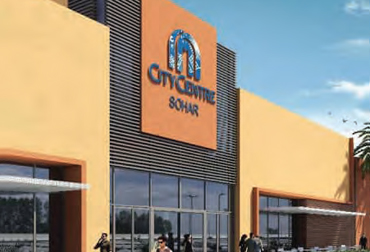
City Center Sohar project utilizing Paneltech panels

City Center Sohar

Sohar, Sultanate of Oman • Retail & Commercial Envelope

Head Office National Bank of Oman project

Head Office National Bank of Oman

Muscat, Oman • Structural Secondary Steel & Cladding

Ras Al Hamra Residential Project

Ras Al Hamra Community

Muscat, Oman • High-Performance Residential Roof Insulation
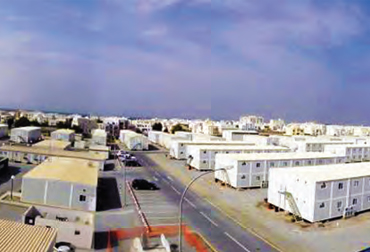
Airport Site Staff Accommodation project

International Airport Infrastructure

Sultanate of Oman • Fast-Track Modular Housing Facility
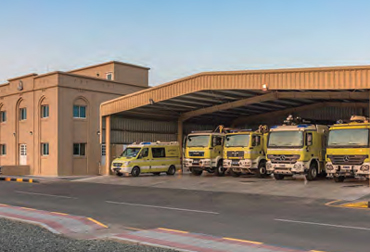
Royal Oman Police facility development

Royal Oman Police Headquarters

Oman • Government Security Infrastructure & Warehousing
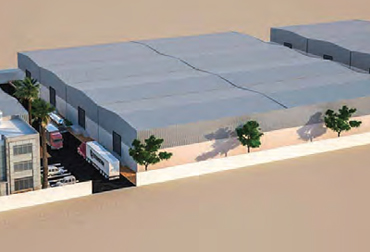
Gulf International Contracting industrial warehouse facility

Gulf International Logistics Hub

Industrial Zone, Oman • Heavy Cold Storage & Metal Decking

Procurement Knowledge Base

Frequently Asked Questions for Engineering Procurement

Clear, technically rigorous answers resolving real-world specification and sourcing inquiries.

1. What is the fundamental operational difference between PIR and PUR foam sandwich panels?
While both belong to the polyurethane family, PUR (polyurethane) is synthesized with roughly equivalent ratios of isocyanate (MDI) and polyol, yielding urethane bonds that begin degrading at ~200°C. PIR (polyisocyanurate) uses an excess of isocyanate (index > 250) reacted with specialty polyester polyols under trimerization catalysts. This produces cyclic isocyanurate rings with much higher bond energies. In a fire scenario, PIR chars without melting or burning droplets, achieving an EN 13501-1 Class B-s1, d0 rating and meeting ASTM E84 Class A criteria. Thermal conductivity is comparable (λ ≈ 0.020 - 0.022 W/m·K), but PIR is mandatory where local civil defense authorities or insurance underwriters enforce stringent fire safety standards.
2. How do you calculate optimal panel thickness for blast freezers operating at -30°C to -40°C?
Cold storage thickness depends on internal design temperature, maximum exterior ambient dry-bulb temperature (often +45°C to +50°C in the Gulf), relative humidity, and targeted heat gain limit (typically ≤ 8 to 10 W/m²). For a -30°C blast freezer in high-ambient zones with a design temperature differential (ΔT) of 75K to 80K, standard practice requires a U-value ≤ 0.11 - 0.14 W/m²·K. Given a design PIR lambda of 0.021 W/m·K, a core thickness of 150mm to 200mm is specified. Furthermore, continuous labyrinth tongue-and-groove profiles with internal cam-locks and factory-applied vapor sealants must be installed to prevent vapor pressure migration and interstitial icing.
3. How does sourcing secondary structural steel (Z & C purlins) from the panel factory eliminate project risk?
Insulated roof panels act as stressed-skin diaphragms supported by secondary structural purlins. When purlins and panels are ordered from separate manufacturers, misalignment between roof panel rib profiles, fastener screw pitch, and purlin top-flange widths often results in fastener tearing, dimpling, and leak paths. Sourcing the entire building envelope—including cold-formed structural Z & C purlins, metal decking, ridge flashings, and matching translucent daylight sheets—from Paneltech International ensures coordinated fastener pull-out resistance calculations, matching prepunched hole patterns, and unified structural deflection guarantees (L/200 or L/250 under full wind-uplift loads).
4. What exterior steel coatings should be specified for aggressive marine or industrial environments?
Standard 25-micron regular polyester (SP) coatings over Z120 galvanized steel are susceptible to premature chalking and edge corrosion in aggressive coastal (C4/C5) environments. For projects within 5 km of seawater or petrochemical installations, engineers should specify:
• Metallic substrate: 55% Aluminum-Zinc alloy coated steel (Galvalume / Aluzinc AZ150 or AZ200).
• Paint system: Polyvinylidene Fluoride (PVDF 70/30 Kynar 500) or 50-micron High-Durability Polyurethane (HDP/PUD) offering maximum UV resistance (RUV4) and superior corrosion resistance (RC5 per EN 10169). For food processing and cold rooms, non-toxic, anti-microbial Food-Safe PVC Plastisol laminates (120 - 150 microns) should be specified.
5. What site handling and lifting procedures prevent core blistering and transverse creasing during installation?
Sandwich panels over 8 meters long are susceptible to transverse buckling if lifted flat without multi-point distribution. We recommend using a vacuum spreader lifting beam with multiple suction pads matched to the panel profile, or wide nylon lifting slings with rigid corner edge protection angles. Never hoist panels with single steel chains or cables. When unstacking manually, rotate panels onto their longitudinal edge rather than pulling them flat to prevent permanent face delamination. Store bundles on a minimum 5% continuous slope off the ground, under breathable tarpaulins, to prevent trapped capillary water from staining pre-painted surfaces.
6. What project parameters are required to receive a comprehensive technical proposal from Paneltech?
To generate an optimized structural and thermal proposal, our engineering team requires:
• Project location & environmental parameters: Wind speed (basic wind pressure, terrain category), seismic zone, and design ambient temperature.
• Building occupancy: Cold storage (with target room temperature), manufacturing warehouse, cleanroom, or commercial facility.
• Dimensional data: Total roof and wall surface areas, purlin spacing/span layout, and required panel profiles (e.g. concealed-fix wall, trapezoidal roof).
• Thermal & fire specifications: Required U-value / R-value, fire resistance rating (e.g., PIR Class B1, Rockwool 2-hour rating), and preferred facing metal thicknesses (0.4mm to 0.7mm) and coating color codes (RAL standards).

Accelerate Your Project With Factory-Direct Engineering

Partner directly with the Sultanate of Oman's premier sandwich panel and structural envelope manufacturer. Submit your structural drawings or bill of quantities today to receive engineering span calculations, certified test documentation, and competitive factory pricing.