
Full-envelope architectural, refrigeration, and structural assemblies engineered for rapid containerized shipping to Puerto Caldera and Puerto Limón, certified under strict European EN 14509 criteria.
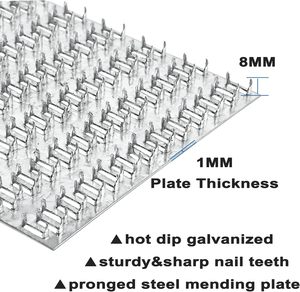
Heavy-duty anti-corrosion connective gussets designed for high-stress timber and light steel truss systems in tropical rainfall zones.
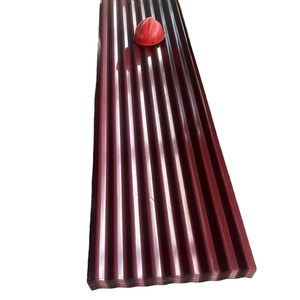
High-tensile structural roof profiles engineered to absorb high-velocity wind loads and torrential tropical precipitation across Central Valley facilities.
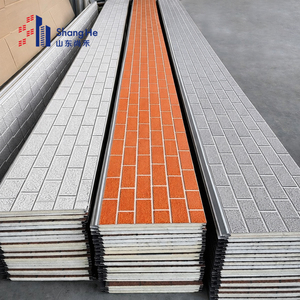
Aesthetic carved masonry-pattern polyurethane cladding offering class-leading thermal barrier (R-value) for eco-tourism resorts and commercial facades.
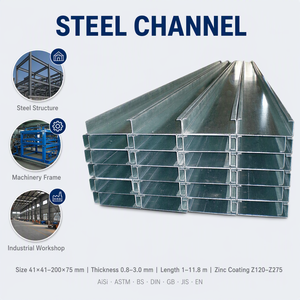
Precision cold-formed structural channels delivering rigid perimeter support and seismic tie-backs for industrial insulated panel wall systems.
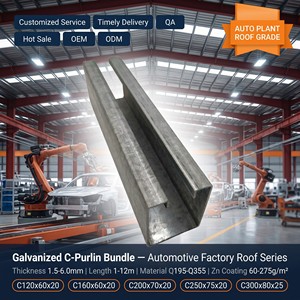
Continuous hot-dip galvanized C-profiles providing optimized span-to-weight structural ratios for industrial manufacturing envelope support.
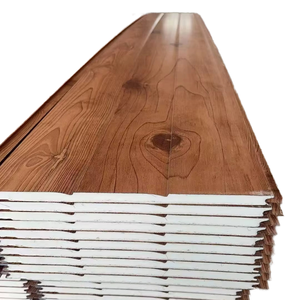
High-density B1/B2 fire-resistant polyurethane core envelope with vapor-tight tongue-and-groove cam locks for agro-export cold storage.
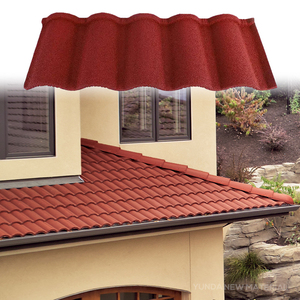
Colonial Spanish tile aesthetic crafted with alu-zinc volcanic stone-coated steel, ideal for luxury eco-resorts demanding hurricane resilience.
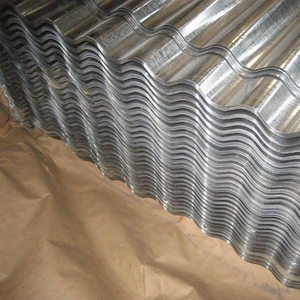
Lightweight anti-saline marine alloy sheeting engineered specifically for Pacific and Caribbean ports with severe salt-fog corrosion exposure.
Navigating the thermodynamics of Central America: Selecting structural insulation cores that balance thermal conductivity (λ-values), non-combustibility, and vapor resistance under 95% relative humidity.
Specifying insulated wall and roof panels for industrial projects in Costa Rica requires addressing a complex interplay of environmental stressors. Operating within tropical latitudes (8° to 11° N), building envelopes face intense solar radiation along the Pacific littoral (Guanacaste, Puntarenas), extreme relative humidity exceeding 90% in the Caribbean basin (Limón), and significant seismic accelerations across the Central Valley (San José, Alajuela, Cartago, Heredia). Selecting the correct core material—Polyisocyanurate (PIR), Polyurethane (PU/PUR), or High-Density Rockwool (Mineral Wool)—directly dictates structural safety, facility operational costs, and lifecycle longevity.
Continuous double-belt laminating ensures that the insulation core forms a monolithic chemical and mechanical bond with the profiled steel facings. Our automated production line precisely controls polymer cross-linking and rockwool lamella fiber orientation, yielding composite wall panels with superior shear resistance, low thermal bridging, and structural integrity that resists tropical delamination.
| Insulation Core Type | Density (kg/m³) | Thermal Conductivity (W/m·K) | Reaction to Fire (EN 13501-1) | Acoustic Damping (Rw dB) | Optimal Costa Rican Application |
|---|---|---|---|---|---|
| PIR (Polyisocyanurate) | 40 – 42 kg/m³ | 0.020 – 0.022 | B-s1, d0 (Self-Extinguishing) | 26 – 28 dB | Export cold rooms, pharmaceutical FTZs, and climate-controlled commercial warehousing. |
| PU / PUR (Polyurethane) | 38 – 40 kg/m³ | 0.022 – 0.024 | B2 / B3 Normal Flammability | 25 – 27 dB | Standard agro-processing packing plants, ambient logistics hubs, and modular offices. |
| Rockwool (Mineral Wool) | 100 – 140 kg/m³ | 0.038 – 0.042 | A1 / A2-s1, d0 (Non-Combustible) | 32 – 35 dB | Data centers, hazardous chemical storage, fire compartment separation, and loud generator rooms. |
| EPS (Expanded Polystyrene) | 15 – 20 kg/m³ | 0.036 – 0.040 | E (High Smoke / Flammable) | 22 – 24 dB | Temporary site accommodations and low-budget secondary partitions (not recommended for industrial). |
Tailored envelope configurations addressing microclimatic diversity, industrial zoning, and export requirements across Costa Rica's key provinces.
Costa Rica is Latin America's leading medical device manufacturing hub. Our CE certified PIR flush-joint panels provide airtight, anti-microbial partitions compatible with ISO 5 through ISO 8 cleanroom sanitation protocols, with smooth PVDF coatings resistant to repeated chemical washdowns.
Pineapple, banana, and premium coffee exporters require unbroken cold chains. We engineer 100mm to 150mm PIR continuous cold room panels with integrated labyrinth tongue-and-groove joints, stopping tropical moisture ingress and holding temperatures between -25°C and +4°C.
Coastal logistics parks along both oceans operate under extreme C4/C5 marine corrosive conditions. Our exterior wall packages combine 55% Al-Zn (Galvalume) substrates with 25-micron high-durability PVDF coatings, resisting salt-fog oxidation and UV degradation.
Sustainable boutique resorts and high-end eco-lodges demand architectural integration with zero mold formation. Our decorative brick-pattern and stone-coated insulated wall systems provide acoustic attenuation (Rw 30+ dB) against heavy rainfall while blending seamlessly with natural landscapes.
Aligning manufacturing standards with national decarbonization targets, structural seismic mandates, and sustainable building certifications.
Under the Código Sísmico de Costa Rica, heavyweight masonry walls create hazardous inertial loads during tectonic movements. Lightweight insulated wall panels (10–14 kg/m² compared to 180+ kg/m² for concrete block) dramatically reduce structural dead-load, enabling lighter steel frames, lower foundation costs, and flexible clip designs that accommodate inter-story drift without brittle envelope failure.
Costa Rica's National Decarbonization Plan prioritizes energy efficiency in the industrial built environment. High R-value PIR envelopes substantially lower heat gain through walls and roofs, directly reducing chiller operating hours. Facilities utilizing our panels qualify for LEED v4 credits and Costa Rica's native RESET (Requisitos para Edificaciones Sostenibles en el Trópico) certification.
Industrial building permits issued via Administradora de Proyectos de Construcción (APC-CFIA) require strict review by the Benemérito Cuerpo de Bomberos de Costa Rica. Our panels, certified to CE EN 14509 with B-s1,d0 and Rockwool A1 non-combustibility ratings, supply verifiable documentation that prevents costly project shutdown or redesign.
Full-scale manufacturing control from steel uncoiling to high-pressure core polymerization, delivering comprehensive packages directly to international project sites.
Operating modern manufacturing facilities since 2009, Paneltech International LLC (PTI) operates continuous, automated double-belt sandwich panel continuous lines alongside heavy-duty cold roll-forming units. Rather than acting as a simple panel assembler, we provide an integrated building envelope ecosystem: structural Z and C purlins, corrugated roofing sheets, composite metal decking, color-matched flashings, and insulated wall panels manufactured under unified tolerances.
This single-source engineering approach resolves the common project issue of field incompatibility between panels, secondary structural framing, and weatherproofing trims. Every batch is rigorously monitored for core density, peel strength, compressive resistance, and coating adhesion, backed by full ISO 9001:2015 quality assurance.
Fully certified under European Standard EN 14509:2013 for self-supporting double skin metal faced insulating panels. Third-party testing documentation is provided for fast approval by Costa Rican municipal authorities and consulting engineers.
Our continuous heated double-belt caterpillar line ensures uniform core density with zero void formation. Automated flying saws execute millimetric cut-to-length customization up to 14 meters, fitting standard 40ft High Cube shipping containers.
We eliminate contractor procurement headaches by producing matching high-strength Q235/Q345 galvanized structural C/Z purlins, roof trusses, ridge caps, corner flashings, and self-drilling fasteners designed to integrate with our panel profiles.
Panels are packaged with high-density protective PE film, expanded polystyrene side buffers, and moisture-absorbing desiccant packs inside heavy-gauge polyethylene bundles, guaranteeing pristine panel surfaces upon arrival at Costa Rican job sites.
Direct technical clarity addressing importation logistics, local building regulations, anti-corrosion selection, and seismic detailing.
Insulated sandwich panels are typically imported into Costa Rica under Central American Tariff System (SAC) code 7308.90.00.00 (Structures and parts of structures of iron or steel). Standard importation into regular territory incurs the Derecho Arancelario a la Importación (DAI) plus the 13% Value Added Tax (IVA). However, companies operating within Costa Rica's Free Trade Zone regime (Régimen de Zona Franca - Law No. 7210), such as those in Coyol, Zeta Cartago, or Global Park, enjoy 100% tax and tariff exemption on imported construction materials and capital goods.
Our export documentation package includes: Commercial Invoice, Packing List with Container Distribution Schemes, Certificate of Origin, Bill of Lading (B/L), CE Declaration of Performance (DoP), and Mill Test Certificates (MTC) for steel coils.
Under the Código Sísmico de Costa Rica, building envelopes must not fail during inter-story drift displacements. While the CSCR focuses primarily on structural frames (concrete and steel), curtain walls and exterior cladding must withstand out-of-plane seismic accelerations and high wind pressures without detachment.
EN 14509 provides certified engineering calculations for characteristic shear strength (f_vk), wrinkling stress (σ_w), and bending moment capacity under cyclic loading. When connected to cold-formed C or Z purlins using stainless steel fasteners with heavy-duty EPDM bonded distribution washers (saddle washers), our panels deliver an engineered envelope that safely moves with the primary structure during seismic events.
Microclimate analysis is essential for steel longevity in Costa Rica:
Shipments destined for Costa Rica are loaded into 40-foot High Cube (40' HC) dry containers. Maximum panel length for containerization is 11.80 meters (38.7 ft) to allow for protective packing and clearance during destuffing. Transit times typically range from 28 to 35 days from departure port to:
A single 40' HC container holds approximately 550 m² of 50mm wall panels, 380 m² of 100mm cold room panels, or 280 m² of 150mm deep-freeze panels.
During the rainy season (temporada de lluvias, May to November), outdoor relative humidity routinely exceeds 90%, creating steep vapor pressure differentials across air-conditioned building envelopes. If warm, humid exterior air reaches the interior cold facing, interstitial condensation and black mold immediately develop.
Our continuous PIR panels solve this with:
Connect directly with our engineering division to calculate required panel thicknesses, review EN 14509 test certificates, and optimize shipping container configurations for your next project in Costa Rica.