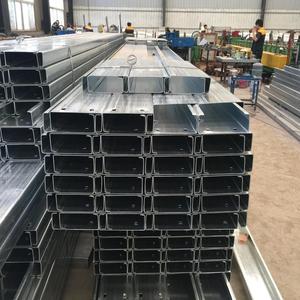
C-Profile Engineering
Customized Structural C Purlin Steel Girts for Factory Roof Systems and Wall Framing
Lip: 15–25mm
Thickness: 1.5–3.2mm
ASTM A653 Grade 50

Continuous line roll-formed to international structural tolerances (AS/NZS 4600, ASTM A653, EN 10346, SANS 10162), delivering consistent edge straightness, hole punching accuracy, and zinc adhesion for South African builds.
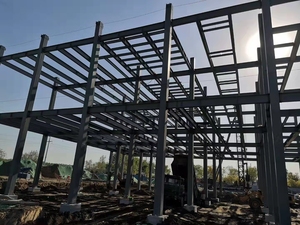
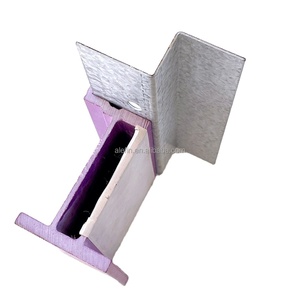
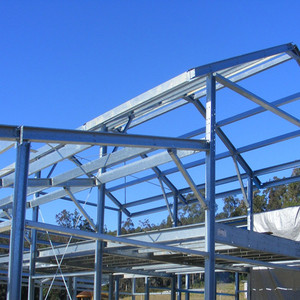
In contemporary industrial architecture, pre-engineered steel buildings (PEBs), logistics super-hubs, and deep-level mining sheds across the Republic of South Africa, horizontal secondary framing members—specifically steel wall girts and roof purlins—constitute between 12% and 18% of the total superstructure weight. Despite representing a fraction of total steel tonnage compared to primary universal columns (UC) and universal beams (UB), wall girts absorb the full brunt of cross-sectional lateral wind pressure, negative suction uplift, and dead-load transfers from heavy uninsulated or composite insulated wall cladding systems. For structural consulting engineers registered with the Engineering Council of South Africa (ECSA), specifiers, and procurement principals operating across Gauteng, KwaZulu-Natal, and the Western Cape, importing precision roll-formed cold-formed steel sections directly from verified Chinese manufacturers provides substantial cost-to-strength leverage, provided strict structural standard alignments are satisfied.
Cold-formed secondary members rely on slender cross-sectional geometries where structural rigidity is generated not by raw mass, but by optimized moment of inertia ($I_x$ and $I_y$) and section modulus ($Z_x$). The factory produces two primary geometries tailored to South African engineering layouts:
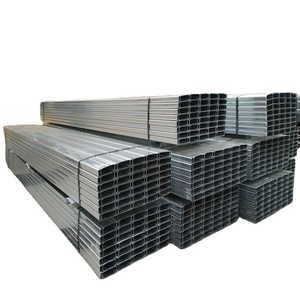
1. Structural C-Girts (C-Sections): Engineered with mono-symmetric lips turned toward the interior axis. C-profiles are predominantly specified for single-span assemblies around window fenestrations, industrial roller shutter door trimmers, eaves framing, and corner terminations where flush wall cladding transitions are mandatory. Because C-sections do not nest efficiently, structural designs incorporate them on simply supported spans between 4.5m and 6.0m frame bays.
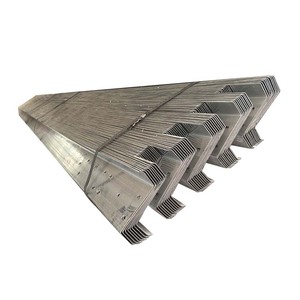
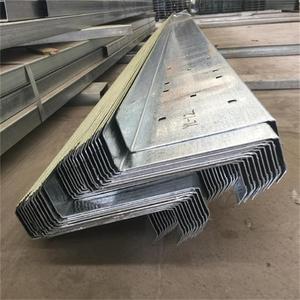
2. Continuous-Span Z-Girts (Z-Sections): Characterized by point-symmetric geometry featuring distinct flange widths (e.g., 68mm upper flange and 60mm lower flange with turned stiffening lips). This deliberate asymmetric dimension allows adjacent lengths to rotate 180 degrees and nest flawlessly over internal structural portal columns. By creating a continuous lapped condition across intermediate structural bays, nested Z-girts reduce mid-span positive bending moments by up to 35% compared to single-span layouts. This structural overlap allows South African warehouse developers to down-gauge steel thickness (for example, stepping from 2.5mm simple-span C-sections down to 2.0mm continuous Z-sections) without compromising maximum permissible wind deflection tolerances (typically $L/150$ or $L/200$ under SANS 10160 wind loading actions).
| Structural Profile Designation | Web Depth (mm) | Flange Widths (mm) | Nominal Thickness (mm) | Minimum Yield Strength ($F_y$) | Galvanizing Standard & Mass |
|---|---|---|---|---|---|
| C15015 / Z15015 | 152 mm | 64 mm / (60/65 Z) | 1.5 mm | G450 (≥ 450 MPa) | Z275 Hot-Dip Continuous Galvanized |
| C20020 / Z20020 | 203 mm | 76 mm / (73/78 Z) | 2.0 mm | G450 / G500 (≥ 450–500 MPa) | Z275 to Z450 Marine Barrier Grade |
| C25024 / Z25024 | 254 mm | 76 mm / (73/78 Z) | 2.4 mm | G450 (≥ 450 MPa) | Z275 / Z600 Heavy Coastal Specification |
| C30030 / Z30030 | 300 mm | 90 mm / (85/92 Z) | 3.0 mm | Grade 50 / G350–G450 | ISO 1461 Batch HDG or Continuous HDG |
Precision roll-forming of high-strength structural strip requires multi-stand progressive roll tooling. Lesser fabrication facilities attempt to shape high-yield steel (G450/G550) via rapid 6-to-8 pass forming stands, generating excessive internal residual stresses, localized thinning at the inner radius, and micro-fractures in the protective zinc matrix. Our Chinese automated manufacturing lines utilize 16 to 22 dynamic sequential forming stations. This gradual deformation preserves the microcrystalline structure of the carbon base steel while ensuring continuous hot-dip zinc coatings (compliant with SANS 3575 and EN 10346) stretch without spalling, micro-crazing, or loss of cathodic self-healing sacrificial protection along punched elongation slots.
From high-humidity salt-spray shorelines to seismic interior high-plateau mining sites, steel girts must withstand severe micro-environments.
In the heavy platinum, coal, and chrome belts of the Highveld and Bushveld, ambient air carries elevated levels of airborne sulfur dioxide ($SO_2$) and abrasive mineral dust. Our Z-girt assemblies utilize heavy galvanized steel (minimum Z350 to Z450) or pre-applied barrier coatings that resist chemical leaching, preventing premature secondary framing failure behind external cladding panels.
Facilities positioned near the Port of Durban or Saldanha Bay operate within ISO 9223 Category C4 to C5-M extreme marine corrosion classifications. Regular structural girts degrade rapidly from chloride deposition. We supply hot-dipped zinc configurations with continuous edge passivating agents, guaranteeing minimum corrosion rates and 25+ year design life cycles.
Modern citrus, macadamia, and livestock logistics require high-volume insulated sandwich panels (PIR, PUR, Rockwool). C-purlins and girts serve as direct mechanical substructures. We manufacture girts with custom lip angles and slotted pre-punched flange holes that interface perfectly with insulated panel concealed fixings and thermal break timber/PVC packers.
Over the past decade, South Africa's structural steel supply chain has undergone fundamental structural shifts. Domestic production bottlenecks, volatility in local primary steel mills, and escalating electricity tariffs under persistent load-shedding dynamics have constrained regional cold-forming capacity. Consequently, commercial tier-1 EPC contractors, steel merchants, and turnkey PEB manufacturers are increasingly establishing strategic, direct factory-to-port procurement channels with premier Chinese roll-forming plants.
Three dominant macroeconomic and engineering trends drive this transformation:
International procurement requires absolute verification of raw materials, mill certificates, and automated factory output.
Direct supply contracts with top-tier prime Chinese integrated mills (Baosteel, Shougang). Every coil arrives with serialized Heat Numbers, chemical compositional logs, and mechanical test certs.
In-house laboratory verification of coating thickness via electromagnetic digital gauges, cross-hatch zinc adhesion testing, base metal yield tensile testing, and salt spray fog chamber testing (ASTM B117).
C- and Z-profiles are systematically nested, steel-strapped with heavy edge protectors, and elevated on specialized fumigated timber dunnage blocks for damage-free maritime container loading and de-stuffing.
Full-package supply capability: consolidate your secondary cold-formed steel girts with high-performance PIR/PUR insulated sandwich panels, metal floor decking, and flashings from one accountable partner.
Direct, technically rigorous answers addressing regulatory compliance, customs tariffs, sea logistics, and structural performance.
Submit your structural purlin and girt schedules, custom roll-forming punch details, or architectural envelope requirements. Our senior technical estimators deliver itemized CIF Durban/Cape Town proposals within 24 hours.