Engineered for industrial warehousing, maritime logistics hubs, and modern commercial infrastructure across Jakarta (DKI), Bekasi, Tangerang, and Karawang.
The Special Capital Region of Jakarta (Daerah Khusus Ibukota Jakarta) and its adjacent industrial manufacturing hubs across Jabodetabek (Bekasi, Cikarang, Karawang, and Tangerang) present one of Southeast Asia's most challenging operational environments for industrial building envelopes. Structural engineers, project developers, and procurement executives must address a trifecta of environmental hazards: coastal marine salinity from the Java Sea, intense tropical monsoonal deluge rates exceeding 140 mm per hour, and aggressive airborne acidic particulates generated by dense urban transit and heavy petrochemical processing.
Conventional single-skin zinc-galvanized sheeting (GI with thin zinc mass ≤ Z120) fails prematurely under these regional conditions. The elevated ambient relative humidity (regularly fluctuating between 75% and 92%) forms a permanent electrolyte film over building surfaces. When combined with sodium chloride aerosol deposits from North Jakarta ports (Tanjung Priok, Kalibaru, and Marunda), galvanic and crevice corrosion accelerates at unsealed laps, screw perforations, and cut edges, causing red rust perforation within 3 to 5 operational years. Factory-grade corrugated profile sheets engineered for Jakarta must therefore deploy advanced metallurgy, tailored coating chemistries, and hydraulic profile geometries designed for extreme runoff volume.
North Jakarta coastal belts require minimum AZ150 (150 g/m² 55% Al-Zn alloy) or heavy-passivated AZ200 substrates. The microscopic intermetallic barrier created by aluminum dendrites blocks chloride ion migration, delivering quadruple the lifespan of ordinary hot-dipped zinc.
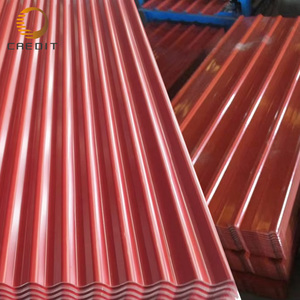
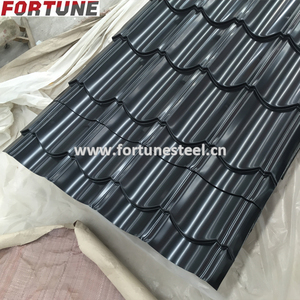
During localized flash downpours, low-crest sinusoidal sheets drown in high-velocity water sheets. Our trapezoidal industrial profiles feature elevated 30-38mm major rib heights accompanied by integrated anti-capillary drainage grooves at side laps to stop back-siphoning.
Under solar radiation reaching 1,000 W/m², bare dark roofs transfer tremendous radiant load into storage spaces. Utilizing Cool Roof PVDF and SMP formulations achieves Solar Reflectance Indexes ≥ 78, cutting warehouse indoor plenum temperatures by up to 8.5°C.
To ensure long-term integrity in industrial applications, our manufacturing facilities utilize continuous hot-dip coated substrates conforming strictly to ASTM A792M / AS 1397 / SNI 4096:2007 standards. The alloy coating comprises 55% Aluminum, 43.4% Zinc, and 1.6% Silicon by weight. This dual-phase crystalline structure offers an optimized performance equilibrium:
The zinc component provides classic sacrificial cathodic protection to exposed steel edges, scratches, and punchings. Simultaneously, the microscopic aluminum dendritic matrix oxidizes into an impermeable aluminum-oxide film that seals the substrate against atmospheric oxygen and water intrusion. Under ISO 9223 atmospheric corrosivity monitoring, 55% Al-Zn alloy sheets exposed to industrial-coastal marine atmospheres exhibit corrosion penetration rates less than one-fifth that of conventional zinc galvanized layers (Z275).
| Substrate / Coating Specification | Yield Strength (MPa) | Nominal Thickness (BMT) | Atmospheric Suitability (ISO 9223) | Expected Service Life (Jakarta Inland) | Expected Service Life (Jakarta Coastal < 5km) |
|---|---|---|---|---|---|
| Galvanized Iron (GI) Z180 | G300 (300 MPa) | 0.35 mm - 0.45 mm | C2 - Low Corrosivity | 5 - 7 Years | 2 - 3 Years (Rapid Pitting) |
| Pre-painted GI (PPGI) Regular Polyester | G300 - G550 | 0.40 mm - 0.50 mm | C3 - Medium Corrosivity | 10 - 12 Years | 4 - 6 Years |
| Unpainted Galvalume (GL) AZ150 | G550 (550 MPa) | 0.45 mm - 0.60 mm | C3 to C4 - High Marine/Industrial | 20 - 25 Years | 12 - 15 Years |
| PPGL Super Durable Polyester (SDP) AZ150 | G550 (550 MPa) | 0.45 mm - 0.70 mm | C4 - Severe Industrial / Coastal | 25 - 30 Years | 18 - 22 Years |
| PPGL Kynar 500 PVDF (70/30) AZ200 | G550 (550 MPa) | 0.50 mm - 0.80 mm | C5 - Extreme Marine / Chemical | 35+ Years | 28 - 30+ Years |
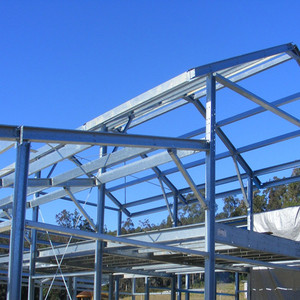
A corrugated profile sheet cannot perform in isolation; its structural reliability relies on the stiffness and span configuration of the secondary cold-formed steel sub-framing. In accordance with AS/NZS 4600 and SNI 1727:2020 (Minimum Design Loads for Buildings in Indonesia), secondary structural supports (Z-purlins and C-sections) must be fabricated from structural grade G450 or G500 zinc-coated steel.
By pairing high-tensile corrugated profile roofing (G550 base steel, nominal tensile strength ≥ 570 MPa) with continuously lapped Z-purlins, structural engineers can expand purlin spacing to 1,500mm – 1,800mm centers while maintaining roof deflection limits within standard L/180 criteria under wind suction loads up to -1.8 kPa. This integrated engineering methodology delivers a weight reduction of approximately 14% to 22% in total superstructure framing steel, driving massive cost savings on logistics, handling, and foundation piling for soft-soil Jakarta delta zones.
Specific structural configurations and protective coatings customized to the distinctive micro-environments of West Java and DKI Jakarta industrial districts.
Encompassing Tanjung Priok Port expansion, Marunda Port Center, and Cakung Bonded Logistics Hubs.
Covering MM2100, Jababeka, EJIP, GIIC Deltamas, KIIC Karawang, and Surya Cipta industrial estates.
Encompassing Cikupa, Balaraja, Modern Cikande, and Soekarno-Hatta Airport logistical zones.
Our building envelope engineering department delivers comprehensive wind-uplift calculations, purlin span spacing evaluations, and coating thickness recommendations for projects across Indonesia.
Navigating environmental directives, carbon reduction benchmarks, and mandatory architectural standards in modern Indonesian developments.
Jakarta’s statutory Green Building regulation mandates rigorous Overall Thermal Transfer Value (OTTV) thresholds below 45 W/m² for commercial and selected industrial properties. Roofing systems are rapidly transitioning from plain unpainted dark panels to certified high-SRI coatings (Solar Reflectance Index ≥ 78) that reflect shortwave solar radiation back into the atmosphere, mitigating the notorious urban heat island phenomenon.
Under MEMR (ESDM) directives accelerating rooftop photovoltaic installations, industrial developers in Cikarang and Karawang demand profiles with engineered structural standing-seams. Concealed-clip fixing systems allow heavy solar arrays to be anchored directly onto the profile ribs using non-penetrating aluminum clamps, eliminating fastener penetrations that could cause leaks during monsoonal deluges.
Tier-1 multinational general contractors (EPCs) operating in Indonesia no longer accept uncertified commercial-grade coils. Tenders strictly enforce compliance with SNI 4096:2007 (Coated Steel Sheet) and SNI 8399:2017 (Cold-formed structural steel profiles), requiring documented mill test certificates (MTC), salt-spray test data, and traceability from primary production facilities.
Combining heavy-industry manufacturing capacity, certified quality control, and full-spectrum building envelope integration.
State-of-the-art multi-stage roll-forming lines operate with multi-axis automated tracking, ensuring zero edge-waviness, flawless rib alignment, and precise cut-to-length dimensional tolerances (±2mm) across long spans up to 14 meters.
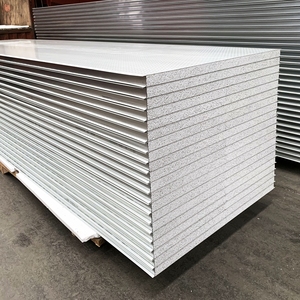
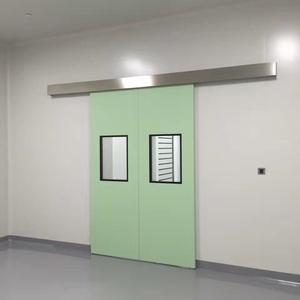
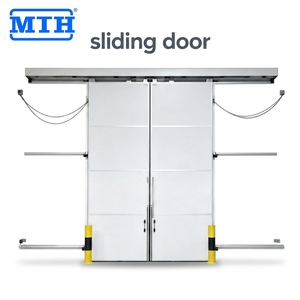
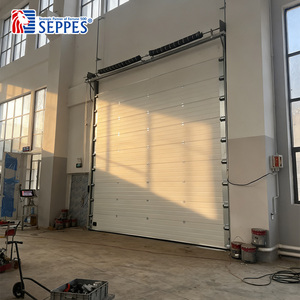
Beyond single-skin corrugated sheets, we manufacture matching PIR, PU, and Rockwool insulated sandwich panels, cold-formed G450 Z/C purlins, structural decking sheets, translucent daylighting panels, and heavy-duty industrial doors under one roof.
Every coil undergoes strict pre-roll inspection: T-bend adhesion testing, impact resistance, micrometer coating thickness scans, and continuous lab-controlled salt spray simulation. Full chemical and physical Mill Test Certificates (MTC) accompany every container.
Decades of global exporting experience ensure expert ocean freight packaging: reinforced steel strapping, water-resistant VCI paper wraps, heavy wooden skid cradles, and desiccant packs designed to arrive spotless at Pelabuhan Tanjung Priok or Cikarang Dry Port.
Authoritative technical, legal, and operational guidance for procurement managers, structural consultants, and estimators.
For installations in North Jakarta (Tanjung Priok, Pluit, Ancol, Marunda), we strictly recommend a minimum metallic coating mass of AZ150 (150 g/m² both sides) for standard sheltered warehouse roofing, and AZ200 with a PVDF topcoat for facilities facing open coastal winds or chemical off-gassing. Conventional GI sheets with Z100 or Z120 zinc coating will experience rapid galvanic degradation within 24 to 36 months in this marine environment.
Our corrugated and trapezoidal profiles are engineered with deep crest rib heights (up to 35-38mm), significantly increasing the cross-sectional hydraulic discharge capacity across long spans. Additionally, our side laps incorporate an integrated anti-capillary capillary break cavity. Even when water levels surge along the pans during a 140 mm/hr monsoon squall, hydrostatic pressure cannot draw water laterally over the purlin line.
Yes. All steel coils utilized across our production facilities conform to internationally recognized standards including ASTM A792M, AS 1397, and SNI 4096:2007 equivalents. Mill Test Certificates (MTC) detailing exact chemical composition (C, Mn, P, S, Si, Al%), mechanical yield strengths (G300 to G550), and verified coating masses are issued per production heat batch for formal consultant approval.
For primary roof profiles in Greater Jakarta industrial parks (Cikarang, Karawang, Cikande), structural consultants typically specify 0.50mm BMT (approx. 0.55mm TCT) or 0.45mm BMT (approx. 0.50mm TCT) high-tensile G550 steel. For side wall cladding, 0.40mm to 0.45mm BMT is standard. When designing walkable industrial roofs with solar panel maintenance requirements, 0.60mm BMT is strongly advised.
Yes. As an integrated manufacturer, we supply the complete structural envelope package: corrugated profile sheets, cold-formed high-tensile Z & C purlins, galvanized composite floor decking, insulated PIR/Rockwool sandwich panels, matched polycarbonate/FRP translucent skylights, automated warehouse doors, and precision-bent flashings. Consolidating these materials in 20ft and 40ft HQ containers lowers logistics expenses and ensures unified finish colors and compatible dimensional profiles.
Ocean freight containers traveling into the port of Tanjung Priok are exposed to harsh marine moisture and fluctuating thermal cycles. Our export-grade packaging features heavy-gauge edge protectors, oil-free micro-perforated protective films on paint surfaces, water-resistant vapor corrosion inhibitor (VCI) inner wrapping, robust wooden skid bases, and silica desiccant bags. This keeps sheets completely free from white rust (wet storage stain) throughout oceanic transit.