
Precision-engineered architectural, cold-chain, and secondary structural components manufactured under stringent ISO 9001:2015 certified continuous lines, fully compliant with Chilean construction standards.
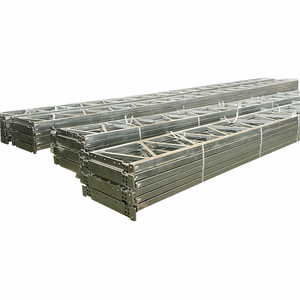
Engineered for agro-industrial packing plants and logistics centers in Santiago and Valparaíso. Hot-dip galvanization resists coastal and high-humidity inland microclimates.
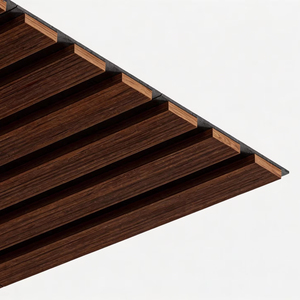
Premium NRC rated sound-dampening interior lining for corporate auditoriums, commercial headquarters, and mining administration hubs across Antofagasta and Santiago.
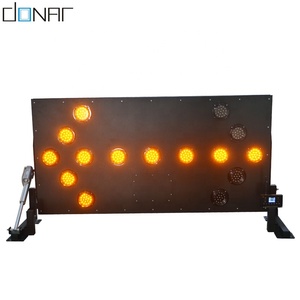
High-luminance remote optical guidance boards built for extreme solar UV and night frost in Atacama open-pit operations and Chilean transport concessions (Rutas del Pacífico).
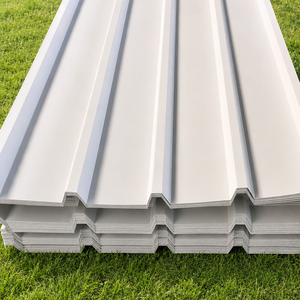
UV-stabilized resin panels profile-matched with steel sandwich roofs, optimizing natural light in industrial sheds and reducing energy expenditure under Chilean green building norms.
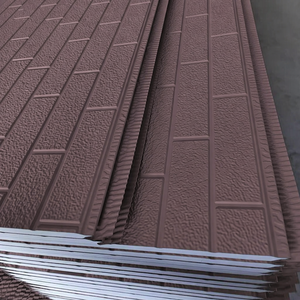
Cost-efficient, high-density insulated partitions for rapid mining camp assembly, pre-fabricated temporary site offices, and light commercial buildings in central Chile.
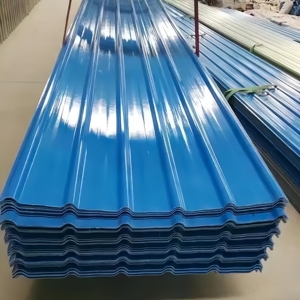
Engineered hail-resistant and non-yellowing continuous skylight systems for logistics hubs in San Bernardo and manufacturing facilities in Concepción.
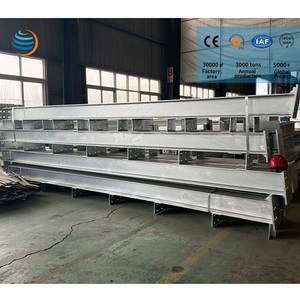
Full seismic-drift engineered truss assemblies designed under NCh 2369 criteria for heavy industrial workshops, distribution centers, and warehouse projects.
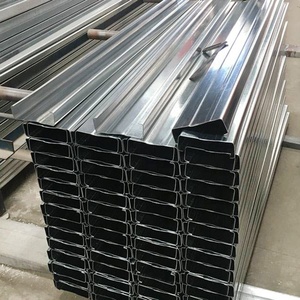
High-tensile cold-formed structural C and Z purlins coated with Z275/AZ150 zinc mass, offering rigid substrate fastening for PIR sandwich panel envelopes.
As Chilean industrial infrastructure expands rapidly across mining, controlled-atmosphere agro-exporting, and institutional logistics, modern engineering practices require building envelope solutions that balance exceptional thermal resistance (λ ≤ 0.020 - 0.022 W/m·K) with rigorous fire resistance, strict seismic performance, and chemical resilience against corrosive environments. As an established direct OEM manufacturer operating high-precision continuous lamination lines since 2009, we deliver custom Polyisocyanurate (PIR), Polyurethane (PU), and Mineral Rockwool insulated composite panels engineered specifically to satisfy the stringent requirements of Chilean construction normative documents—including the Ordenanza General de Urbanismo y Construcciones (OGUC), NCh 935/1, and Chilean seismic design codes NCh 433 and NCh 2369.
Unlike obsolete expanded polystyrene (EPS) or conventional polyurethane (PUR), modern thermoset PIR foam formulation utilizes a high-index polyisocyanurate ring structure (index ratio > 250%) blown with eco-friendly zero-ODP cyclopentane. When subjected to intense flame exposure, the PIR molecular backbone undergoes controlled carbonaceous charring, effectively cutting off oxygen ingress, inhibiting flame propagation, and self-extinguishing without generating burning molten droplets. For Chilean facility managers and EPC contractors, this fire behavior guarantees compliance with Chilean fire-resistance ratings (F30, F60, and F90) while substantially lowering catastrophic property loss risks and corporate insurance premiums underwritten by international insurers.
To provide technical consulting teams, structural engineers, and Chilean project specifiers with transparent decision-making criteria, the following matrix benchmarks the thermodynamic, physical, and fire-reaction metrics across primary insulated cores:
| Engineering Property | Rigid PIR Foam (Our Spec) | Standard PUR Foam | Mineral Rockwool Core | Expanded Polystyrene (EPS) |
|---|---|---|---|---|
| Thermal Conductivity (λ) | 0.020 - 0.022 W/m·K (Superior) | 0.024 - 0.026 W/m·K | 0.038 - 0.044 W/m·K | 0.036 - 0.040 W/m·K |
| Reaction to Fire (EN 13501-1) | B-s1, d0 (Flame retardant, minimal smoke) | B-s3, d0 to C-s3, d0 | A1 / A2-s1, d0 (Non-combustible) | E / F (Highly combustible, melting droplets) |
| Chilean OGUC Fire Resistance | F30 / F60 Compliant Assembly | F15 / F30 Limited | F60 / F90 / F120 / F180 | Uncertified for high-risk zones |
| Standard Density | 40 - 42 kg/m³ | 38 - 40 kg/m³ | 100 - 120 kg/m³ | 15 - 20 kg/m³ |
| Moisture Absorption (Vol %) | ≤ 1.5% (Closed cell > 95%) | ≤ 2.0% | Up to 10% (Requires vapor barriers) | 3.0% - 5.0% |
| Compressive Strength (10% def.) | ≥ 140 - 160 kPa | ≥ 120 - 140 kPa | ≥ 80 - 100 kPa | ≥ 60 - 80 kPa |
| Ideal Chilean Application | Mining camps, cold storage, agro packing | General inland dry storage | Fire compartment walls, generator rooms | Low-cost temporary cabins |
From the arid, high-radiation Atacama desert to the sub-zero, rainy fjords of Patagonia, our OEM PIR sandwich panels are engineered to solve specific regional operating challenges.
High UV index (UV 11+), severe diurnal thermal swings (ΔT > 35°C between day and night), and chemical dust from copper smelting and lithium brine extraction demand heavy-duty protection.
Chile is the premier exporter of cherries, table grapes, and blueberries. Controlled Atmosphere (CA) cold stores and packhouses require absolute vapor-barrier integrity to eliminate thermal bridges.
Marine salinity, constant airborne chlorides, and aggressive relative humidity require premium corrosion resistance for container staging facilities and intermodal distribution parks.
Continuous internal washing with pressurized sanitizers, severe internal condensation, torrential rainfall, and persistent dampness require impermeable surfaces and zero moisture uptake.
Understanding seismic norms, fire ratings, and sustainability mandates driving the specification of insulated panels across Chile.
The Chilean Ministry of Housing and Urbanism (MINVU) enforces rigorous compartment fire requirements under the Ordenanza General de Urbanismo y Construcciones (OGUC). While EPS panels have been extensively restricted due to rapid flame propagation and toxic black smoke, PIR sandwich panels fulfill mandatory F30 to F60 ratings, preventing vertical fire spread across exterior walls without requiring costly secondary drywall assemblies.
As one of the world's most seismically active nations, Chilean structural engineering mandates that building envelopes withstand severe inter-story drifts. Modern continuous PIR panels engineered with slotted connection brackets and specialized perimeter flashings accommodate cyclic lateral displacements during magnitude 8+ earthquake events without unseating, delaminating, or compromising building integrity.
Chile's national pledge toward carbon neutrality by 2050 and massive capital investment into Magallanes and Antofagasta green hydrogen generation have dramatically escalated thermal insulation standards. High-performance PIR systems deliver ultra-low $U$-values down to 0.11 W/m²·K, minimizing auxiliary HVAC power consumption in remote off-grid operations.
Clear, technically rigorous answers covering ocean shipping, customs, engineering specifications, and seismic performance.
We regularly ship directly to Chile's primary industrial seaports: Puerto San Antonio (CLSAI) and Puerto Valparaíso (CLVAP) for central Chile, as well as Puerto de Iquique (CLIQQ) and Antofagasta (CLANF) for northern mining operations. Typical maritime transit times from our production facility range from 28 to 36 days. We provide complete documentation for Chilean customs clearance (Declaración de Ingreso - DIN), including the Bill of Lading, certified commercial invoices, packing lists with piece-by-piece bundle dimensions, Certificate of Origin (granting preferential tariff treatment under free trade agreements), and third-party laboratory mill test certificates (MTC).
Chile's OGUC Article 4.3.3 establishes fire resistance classes (F15, F30, F60, F90, F120) based on load-bearing capacity (R), integrity (E), and thermal insulation (I). Our PIR core material possesses an international reaction-to-fire rating of B-s1, d0 according to EN 13501-1 and ASTM E84 Class A (flame spread index ≤ 25, smoke developed index ≤ 450). When configured with steel facings of ≥ 0.50mm and certified structural perimeter stitch screws, our 100mm+ wall assemblies provide verifiable F30 to F60 perimeter compartment fire resistance, validated by furnace tests equivalent to NCh 935/1 Of.97.
For standard inland warehouses in the Santiago Metropolitan region, a 25-micron Regular Modified Polyester (PE) over a Z180 or AZ100 substrate delivers a 15-20 year service life. However, for installations within 5 km of the Pacific coast (San Antonio, Valparaíso, Puerto Montt) or in hyper-arid, high-UV mining zones, we strictly specify AZ150 Galvalume (55% Al-Zn) or Z275 hot-dip galvanized steel with a 50-micron PVDF (Fluoropolymer 70% Kynar 500) or High Durability Polyester (HDP) coating, achieving a salt spray resistance rating exceeding 1,000 to 1,500 hours (ASTM B117) and UV resistance category RUV4 (EN 10169).
Under Chilean seismic code NCh 2369 (Seismic Design of Industrial Structures and Facilities), exterior cladding must not experience brittle failure during structural drift. Our panels utilize deep-engagement tongue-and-groove joints embedded with factory-applied non-skinning butyl mastic. Fasteners are installed through heavy-gauge load-distributing saddle washers (caps) or hidden-clip brackets featuring slotted anchor points. This mechanical freedom allows purlin-to-panel micro-slippage during peak ground acceleration without cracking the exterior steel facings or shearing the PIR core.
Yes. One of our key competitive strengths is single-source envelope manufacturing. In addition to continuous PIR and Rockwool panels, our Barka production facility roll-forms high-tensile cold-formed Z and C structural steel purlins, profile-matched translucent FRP and polycarbonate daylighting sheets, custom CNC-folded flashings (ridge caps, corner trims, drip edges, base channels), self-drilling fasteners with EPDM washers, and industrial galvanized roller shutter doors. Sourcing a complete package guarantees color consistency, profile compatibility, and unified shipping consolidation.
Every panel leaves the continuous laminator covered with an adhesive UV-protective PE masking film. Panels are stacked into dense, rigid bundles interleaved with protective polystyrene foam spacers. The bundle is hermetically sealed with heavy-duty heat-shrink plastic wrap, reinforced with heavy corner edge-protectors, and mounted onto custom timber or high-density EPS base blocks. This rugged ocean-freight packaging protects against condensation, salt spray ingress, and mechanical abrasion inside 40-foot High Cube (40HC) shipping containers.
Established in 2009, our manufacturing infrastructure combines continuous automated Italian-standard machinery, rigorous QA/QC inspection, and deep structural envelope expertise.
Our continuous high-speed double-belt laminating line applies uniform hydraulic pressure and closed-loop heating, ensuring consistent PIR foam density, zero unbonded voids, and flat steel facing surfaces.
All prime steel coils are sourced from audited Tier-1 steel mills with guaranteed yield strengths (≥ 280 to 550 MPa). Every batch undergoes automated chemical and physical testing before entering the roll-forming process.
From cold-formed C/Z purlins to custom-bent flashings, translucent skylight sheets, and metal decking, we manufacture the entire structural envelope under one roof, eliminating job-site interface mismatches.
Our bilingual technical team supports Chilean EPC contractors, engineers, and project owners with detailed panel layout drawings, wind-load span tables, thermal modeling, and optimal 40HC container packing schematics.
Whether you are engineering a high-altitude lithium mining facility in Calama, a cherry packing cold storage facility in Rancagua, or a port logistics hub in San Antonio, our technical engineering team provides custom panel configurations, thermal calculations, and direct factory pricing.