English | العربية
ISO 9001:2015 & AS/NZS 4600 Certified Precision Roll-Forming

Steel Girts Manufacturer & Supplier Serving the Thailand Market

High-Yield Cold-Formed C & Z Section Steel Girts, Custom Factory Wall Secondary Framing, and Heavy Corrosion-Resistant Galvanized Solutions Engineered for Thai Industrial Standards.

Structural Profile Catalog

High-Performance Steel Girts & Secondary Framing Profiles

Engineered to resist intense tropical typhoons, seismic shears, and severe monsoonal wind loads across Eastern Seaboard and Central Plain industrial complexes.

Get Catalog
550 MPa
Guaranteed High Tensile Yield
±1.0 mm
CNC Punch & Shear Tolerance
Z275 / AZ150
Tropical Anti-Corrosion Barrier
100% Direct
Factory Roll-Forming QA Audited
Technical Whitepaper

Engineering Cold-Formed Steel Girts for Extreme Tropical Climates

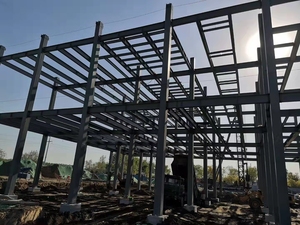
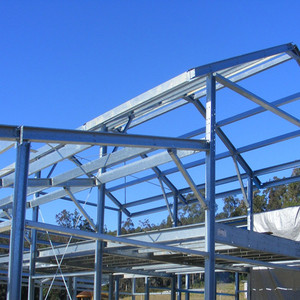
In modern pre-engineered building (PEB) design, cold-formed steel (CFS) girts serve as the critical secondary framing mechanism interconnecting primary structural portal frames with the building's exterior cladding envelope. Far beyond functioning as mere attachment battens, horizontal steel girts are structurally responsible for transferring severe horizontal lateral loads—predominantly inward positive wind pressures and outward monsoonal wind suction—directly into the main columns. Concurrently, when engineered in strict compliance with AS/NZS 4600:2018 (Cold-formed steel structures) and AISI S100 standards, steel girts provide lateral torsional buckling restraint to the exterior flanges of primary columns under gravity and seismic moments, drastically reducing the effective unbraced column length ($L_{cr}$).

Structural Engineering Distinction: Lapped Continuous Z-Girts vs. Simple-Span C-Girts
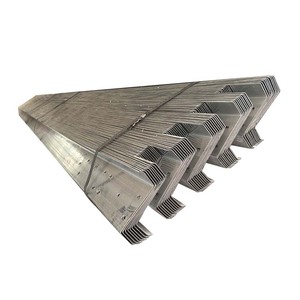
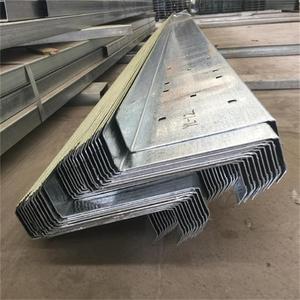
For large-span industrial warehouses spanning 6.0m to 9.0m column bays across Thailand's Eastern Seaboard, continuous lapped Z-sections deliver substantial material and deflection efficiencies over single-span C-sections. By nesting two Z-profiles back-to-back across interior column brackets to create a structural overlap of 10% to 15% of the total span length ($0.10L$ to $0.15L$), the section modulus is doubled at regions of peak negative bending moment. This mechanical continuity diminishes mid-span positive bending deflections by up to 42%, enabling structural engineers to reduce overall steel thickness while safely maintaining strict deflection limits ($L/180$ for standard trapezoidal sheet walls and $L/240$ for rigid insulated sandwich panels).

The atmospheric reality of the Gulf of Thailand and adjacent industrial provinces introduces rigorous durability demands. The convergence of high ambient humidity (averaging 75% to 85% year-round), elevated temperatures exceeding 38°C, heavy cyclical monsoon downpours, and dense chemical emissions in provinces such as Rayong and Chonburi classifies these environments as C4 to C5 corrosive atmospheres according to ISO 12944. Traditional structural carbon steels without advanced protective metallurgy experience premature micro-pitting and rust staining within 18 to 24 months. Our steel girts utilize premium cold-rolled galvanized steel sheets with high-adhesion zinc masses up to Z275 (275 g/m² total both sides) or 55% Aluminum-Zinc alloy coatings (AZ150 Galvalume), establishing a resilient galvanic self-healing boundary layer that resists micro-fissuring during high-speed CNC roll-forming and field punching operations.

Profile Designation Web Depth ($D$) Flange ($B_1/B_2$) Lip ($L$) Base Metal Thickness ($t$) Minimum Yield ($f_y$) Moment of Inertia ($I_x$)
C15015 / Z15015 150 mm 64 / 60 mm 15 mm 1.5 mm G450 (≥450 MPa) 198.4 cm⁴
C20019 / Z20019 200 mm 76 / 70 mm 19 mm 1.9 mm G450 (≥450 MPa) 492.1 cm⁴
C25024 / Z25024 250 mm 76 / 70 mm 20 mm 2.4 mm G450 / G500 (≥500 MPa) 896.7 cm⁴
C30030 / Z30030 300 mm 96 / 88 mm 25 mm 3.0 mm G450 / G550 (≥550 MPa) 1,640.2 cm⁴
C35032 / Z35032 350 mm 100 / 92 mm 28 mm 3.2 mm G450 / G550 (≥550 MPa) 2,480.5 cm⁴
Geographic & Industrial Relevance

Localized Application Scenarios Across Thailand

Engineered to satisfy specific geographical, environmental, and architectural specifications across major Thai economic corridors.

EEC Automotive & EV Gigafactories

Installed across Rayong, Chonburi, and Chachoengsao industrial parks (WHA, Amata City). High-tensile G550 Z-girts support wide-bay EV manufacturing facilities requiring minimal columns and clean, pre-punched secondary wall steel.

Coastal & Petrochemical Estates

Deployed in heavy chemical zones around Map Ta Phut Port and Laem Chabang Deep Sea Port. Heavy-dip Z275/AZ150 coatings withstand marine airborne chlorides and sulfur emissions without flaking or chemical degradation.

Automated Cold Chain Logistics

Central Plain distribution hubs (Bangna-Trad, Samut Prakan, Pathum Thani). C-girts engineered with thermal-break isolators support thick PIR/PU sandwich panels, eliminating condensation and thermal leakage in temperature-controlled spaces.

Agro-Industrial Feed & Processing

Processing plants in Saraburi, Ayutthaya, and Nakhon Ratchasima. Resistant to severe interior ammonia vapors, grain dust moisture, and pressure washdowns, maintaining long-term structural integrity with zero weld failure risk.

Market Dynamics & Growth Trends

Thailand Construction Trends Reshaping Secondary Framing

Analyzing key structural, economic, and green building factors accelerating cold-formed steel girt adoption in Thailand 4.0 initiatives.

Hot-Rolled to Cold-Formed Transition

Thai EPC contractors are rapidly transitioning away from heavy hot-rolled channels (JIS G3101 SS400) toward G450/G550 cold-formed girts, slashing secondary steel tonnage by 35% to 45% and reducing foundation dead load requirements.

Solar Rooftop & Parapet Over-Engineering

Under Thailand's Power Development Plan (PDP) solar expansion, secondary framing must accommodate substantial additional dead loads and parapet wind vortices. Our high-moment profiles offer pre-calculated deflection margins for retrofits.

Stringent EIA Environmental Protocols

Modern industrial estates mandate zero on-site hot work (welding and flame-cutting) to minimize toxic emissions and fire hazards. CNC pre-punched girt systems allow 100% bolted field connections using high-tensile Grade 8.8 bolts.

Compliance with DPT Standard 1311-50

Thailand's Department of Public Works and Town & Country Planning enforces wind design criteria accounting for coastal tropical wind bursts. Our certified section modulus data provides verifiable proof for local municipal building permits.

Manufacturing Excellence

Integrated Envelope Metallurgy: The Manufacturer Advantage

Single-source quality control from raw hot-dip galvanized steel coil slit lines to custom jobsite packing and export logistics.

Precision Roll-Forming & Inline Punching

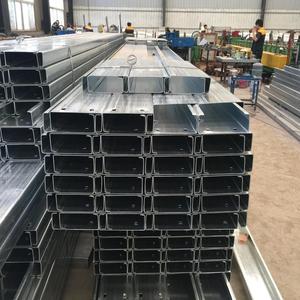
Operating advanced multi-stand CNC roll-forming lines, we cold-form structural C and Z girts with strict dimensional adherence to cross-sectional symmetry, flange angles, and stiffener lip geometries. Our inline automated hydraulic punching presses execute web cleat holes, elongated thermal expansion slots, and anti-sag rod apertures with precision tolerance within ±1.0 mm, guaranteeing seamless site bolt-up without torch adjustments.

By coordinating secondary cold-formed steel girts and purlins with insulated sandwich panels (PIR, PU, Rockwool), profile decking sheets, and precision flashings, contractors can source a fully engineered, thermally and structurally unified building envelope from a single certified source.

Quality Assurance & Testing Protocols

  • ✓ Mill Test Certificates (EN 10204 3.1): Full traceability on yield strength ($f_y$), ultimate tensile strength ($f_u$), and elongation percentage for every production heat.
  • ✓ Coating Weight Verification: X-ray fluorescence and magnetic induction gauges verify minimum zinc/alloy masses (Z275/AZ150) across web and flange radiuses.
  • ✓ Salt Spray Corrosion Testing: Validated per ASTM B117 standards to confirm no red rust occurrence after 1,000 continuous hours of salt fog exposure.
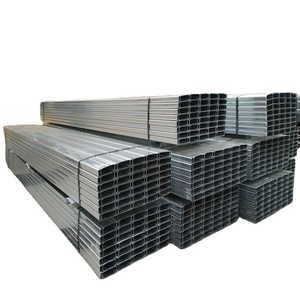
  • ✓ Seaworthy Bundling & Export Wrapping: Stacked in timber-cradled, moisture-barrier strapped bundles engineered for containerized ocean transit to Laem Chabang.
Procurement & Engineering FAQ

Frequently Asked Questions for Thailand Projects

Key structural, metallurgical, and logistics answers for EPC contractors, design consultants, and procurement managers.

1. How do your G450/G550 AS/NZS 4600 steel girts align with Thai Industrial Standard TIS 1228-2561? +
Thai Industrial Standard TIS 1228-2561 specifies cold-formed structural steel sections across various grade classes. Our high-tensile steel girts manufactured to AS/NZS 4600 / ASTM A653M standards utilize base metals with guaranteed yield strengths of 450 MPa to 550 MPa, substantially exceeding standard TIS mild steel grades (such as SSC400 with ~245 MPa yield). We furnish comprehensive engineering documentation, cross-sectional calculations, and certified mill test reports (MTC) showing exact metallurgical parity, allowing Thai licensed structural engineers (Chartered Engineers / Samakom Witsawakam) to easily obtain municipal building approvals.
2. What is the recommended lap ratio for continuous Z-girts across 6m to 8m portal column bays? +
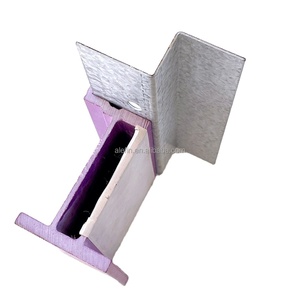
To achieve fully continuous structural beam performance over intermediate columns, we recommend an overlap length of 10% to 15% of the total span ($0.10L$ to $0.15L$) on each side of the support cleat. For example, on a 6.0-meter bay design, a standard lap length of 600 mm to 900 mm provides the necessary double-section thickness to resist maximum negative bending moments while restricting lateral-torsional flange rotation. Bolting should be detailed using M12 or M16 Grade 4.6 or 8.8 structural bolts placed through pre-punched web holes per our certified layout drawings.
3. Which coating weight should be specified for coastal projects in Rayong versus inland Pathum Thani? +
For inland, climate-controlled warehousing in Pathum Thani, Ayutthaya, or Saraburi with mild humidity (ISO 12944 C2 environment), a hot-dip zinc coating of Z180 to Z200 g/m² or AZ100 provides adequate service life exceeding 25 years. However, for coastal facilities, ports, or industrial chemical zones in Rayong, Chonburi, or Samut Prakan (C4 to C5 marine/industrial atmospheres), we strongly mandate a minimum of Z275 (275 g/m² total zinc mass) or AZ150 Galvalume (150 g/m² 55% Al-Zn alloy coating) to prevent micro-pitting caused by salt spray and chemical airborne condensation.
4. How should sag rods and anti-sag struts be spaced for tall industrial walls under suction? +
Under severe wind suction (outward loading), the unrestrained inner flange of the steel girt experiences critical compressive stress, which can trigger lateral torsional buckling if unbraced. For girt depths of 200 mm or greater on spans exceeding 5.5 meters, we recommend incorporating mid-point or third-point sag rods and bridging channels connected to top-tier structural eaves struts. Anti-sag rods align the minor axis ($Y-Y$) of the profile, maintaining plumb alignment under dead load (cladding weight) and restraining the compression flange against rotational twist under gusting wind bursts per DPT Standard 1311-50.
5. What are the lead times and shipping arrangements for deliveries to Laem Chabang and Bangkok Port? +
Standard roll-forming fabrication cycles range between 10 to 18 working days depending on order tonnage and custom hole punching configurations. Ocean container shipping or breakbulk vessel transit to Laem Chabang Port or Bangkok Modern Terminal typically takes 12 to 18 days. Products are bundled in tight, protective moisture-barrier shrink wraps with reinforced corner edge protectors and bottom steel lifting dunnage, ensuring undamaged unloading and immediate flatbed staging directly to Thai jobsites.
6. Can your factory supply custom-notched flanges and slotted web holes for thermal movement? +
Yes. Our high-speed CNC roll-forming lines feature integrated hydraulic punch heads capable of punching round holes, elongated slots, and flange copes directly from Tekla or BIM detailing software coordinates. Elongated slotted holes (e.g., 14 mm x 25 mm or 18 mm x 30 mm) are frequently specified on continuous girt spans in Thailand to facilitate thermal longitudinal expansion and contraction caused by extreme solar heating on dark corrugated external sheets, preventing wall panel buckling.

Request Certified Steel Girt Engineering Data & Quotations

Consult with our structural engineering team for span charts, section moduli, wind-load capacity calculations, and factory-direct pricing for your Thailand infrastructure project.