
Precision cold-rolled secondary structural steel components manufactured under strict ISO 9001 and EN 1090 execution classes. Designed for fast-track installation, superior lateral load resistance, and full architectural integration across Slovak industrial building envelopes.
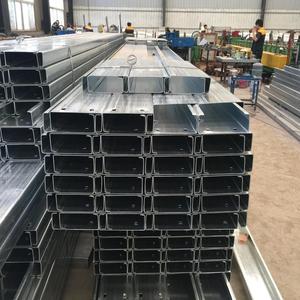
Engineered for Slovak factory wall envelopes requiring high load-bearing capacity and pre-punched web configurations for accelerated erection cycles.
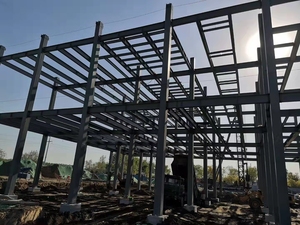
Optimized cold-formed C/Z structural profiles providing enhanced flexural rigidity against extreme suction forces and heavy side-wall curtain loads.
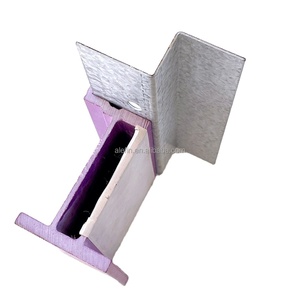
Continuous lapping geometry creates structural continuity over multiple internal bays, decreasing cross-sectional weight by up to 18% in distribution centers.
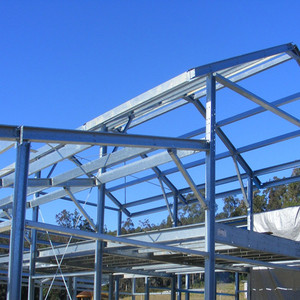
Heavy galvanized and zinc-magnesium coated structural steel framing tailored for chemical fertilizer storage and agro-industrial facilities in Eastern Slovakia.
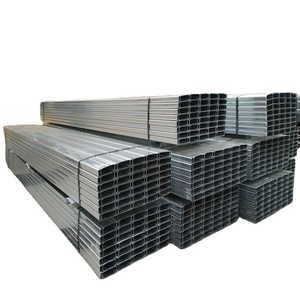
High-precision trusses and secondary purlins manufactured with tight dimensional tolerances, ensuring seamless alignment with portal frames and trusses.
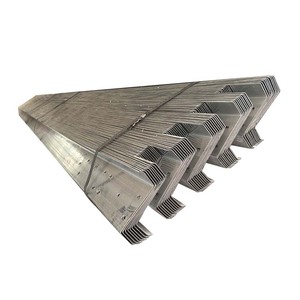
Ideal for multi-story residential structures and modular commercial developments requiring lightweight acoustic and fire-barrier integration.
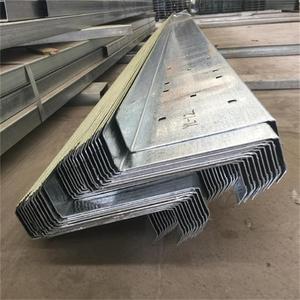
Multi-functional cold-formed profiles engineered to support massive external sandwich panel facades, delivering outstanding thermal expansion accommodation.
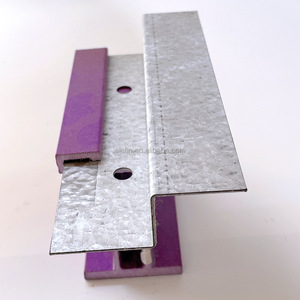
Heavy duty structural steel girts fabricated to withstand high mountain snow and dynamic wind suction forces across mountainous Slovak regions.
When specifying secondary steel wall framing (girts) and roof purlins for modern pre-engineered steel buildings (PEB) in Slovakia, structural engineers must satisfy strict Eurocode criteria. Our production lines combine automated roll-forming precision with structural grades up to S450GD.
| Profile Designation | Available Depths (mm) | Thickness Range (mm) | Standard Steel Grade | Corrosion Protection | Structural Behaviour & Primary Role |
|---|---|---|---|---|---|
| C-Girt (Stiffened Lip) | 100 – 350 mm | 1.5 – 3.2 mm | S350GD + Z / S390GD | Z275 / ZM120 - ZM310 | Simply supported single-bay framing. Ideal for window jambs, door trimmers, and framed openings. |
| Z-Girt (Sleeved / Lapped) | 120 – 300 mm | 1.5 – 3.0 mm | S350GD / S450GD | Z275 / ZM310 Magnelis | Continuous multi-bay systems. Lapping over structural columns eliminates mid-span deflection and optimizes steel weight. |
| Sigma (Σ) High-Moment Girt | 170 – 400 mm | 2.0 – 3.5 mm | S350GD / S420GD | Z275 / Hot-Dip Galvanized | Extra-wide bay centers (9m – 12m). Increased torsional resistance for large logistics parks and high facade heights. |
| Sub-Framing Top-Hat & Z | 40 – 100 mm | 1.0 – 2.0 mm | DX51D / S280GD | Z275 / AZ150 | Architectural rain-screen cassette backing, insulated architectural panels, and solar facade brackets. |
In the Slovak Republic, structural calculation of thin-walled cold-formed members must account for distorted and local buckling according to standard STN EN 1993-1-3:NA. Our structural profiles feature engineered returns (stiffening lips ranging from 15mm to 28mm) designed to maximize effective cross-sectional area (A_eff) under both positive and negative wind pressures, ensuring full compliance during Technical Inspection (Technická inšpekcia) reviews.
From heavy snow accumulation along the Carpathian mountain range to the demanding logistical hubs surrounding the Greater Bratislava Area, our cold-formed secondary framing systems are calibrated for regional microclimates and rigorous construction methodologies.
Slovakia's automotive backbone—spanning Tier-1 and Tier-2 suppliers around Stellantis (Trnava), Jaguar Land Rover (Nitra), and Kia (Žilina)—demands massive, clear-span assembly and warehousing plants. Our continuous lapped Z-girts handle horizontal cladding spans of 6m to 9m, allowing rapid installation of heavy acoustic and fire-rated Rockwool core sandwich panel wall systems.
In northern districts such as Poprad, Liptovský Mikuláš, Martin, and the foothills of the High and Low Tatras, snow loads (Snow Zone 3 to Zone 5 under STN EN 1991-1-3) routinely exceed 2.5 to 4.0 kN/m². We provide high-gauge C-purlins and deep Z-girts (up to 3.2mm steel thickness) engineered to resist roof-edge snow drift forces and extreme gale-force wind suctions.
The Senec logistical cluster represents the premier distribution gateway for Central and Eastern Europe. High-bay distribution warehouses (clear internal heights up to 14m) require slender, lightweight horizontal wall girts that maximize storage volume while preserving tight structural deflection limits (L/200 or L/250) against high exterior wind buffeting.
The agricultural heartlands of Podunajská nížina and the Košice Basin house high-humidity grain processing facilities, livestock stables, and bulk fertilizer storage. Standard galvanized coatings deteriorate rapidly under ammonia vapors and humid microclimates. We manufacture steel girts protected with advanced Zinc-Aluminium-Magnesium coatings (ZM310 Magnelis), delivering up to 3x higher corrosion protection than conventional Z275 steel in aggressive C3 and C4 environments.
Slovakia's national thermal insulation standard STN 73 0540-2 sets strict linear thermal transmittance requirements (ψ-values) to eliminate thermal bridging across building envelopes. Our engineered sub-framing Z-girts and custom thermal spacers allow Slovak contractors to install thick PIR/mineral wool insulation layers (150mm - 200mm) without compromising external facade structural integrity.
Strategic insights into legislative, architectural, and sustainability shifts transforming steel procurement and building envelope execution across the Slovak Republic.
Under EU Construction Products Regulation (CPR 305/2011), all load-bearing cold-formed girts installed on Slovak construction sites must be delivered with factory production control (FPC) certification and a formal Declaration of Performance (DoP). Slovak site supervisors strictly reject profiles lacking mill test certificates EN 10204 3.1 verification.
Slovak design institutes in Bratislava, Košice, and Žilina rely on Tekla Structures and Autodesk Revit models. Our engineering teams provide fully native IFC and 3D structural model exports with customizable CNC punching schedules, eliminating all on-site drilling, gas cutting, or zinc-coating damage during building erection.
Driven by European ESG mandates and soaring industrial power tariffs, commercial facility owners across Slovakia are equipping warehouse roofs with photovoltaic arrays. Secondary purlins and eave girts must be calculated for auxiliary dead loads (+0.18 kN/m²) plus concentrated ballast forces, sparking a migration from S350GD to high-tensile S450GD steel.
Operating world-class manufacturing facilities since 2009, Paneltech International LLC delivers fully synchronized secondary steel and building envelope packages direct to project sites worldwide.
Beyond structural C/Z girts and purlins, we manufacture PIR/PU/Rockwool sandwich panels, metal decking, translucent skylight sheets, flashings, and industrial roller shutter doors. Slovak buyers eliminate multi-vendor interface disputes by sourcing their entire roof and wall secondary package from one accountable manufacturer.
Our multi-stage continuous roll-forming lines execute automated web and flange punching (round, slotted, and elongated holes) with millimeter tolerances. Lengths are cut to exact project requirements up to 14 meters, significantly cutting crane hoisting time and scrap generation on site.
Every master coil is verified for yield strength, elongation, tensile limit, and zinc coating mass adherence before feeding into the forming line. Full metallurgical test reports (MTR) according to EN 10204 3.1 accompany every shipping container, satisfying Slovak building control authorities.
Equipped with specialized heavy-gauge nesting and sea-container strapping protocols, our steel profiles arrive in pristine condition at Central European intermodal terminals (Bratislava Port, Dunajská Streda, or Košice) with complete moisture-barrier wrapping preventing white rust formation during transit.
Direct technical answers for Slovak structural engineers, pre-engineered building fabricators, and commercial general contractors.
The distinction lies primarily in cross-sectional symmetry and continuity over support columns. C-girts have a symmetrical channel profile with unequal or equal stiffened flanges; they are typically designed as single-span (simply supported) members. They excel around framed wall openings, window jambs, and parapets because their flat backs easily fix to primary columns without offsetting.
In contrast, Z-girts feature asymmetrical flanges (one slightly narrower than the other) that permit nesting and lapping at internal structural frame columns. Lapping creates true structural continuity (double thickness at high negative bending moment regions over supports). In standard Slovak logistics centers with 6m, 7.5m, or 9m column grids, lapped Z-girts reduce mid-span deflection and deliver an overall steel weight reduction of 15% to 22% compared to simply-supported C-sections.
Our profiles are manufactured strictly using structural steel complying with EN 10346 (S350GD, S390GD, or S450GD). Calculations under STN EN 1993-1-3 require determining effective width and cross-sectional properties based on local and distortional buckling modes. Our roll-formed profiles are designed with optimal return lip angles (ranging from 45° to 90° with stiffening returns ≥ 15 mm) to maximize cross-sectional efficiency.
Furthermore, our factory adheres to EN 1090-2 Execution Class 2 (EXC2) as standard, with EXC3 available for critical public structures, providing complete 3.1 Mill Test Certificates verifying mechanical yield, ultimate tensile strength, and impact tests.
For standard dry, heated logistics centers and retail warehouses located in rural and suburban Slovak environments (Corrosivity Category C1/C2 per ISO 12944-2), a standard hot-dip galvanized coating of Z275 (275 g/m² total both sides, ~20 µm per side) is the industry norm and provides a design life exceeding 25–30 years.
However, for industrial environments with elevated chemical emissions (such as chemical processing, pulp and paper facilities around Ružomberok, or agricultural livestock sheds with high ammonia concentrations in southern Slovakia classified under C3 or C4), we strongly recommend our Zinc-Aluminium-Magnesium coating (ZM310 Magnelis). ZM310 provides superior sacrificial self-healing protection on sheared edges and punched bolt holes, dramatically slowing red-rust degradation.
Yes. Our automated CNC punching station integrates directly into the cold roll-forming process. We execute standard round holes (Ø 14mm, Ø 18mm for M12/M16 bolts) as well as slotted holes (e.g., 18mm x 22mm or 18mm x 30mm) along both web and flanges.
Slotted holes are critical for accommodating thermal expansion and contraction over long structural facades without buckling secondary steel members or distorting external sandwich panels. Punching schedules are calibrated directly from your Tekla or Revit fabrication drawings with an accuracy tolerance of ±1.0 mm.
STN 73 0540-2 enforces strict overall heat transfer coefficients (U-values) for external industrial walls (typically U ≤ 0.22 W/(m²·K)). When steel girts are placed in direct metal-to-metal contact with exterior cladding, linear thermal bridges significantly degrade building energy performance.
We manufacture sub-framing Z-girts specifically engineered for use with high-density EPDM or PVC thermal break pads (insulation isolators) situated between the girt and the building's primary column. In double-skin built-up cassette systems, our cold-formed girts accommodate mineral wool or PIR insulation depths up to 200mm, ensuring zero condensation formation on internal steel surfaces during sub-zero Slovak winters.
Every consignment supplied to Slovak projects includes a comprehensive technical dossier: (1) CE Declaration of Performance (DoP) referencing harmonized standard EN 1090-1, (2) Mill Test Certificates EN 10204 Type 3.1 certifying steel chemical composition and tensile properties, (3) Zinc coating mass measurement logs, and (4) Detailed packing lists keyed to member marks specified in your assembly plans. This guarantees frictionless sign-offs by local site technical supervisors (Stavebný dozor).