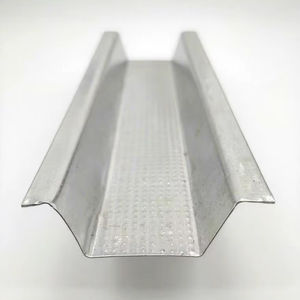
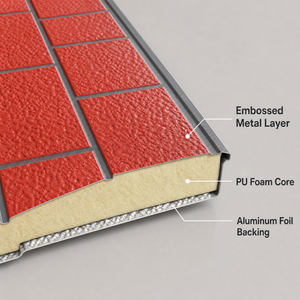
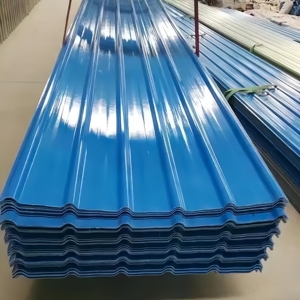
Direct factory manufacturing across precision metal furring, insulated wall and roof panels, glazed structural joinery, and specialized daylighting components to complete full exterior envelopes.
An analytical appraisal of microclimatic stresses across the Ardennes (Éislek) and Gutland, structural loads under Eurocode 1, and the paradigm shift from natural slate to composite stone-coated steel.
The Grand Duchy of Luxembourg presents a distinctly severe set of climatological and structural demands for building envelope engineers, project specifiers, and architectural conservators. Positioned at the dynamic intersection of oceanic and continental meteorological patterns, Luxembourg experiences intense moisture saturation, sustained winter freezing cycles, heavy wind-driven precipitation along the Ardennes mountain shelf, and localized high-density hail events during transition seasons. Traditional roofing systems across the Grand Duchy have historically relied on natural slate (Ardoise) and heavy ceramic or terracotta tiles. While aesthetically embedded in the historical urban fabrics of Luxembourg-Ville, Clervaux, and Vianden, these legacy materials place enormous dead loads upon structural timber frameworks—routinely exceeding 45 kg to 55 kg per square meter—while demonstrating vulnerability to freeze-thaw spalling, delamination, and hail shatter.
As Luxembourg accelerates its national sustainability trajectory in alignment with the Pacte Climat 2.0 and strict thermal efficiency directives outlined in the Règlement Grand-Ducal sur le Rendement Énergétique des Bâtiments, modern structures require exterior building envelopes that balance structural featherweight characteristics with extreme thermodynamic resistance. Stone-coated roofing tiles, roll-formed from high-tensile 55% Aluminum-Zinc alloy coated steel (Galvalume®) and sintered with deep-baked volcanic basalt stone chips, emerge as the premier technical alternative. Delivering an installed dead load of only 6.2 kg to 6.8 kg per square meter, stone-coated architectural metal shingles alleviate over 85% of roof superstructural stress while delivering uncompromising Eurocode-compliant mechanical performance.
For commercial developers and renovation general contractors across Esch-sur-Alzette, Differdange, Strassen, and Bertrange, the material composition of roofing systems must also address the acoustic realities of rainfall and hail. Uncoated bare metal profile sheeting creates substantial resonant reverberation during intense downpours, requiring heavy acoustic insulation build-ups to satisfy European interior ambient noise thresholds. In contrast, the graded basalt granules embedded in our acrylic-resin matrices function as a natural acoustic baffle, dissipating vibrational kinetic energy and dampening ambient rain noise to levels indistinguishable from thick clay tiles.
A micro-structural dissection of the 8-layer protective matrix designed to prevent edge creep, galvanic corrosion, and granule depletion in harsh continental atmospheres.
Comparative material metrics validated against European Norms (EN), demonstrating superiority over fiber cement, clay tiles, and uninsulated metal profiles.
| Performance Parameter | Stone Coated Steel Tile | Natural Slate (Ardoise) | Clay / Terracotta Tile | Corrugated Fiber Cement |
|---|---|---|---|---|
| Installed Weight (kg/m²) | 6.20 – 6.80 kg/m² | 42.0 – 55.0 kg/m² | 45.0 – 60.0 kg/m² | 14.0 – 18.0 kg/m² |
| Base Material Specification | Aluzinc AZ150 (55% Al, 43.4% Zn) | Metamorphic Foliated Rock | Fired Ceramic Clay | Reinforced Synthetic Matrix |
| Fire Reaction (EN 13501-1) | Class A1 / Class Broof(t1) | Class A1 | Class A1 | Class A2-s1, d0 |
| Hail Impact Rating (FM 4473 / UL 2218) | Class 4 (No shatter at 50mm hail) | Prone to cleavage cracking | Prone to impact fracture | Susceptible to hairline puncture |
| Wind Uplift Resistance | Up to 240 km/h (Interlocking) | Depends on individual clips | Susceptible to dislodgement | Prone to perimeter tear-off |
| Freeze-Thaw Resistance (EN 539-2) | 100% Impermeable (Zero spalling) | Delaminates along foliation | Porous absorption causes spalling | Micro-cracking under frost cycles |
| Structural Substructure Demand | Standard 38x38mm timber or light steel battens | Heavy timber trusses & full sarking | Reinforced heavy roof rafters | Heavy purlin spacing required |
From historical preservation mandates in the capital to modern zero-emission commercial hubs in Belval, exploring exact deployment methodologies.
How stone-coated steel directly satisfies the Ministry of Environment's circular economy mandates and life-cycle assessment (LCA) requirements.
Luxembourg's construction sector is transitioning rapidly toward mandatory Life Cycle Assessment (LCA) scoring under circular economy guidelines established by the Conseil National pour la Construction Durable. Conventional asphalt shingles and fiber cement composite panels create significant post-demolition landfill burdens and release hazardous volatile organic compounds during production and disposal. In sharp contrast, our stone-coated steel roofing panels are composed of 100% recyclable structural steel, which can be continuously reclaimed through electric arc furnace (EAF) processing without structural degradation.
Furthermore, the mechanical assembly architecture utilizes localized corrosion-resistant fastener fixings rather than permanent bituminous wet adhesives. This dry construction approach allows for complete end-of-life demountability—a foundational requirement of the European Union's Circular Economy Action Plan. Renovation specifiers across Luxembourg increasingly favor stone-coated metal systems because they minimize demolition waste during structural alterations. When retrofitting failing roofs, the existing batten framework or older shingles can frequently remain in place, acting as an additional thermal barrier while the stone-coated system is fastened above, drastically reducing municipal tipping fees and site waste.
A fully integrated manufacturing campus operational since 2009, combining roll-forming precision, continuous composite panel production, and containerized logistics straight to Luxembourg depots.
Authoritative guidance regarding building codes, Eurocode conformity, installation over existing roof substrates, and logistical workflows in Luxembourg.