
High-load trapezoidal profiles, prepainted metallic coatings, non-combustible composite systems, and cold-formed purlins designed to fulfill strict structural design codes, typhoon uplift criteria, and thermal envelope mandates across Greater Nagoya.
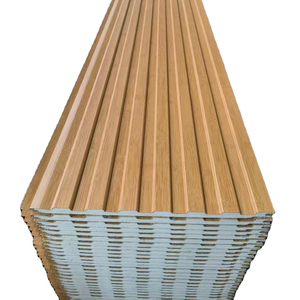
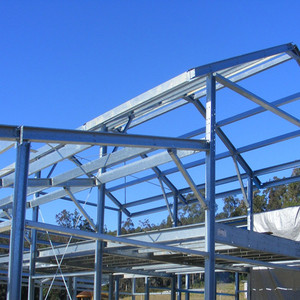
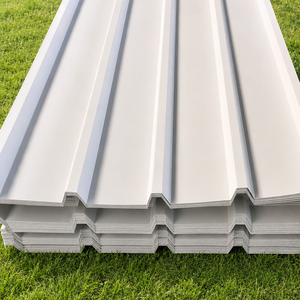
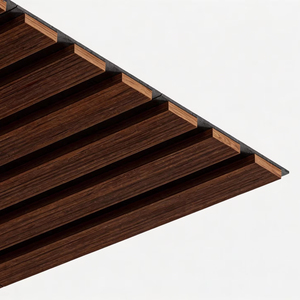
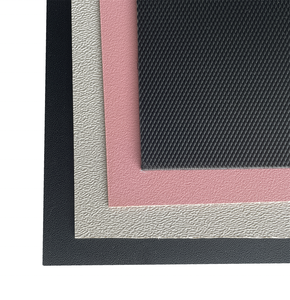
The Chubu region, centered on Nagoya, stands as Japan's undisputed manufacturing engine. From automotive mega-complexes in Toyota City and Kariya to aviation manufacturing clusters around Chubu Centrair International Airport and expansive transshipment hubs along the Port of Nagoya, industrial roofing and cladding systems are subjected to some of the world's most demanding operating conditions.
Procuring corrugated profile sheets in this market requires far more than aesthetic evaluation. Nagoya’s structural envelopes must simultaneously resolve three severe physical vectors: high seismic acceleration coefficients mandated by Japan’s Building Standard Law (Kenchiku Kijun-hō), intense typhoon-induced dynamic uplift forces originating in the Ise Bay corridor, and aggressive atmospheric salinity (ISO 12944 Category C4 to C5-M) pervasive across the coastal industrial belt.
Design Insight for Tokai Engineering Teams: In accordance with Ministry of Construction Notification No. 1454, Nagoya's reference basic wind speed ($V_0$) is established at 34 m/s to 38 m/s, yielding localized suction coefficients at roof corners and eaves that exceed $-2.2$ to $-3.1$. Sourcing trapezoidal profiles with optimized rib geometry and continuous crest-fastening clip systems is mandatory to eliminate sheet pull-through failures.
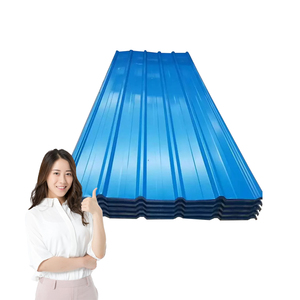
Our engineered profile sheets leverage continuous cold-roll forming processes utilizing certified high-tensile hot-dip galvanized (GI), 55% Aluminum-Zinc alloy coated (Galvalume / GL), and zinc-aluminum-magnesium (ZAM) structural steel coils. By maintaining precise rib pitch, generous capillary cut grooves, and deep water-carrying valleys, these profiles guarantee leak-proof performance under convective precipitation rates exceeding 100 mm/hour during Chubu's torrential summer typhoon season.
Compare mechanical properties, surface coatings, and Japanese industrial compliance standards across our prime corrugated envelope catalog.
| Profile Substrate Class | Standard Yield Strength | Protective Barrier / Mass | Corrosion Resistance | Applicable Standards | Recommended Chubu Siting |
|---|---|---|---|---|---|
| Galvalume (GL) 55% Al-Zn | G300 – G550 (300–550 MPa) | AZ150 (150 g/m² double-sided) | High Barrier 4x over GI | JIS G 3321 / AS 1397 | Automotive component factories & distribution centers |
| Pre-Painted PVDF (Fluoropolymer) | G300 – G450 (300–450 MPa) | Kynar 500 / Hylar 5000 (25µm + 5µm) | Exceptional UV/Acid | JIS G 3322 / ASTM A755 | Coastal facilities within 2 km of Nagoya Port / Ise Bay |
| Structural Z275 Hot-Dip Zinc | G250 – G350 (250–350 MPa) | 275 g/m² Pure Metallic Zinc | Standard Galvanic Protection | JIS G 3302 / EN 10346 | Inland warehouses, mezzanine floors, structural decking |
| Continuous Reinforced FRP | Flexural: >140 MPa | 20µm Gel-Coat Anti-UV Layer | Total Chemical / Acid Inertness | JIS K 6919 / ASTM D3841 | Chemical processing, pickling lines, coastal skylights |
| Cold-Rolled G450 Purlins (C/Z) | Yield: ≥450 MPa (Tensile: 480+) | Z275 / Z450 Heavy Galvanized | Heavy Structural Lifespan | AS/NZS 4600 / JIS G 3350 | Primary and secondary roof frameworks across Aichi |
Tailored envelope implementations engineered to solve real microclimatic and structural operational demands across key economic nodes in Central Japan.
Facilities positioned in Tobishima, Minato Ward, and along the Chita Peninsula face relentless airborne sea salts and humid maritime winds. Utilizing AZ150 Galvalume and 2-coat PVDF profiled sheets prevents premature sacrificial corrosion, guaranteeing a maintenance-free 25+ year lifespan for logistics hangars and shipping consolidation hubs.
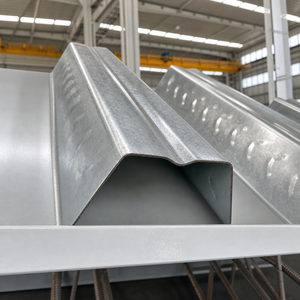
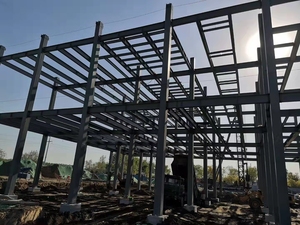
Across Toyota City, Okazaki, and Kariya, massive stamping, robotic assembly, and powertrain manufacturing require large, unobstructed column-free spans. Our precision open-rib metal decking combined with G450 high-yield purlins delivers elevated load-to-weight ratios, absorbing dynamic machinery vibrations and overhead crane loads seamlessly.
Under Aichi Prefecture's aggressive decarbonization roadmap, industrial operators are retrofitting vast warehouse roofs with commercial solar arrays. Our deep-rib standing seam and corrugated profiles are designed for non-penetrating aluminum clamp fixtures, eliminating roof punctures while sustaining severe typhoons and snow loads from Mt. Ibuki winds.
Semiconductor tooling, gigafactory facilities, and chemical plants in Yokkaichi and Komaki generate corrosive exhaust fumes and require strict acoustic suppression. Pairing heavy-duty corrugated sheets with soundproof acoustic slats and acid-resistant flat FRP panels maintains strict particulate containment and employee noise safety.

The industrial building envelope market in Greater Nagoya is undergoing a profound paradigm shift driven by legislative reforms, supply chain reshoring, and the Tokai Earthquakes preparedness initiatives. Specifying engineers are moving away from commodity single-skin sheets toward integrated building systems that address key micro-trends:
Following updates to the revised Act on the Improvement of Energy Consumption Performance of Buildings (Kenchiku Shouene-hō), industrial and logistics facilities in Japan must maintain stringent thermal envelope U-values. Sourcing high-performance sandwich systems featuring polyisocyanurate (PIR) and Rockwool cores alongside profiled outer skins dramatically cuts HVAC loads during Nagoya's sweltering 38°C summers.
Severe skilled labor shortages across Japan's general contracting sector have heightened demand for factory cut-to-length sheets, pre-punched purlins, and matching folded accessories. Delivering custom-formed profiles cut to precise millimetric dimensions removes dangerous on-site cutting, eliminates metal swarf oxidation, and shortens construction timelines by up to 35%.
Tokai's infamous winter "Ibuki-oroshi" dry winds, paired with intensifying summer cloudbursts, require corrugated profile sheets with high moment of inertia ($I_x$) and section modulus ($Z_x$). Structural metal deck profiles serve as permanent horizontal structural diaphragms, distributing seismic lateral loads effectively into the main moment frames.
From single-profile orders to complete structural envelope packages, our state-of-the-art manufacturing plants provide audited reliability and rapid maritime routing to the Port of Nagoya.
Operating continuously since 2009, our automated multi-stage rolling lines produce full building envelopes under one roof: sandwich panels, corrugated roofing, open-rib decking, Z/C purlins, flashings, and daylighting panels.
Every steel master coil undergoes metallurgical verification: spectrographic alloy checks, zinc coat weight micrometer testing, paint flexibility T-bend checks, and ASTM B117 salt spray simulation prior to roll-forming approval.
We supply full submittal dossiers for Japanese structural engineers and consultants: load-span calculation tables, section properties, wind suction test reports, and non-combustible material certifications to accelerate local permitting.
Optimized maritime freight protocols with breakbulk and containerized wooden crate packing specifically designed to protect paint coatings during Pacific transit, ensuring direct and damage-free arrival into Nagoya Port docks.
Clear technical guidance covering Japanese regulatory codes, anti-corrosive specifications, fastener selections, and shipping logistics.
Our corrugated profile sheets are manufactured from cold-rolled steel coils matching JIS G 3302 (SGCC/SGH), JIS G 3321 (SGLC), and JIS G 3322 (CGLCC) standards. For every project batch, we deliver verified Mill Test Certificates (MTC) detailing yield strength, elongation, tensile limit, and zinc/aluminum coating mass to satisfy Japanese municipal building inspector audits.
For coastal structures situated within 1 to 3 kilometers of Ise Bay or Nagoya Harbor, standard galvanized steel is prone to premature white rust. We strongly advise either Galvalume AZ150 (55% Al-Zn) with an anti-fingerprint resin or high-durability PVDF (Polyvinylidene Fluoride) 70% fluoropolymer paint systems (25-micron exterior / 10-micron primer) which withstand C5-M marine exposure.
Under Japanese Building Standard Law Notification No. 1454, roof design wind pressure ($q$) is calculated as $q = 0.6 \times E \times V_0^2$. In Aichi Prefecture's high-wind zones, we engineer deep trapezoidal ribs that maximize the section modulus ($Z_x$) and provide customized fastener layout drawings using heavy-gauge EPDM-washered self-drilling screws or hidden structural clips.
Yes. Our corrugated fiberglass reinforced plastic (FRP) and flat GRP translucent panels are precision molded to interlock perfectly with our steel trapezoidal roof profiles. This eliminates lap-joint water pooling, guarantees unified expansion movement, and provides 75% uniform light diffusion without heat spot glare in warehouse interiors.
Absolutely. Single-source envelope integration is one of our primary strengths. Contractors can bundle cold-formed G450 Z/C purlins, open-rib metal decking, insulated PIR/Rockwool panels, exterior corrugated cladding, matching color flashings, and self-tapping fasteners into unified shipping lots, eliminating cross-supplier dimensional misalignment.
Standard fabrication lead times average 10 to 18 working days depending on quantity and custom slitting requirements. Sheets are bound with protective peel-off film, interlayered with moisture-resistant kraft paper, mounted on heavy-gauge wooden dunnage, and edge-protected with galvanized corner angles for sea freight transit direct to Nagoya Port terminals.