Factory Wall Systems
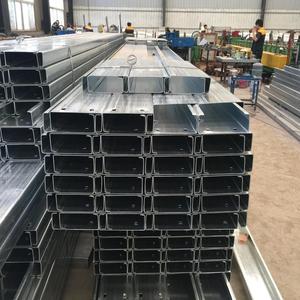
Customized Structural C Purlin Steel Girts for Factory Roof Systems and Wall Framing
- Profile Depth: 100mm – 350mm
- Yield Strength: S350GD / S450GD
- Zinc Mass: Z275 – Z450 g/m²

Continuous roll-formed high-tensile steel wall girts and roof purlins manufactured to international tolerances (EN 10162 / ASTM A1003 / AS 1397). Tailored for seamless integration with insulated sandwich panels and corrugated facade systems across the South Caucasus.
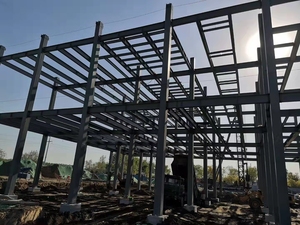
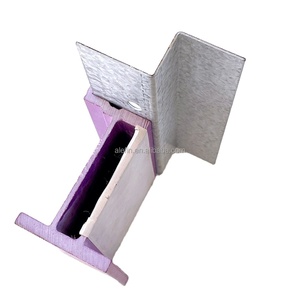
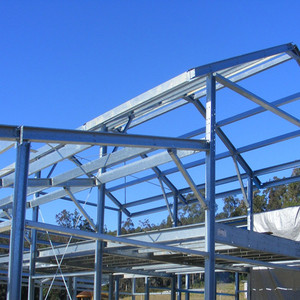
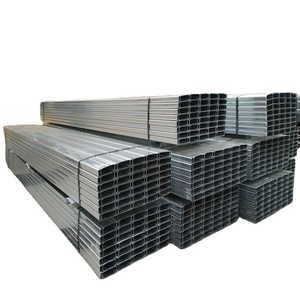
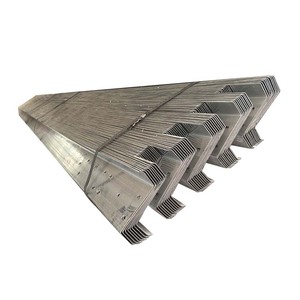
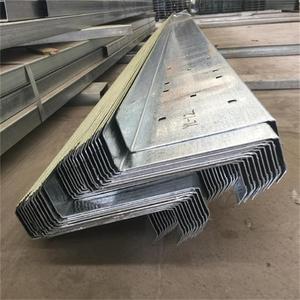
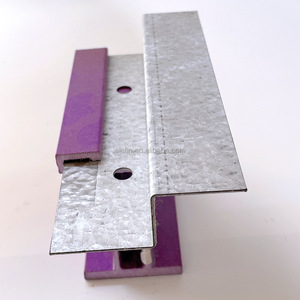
In modern industrial pre-engineered building (PEB) construction across the Republic of Azerbaijan, horizontal structural girts represent critical secondary structural components. Installed along external column lines, wall girts function far beyond simple cladding supports; they act as primary transfer mechanisms for high lateral wind forces, stabilize portal frame columns against out-of-plane lateral-torsional buckling (LTB), and provide the unyielding structural backbone required for insulated sandwich panels and architectural exterior envelopes.
Specifying steel girts for Azerbaijani infrastructure demands an exhaustive understanding of dual engineering codes. While the country transitions towards harmonization with European standards under AzDTN (Eurocodes including EN 1993-1-3 for cold-formed thin-gauge members), structural engineers and the State Agency on Control over Safety in Construction under the Ministry of Emergency Situations (FHN) continue to reference established standards derived from SNiP 2.01.07-88 (Loads and Impacts) and SNiP II-7-81* (Construction in Seismic Regions).
Engineering Imperative: The Absheron Peninsula, particularly Baku and Sumgait, experiences dynamic gust velocity pressures surpassing 1.2 to 1.8 kPa under the renowned northerly "Khazri" winds. Concurrently, seismic zoning under MSK-64 scale classifies greater Baku and adjacent fault zones as Intensity 8 to 9 areas. Steel wall girts must therefore balance superior yield strength (yielding ductility Class 1 or 2) with optimal cross-sectional slender stability to resist second-order P-Delta torsional warping.
Our manufacturing facilities produce structural girts utilizing automated continuous cold roll-forming lines integrated with flying shears and multi-station CNC punching platforms. Steel grade selection centers on continuous hot-dip galvanized structural coils conforming to EN 10346 (S350GD, S390GD, S450GD) or high-tensile specifications under AS 1397 / ASTM A653 (Grade 50 / Grade 65).
Cold-formed sections differ fundamentally from thick hot-rolled channels due to local plate buckling phenomena, distortional buckling of edge stiffeners, and lateral torsional interaction. The moment capacity ($M_c$) and effective section modulus ($Z_{eff}$) of our girts are calculated via the Direct Strength Method (DSM) and Effective Width Method, ensuring zero risk of unpredicted flange crippling under sustained negative suction pressures.
| Profile Type | Structural Configuration | Optimal Bay Spacing | Moment Continuity Factor | Target Localized Application |
|---|---|---|---|---|
| C-Girt (Inward Flanges) | Single-span simply supported; flush or bypass exterior framing | 4.5m – 6.5m | $M = \frac{wL^2}{8}$ (Iso-static) | Baku commercial logistics, curtain wall framing, perimeter door/window trims |
| Z-Girt (Opposed Lips) | Continuous multi-span with 10%–15% nested lapping over column cleats | 6.0m – 9.0m | $M \approx \frac{wL^2}{12}$ (Hyper-static support moment) | Heavy industrial PEB plants, Sumgait chemical warehouses, large-span hangars |
| Sigma / Nested C-Plus | Internal stiffener rib on web section; enhanced shear resistance | 7.5m – 12.0m | High axial load bearing ($N_{Ed}$ & $M_{Ed}$ combined) | Karabakh reconstruction projects, multi-tier grain silos, heavy crane bays |
| Bespoke Slotted Girt | Integrated elongated slot holes ($14 \times 30\text{mm}$) for seismic drift | 5.0m – 8.0m | Slip-friction ductile energy dissipation | Seismic Zone 9 industrial buildings along the Caspian coastal corridor |
When engineering pre-engineered steel frames with continuous exterior sandwich wall panels (PIR / Polyisocyanurate or Rockwool core), girt spacing is strictly controlled by allowable cladding deflection limits—typically $L/200$ for industrial serviceability or $L/250$ for acoustic/masonry ties. By utilizing cold-formed high-strength Z-sections lapped over internal portal column joints, contractors in Azerbaijan achieve up to a 22% to 28% reduction in total steel tonnage compared to conventional hot-rolled channel (GOST 8240-97 / UPN) designs.
Strategic deployment of specialized cold-formed steel girts adapted to geological, climatic, and industrial micro-climates across key Azerbaijani economic regions.
Positioned along the Caspian coast, facilities in the Alat logistic cluster endure high atmospheric chloride deposition and relentless coastal salt fog, categorizing the environment as ISO 12944 C4 to C5-M (Marine High Corrosivity).
Sumgait represents Azerbaijan's petrochemical, fertilizer, and advanced metallurgy capital. Industrial atmospheres feature elevated concentrations of sulfur oxides ($SO_x$), nitrates, and industrial particulate dust.
The accelerated revitalization of Agdam Industrial Park, "Araz Valley Economic Zone", and modern agricultural cold chains requires rapid erection, lightweight modularity, and high snow-load capacity.
The industrial landscape of the South Caucasus is experiencing an unprecedented structural evolution driven by regional trade routes, government-backed industrial zones, and technological modernization in structural engineering. International procurement directors and Azerbaijani general contractors are adapting their supply chain criteria according to four major macro trends:
As the Trans-Caspian International Transport Route (TITR) captures exponential intermodal freight volumes between Asia and Europe, Azerbaijan is actively expanding dry docks, bonded transshipment hubs, and refrigerated warehousing across the Baku-Tbilisi-Kars rail axis. These mega-warehouses demand clear internal spans of 30 to 48 meters, necessitating secondary framing that maximizes purlin and girt spans up to 9 or 10 meters without requiring intermediate wind columns. Cold-formed continuous high-tensile Z-girts are replacing antiquated hot-rolled IPE/HEA profiles, drastically cutting total building deadweight and reducing substructure foundation concrete volumes.
While traditional hot-dip galvanizing (Z275) remains a standard baseline, coastal industrial developments on the Absheron Peninsula increasingly demand next-generation Zn-Al-Mg coatings (such as SuperDyma, Magnelis, or POSMAC equivalents). The inclusion of 1.5% to 3.0% magnesium and 2.0% aluminum forms a dense, insoluble simonkolleite barrier layer that self-heals sheared edges and punch holes. For Azerbaijani project owners, this delivers an audited service life exceeding 30 to 50 years without requiring costly secondary anti-corrosive recoating in aggressive marine micro-climates.
Modern building tenders overseen by leading Azerbaijani engineering firms (such as PMD Projects, Pasha Construction, or state engineering boards) mandate Building Information Modeling (BIM Level 2 / LOD 400). Purlins and girts are no longer procured as bulk raw lengths to be cut on site. Direct CAD-to-CAM digital manufacturing allows CNC multi-head punch presses to stamp slotted holes, counter-sinks, sag rod passes, and bridge cutouts directly from 3D Tekla Structures models, resulting in zero-waste erection cycles and compressed project schedules.
Azerbaijan's updated state energy efficiency standards for commercial buildings require lower U-values ($U \le 0.22\text{ W/m}^2\text{K}$) for building envelopes. Consequently, cold-formed steel girts are engineered to accommodate high-thickness continuous PIR panels (100mm to 150mm) while mitigating thermal bridging through composite thermal-break gaskets and engineered standoff bracket connectors, significantly diminishing winter heat dissipation and summer HVAC cooling loads.
Engineered precision, global metallurgical verification, and dedicated South Caucasus project logistics ensure seamless execution for international building tenders.
Variable-width roll forming machines capable of switching profile web depths (80mm to 400mm) and flange dimensions in minutes, ensuring tight dimensional tolerances conforming to EN 10162 Class A.
Exclusively sourced structural cold-rolled steel coils with verified yield strengths up to 550 MPa. Full mill test certificates (EN 10204 Type 3.1) provided for chemical analysis, elongation, and zinc coating thickness.
Beyond steel girts, our manufacturing plants deliver the complete secondary envelope package—including matching roof purlins, composite floor decking, insulated sandwich panels, translucent skylights, and custom CNC folded flashings.
Optimized bundle nesting engineered for maximum 40ft High Cube container payload utilization (26–28 metric tons) or open rail wagon shipping via multi-modal routes directly to Bilajari, Alat, or Ganja freight yards.
Technical, regulatory, and logistics answers for procurement engineers, project directors, and structural steel fabricators.
Under both SNiP 2.01.07-88 and Eurocode 1 (EN 1991-1-4) localized for the Absheron Peninsula, wind pressures must account for open coastal exposure (Terrain Category I/II). The characteristic velocity pressure ($q_p$) often reaches 1.2 to 1.8 kPa, with localized edge/corner suction zones requiring design pressures exceeding 2.2 kPa.
We recommend specifying continuous multi-span Z-girts with minimum 10% to 15% overlap lengths at structural portal columns, coupled with mid-span sag rods or bridging channels. This configuration effectively cuts the mid-span deflection ($w = \frac{5qL^4}{384EI}$) by more than 50% compared to isolated single-span beams, avoiding excessive cladding pillowing or fastener shear failures.
Baku, Shamakhi, and southern Caspian zones fall into Seismic Intensity Zones 8 and 9 on the MSK-64 scale. In high-seismic zones, rigid secondary attachments can attract unintended lateral frame shear forces, causing premature flange buckling.
Our automated production lines stamp precision slotted bolt holes ($14 \times 30\text{mm}$ or custom dimensions) at girt cleat connections. When combined with calibrated slip-critical torque bolts, this detailing permits planned inter-story drift during seismic excitation without transferring destructive plastic moments into the building envelope framing.
For standard interior heated environments located 10km+ inland (e.g., Ganja, Imishli, Barda), hot-dip galvanized Z275 (275 g/m² total both sides, approximately 20 microns per side) delivers adequate protection. However, within 5 kilometers of the Caspian coastline (Alat Port, Baku Bay, Sumgait seashore), the atmosphere contains high airborne salt aerosol coupled with high relative humidity (up to 80–85%).
For these environments, we strongly advise a minimum of Z450 (450 g/m² zinc) or advanced Zn-Al-Mg (ZM310) coating. This delivers up to three times the barrier protection of standard galvanizing and passes 1,500+ hours in neutral salt spray testing without red rust formation.
Every export shipment is dispatched with an exhaustive engineering compliance dossier formulated to streamline clearance through the State Customs Committee of the Republic of Azerbaijan and meet approval by FHN inspectors:
1. Mill Test Certificate according to EN 10204 Type 3.1 displaying complete heats, chemical ladle analysis, yield strength ($R_{eH}$), tensile strength ($R_m$), and elongation values.
2. Certificate of Conformity under relevant ISO 9001:2015 and CE marking (EN 1090-1 Execution Class EXC2/EXC3).
3. Factory-audited coating thickness verification reports and third-party dimensional inspection protocols conforming to EN 10162 / ASTM A1003.
4. Packing lists itemizing bundle piece numbers matching the client's Tekla erection mark drawings for rapid site triage.
Standard fabrication lead times range from 10 to 20 days depending on order tonnage and punch complexity. For transport, C and Z sections are paired, compactly nested into tight structural bundles bound by heavy steel strapping, edge corner protectors, and waterproof plastic shrink wrapping to prevent white rust formation during transit.
Shipments can be routed via containerized maritime lines to Poti/Batumi (Georgia) followed by rail/truck transit to Baku, or through direct rail corridors entering Azerbaijan via Yalama or Astara customs terminals. Bundles are designed with lifting sling clearance for easy forklift and crane offloading at destination depots.
Collaborate directly with our senior structural cold-forming application engineers. We offer complete profile section modulus optimization, Tekla model punching detailing, deflection calculations under Caspian wind loads, and factory-direct export quotations for your project in Baku, Sumgait, or regional industrial parks.