A rigorous examination of visible light transmittance (VLT), solar heat gain coefficients (SHGC), and polymer degradation mechanisms in Singapore’s coastal equatorial zone.
Singapore occupies a uniquely demanding climatic zone located approximately 137 kilometres north of the equator. The urban microclimate is characterized by uniform temperatures fluctuating between 24°C and 34°C, persistently high ambient relative humidity ranging from 70% to over 90%, and an annual global solar horizontal irradiance exceeding 1,600 kWh/m² per annum. For structural engineers, facade consultants, and main contractors sourcing through international translucent roof sheets exporters, these environmental constraints transform architectural roof daylighting from a simple aesthetic choice into a high-stakes balance between thermal envelope thermodynamics and optical physics.
Standard grade non-stabilized polymer sheets frequently experience catastrophic degradation under tropical conditions. Within 24 to 36 months of exterior exposure across industrial districts such as Tuas, Jurong Industrial Estate, or Sungei Kadut, inferior unsaturated polyester sheets undergo photo-oxidative degradation triggered by ultraviolet spectral radiation (specifically UV-A and UV-B wavelengths between 290 nm and 400 nm). The breakdown of tertiary carbon bonds inside unprotected polyester resin matrices creates yellowing chromophores, accelerating light transmittance loss from an initial 75% down to below 35%, while simultaneously instigating micro-fissuring and fiber-bloom phenomena.
As an international building envelope manufacturer and exporter with core manufacturing roots dating back to 2009, our engineered translucent sheet portfolio incorporates advanced nano-stabilized isophthalic neopentyl glycol (NPG) resin chemistry, reinforced co-extruded UV barrier caps (up to 50 microns of Melinex or equivalent fluoropolymer films), and silane-treated E-glass roving matrices. This technical design retains optical haze diffusion above 90% while restricting solar heat transfer, allowing industrial facilities across the Singapore Straits corridor to maximize natural interior lux levels without breaching the 38 W/m² statutory ETTV thresholds.
| Performance Parameter | Export-Grade Gel-Coated FRP | Multi-Wall Polycarbonate | Standard Unprotected Polyester | Singapore Standards Benchmark |
|---|---|---|---|---|
| Visible Light Transmittance (VLT) | 58% – 72% (Engineered Diffused) | 60% – 80% (Direct/Diffused) | 70% (Degrades to <35% in 3 yrs) | SS 531 Daylighting Compliance |
| Solar Heat Gain Coefficient (SHGC) | 0.32 – 0.42 (Heat Shield Option) | 0.38 – 0.52 | 0.68 – 0.78 (Excessive heat load) | BCA Green Mark ETTV Target < 38 W/m² |
| Thermal Expansion (mm/m/°C) | 0.022 – 0.028 (Matches Steel Profiles) | 0.065 (High differential movement) | 0.035 (Prone to screw hole tear) | Zero fastener shear failure under ΔT 50°C |
| Surface Hardness & Abrasion | >45 Barcol (ASTM D2583) | Rockwell M70 (Requires hard-coat) | <30 Barcol (Rapid erosion) | Resistant to equatorial tropical downpours |
| Fire Safety Classification | BS 476 Part 7 Class 1 / B1 | EN 13501-1 B-s1, d0 | Non-rated Class 4 (Combustible) | Singapore Civil Defence Force (SCDF) Code |
| Chemical / Marine Saline Resistance | Immune to coastal salt spray & acids | Susceptible to alkaline cleaning agents | Porous to airborne moisture intrusion | ISO 12944 C5-M Marine Coastal Environment |
Detailed engineering deployment of weather-sealed translucent roof systems mapped to Singapore's strategic development precincts.
The western coastal gateway of Tuas requires daylighting elements engineered for extreme marine salinity and intense cyclonic wind uplifts. Our heavy-duty corrugated FRP sheets match standing seam and trapezoidal metal decking profiles, ensuring zero galvanic oxidation, chemical inertness against salt crystallization, and continuous operation in multi-tier logistics hubs where high-bay interior lighting costs are reduced by up to 40% during daytime shifts.
Heavy manufacturing, fabrication facilities, and offshore engineering workshops in Jurong demand shatter-resistant, high-impact composite skylights. Our high-tensile continuous-laminated sheets tolerate roof traffic, structural vibration from gantry cranes, and incidental weld sparks without catastrophic fracturing, complying with Singapore Workplace Safety and Health (WSH) guidelines for roof maintenance safety.
Aviation maintenance hangars, airfreight centers, and cold-chain bonded warehouses around Changi require glare-free, highly diffused light transmission. Our translucent sheets scatter direct tropical sunlight at a haze factor >92%, eradicating dark shadowing and blinding focal glare on precision avionic workstations while keeping internal temperatures insulated via specialized nano-ceramic coatings.
Under JTC’s master plan transformation of Sungei Kadut into an eco-district and multi-storey high-tech agri-food manufacturing park, light quality is essential for modern indoor vertical agriculture and timber processing. Specially tuned photosynthetic radiation transmittance spectrum sheets facilitate urban farming trials while safeguarding mechanical wood processing zones from torrential monsoon moisture.
Singapore’s Land Transport Authority (LTA) covered pedestrian linkways connecting MRT stations and HDB housing estates mandate high-impact polycarbonate and FRP canopy solutions. These profiles offer Class 1 surface flame spread resistance, total UV filtration protecting daily commuters, and anti-graffiti surface coatings that resist ambient smog, mold staining, and organic grime buildup.
Navigating the statutory compliance landscape: BCA Green Mark, SCDF Fire Safety Regulations, and Singapore National Climate Target alignments.
The Singapore Green Building Masterplan—a central pillar of the Singapore Green Plan 2030—targets the greening of 80% of Singapore’s buildings by gross floor area by 2030, alongside mandating that 80% of all new construction projects achieve Super Low Energy (SLE) performance. Consequently, industrial envelope architecture has transitioned from purely functional rain-shedding toward intelligent solar-optical management. Procuring through our qualified translucent roof sheets export ecosystem gives mechanical, electrical, and plumbing (MEP) engineers verifiable data sets for Green Mark building energy modelling.
1. Envelope Thermal Transfer Value (ETTV) Compliance: Under BCA building envelope criteria, the maximum permissible ETTV for commercial and industrial roofs must not exceed statutory thresholds. Translucent skylights, if misengineered, represent the single largest point of solar radiant heat ingress. By engineering solar-reflective translucent sheets containing microscopic mica-platelet dispersions, radiant infrared wavelengths (780 nm to 2500 nm) are selectively reflected while visible light (380 nm to 780 nm) is admitted. This produces a low Solar Heat Gain Coefficient (SHGC ≤ 0.35) paired with a high Light-to-Solar Gain ratio (LSG ≥ 1.6), drastically reducing cooling energy consumption.
2. SCDF Fire Code 2023 Alignment: The Singapore Civil Defence Force enforces stringent flammability performance for all roof covering materials. Under the revised Fire Code, translucent sheets utilized in roof assemblies must meet specified reaction-to-fire and flame spread parameters:
Our specialized halogen-free fire retardant formulations yield a confirmed Class 1 or Class 2 rating, preventing combustible flame propagation across contiguous warehouse bays.
Achieving B-s1, d0 classification ensures minimal toxic smoke opacity (s1) and zero flaming droplets (d0), critical for protecting personnel and storage assets below.
Low emission resin systems that avoid hazardous heavy-metal stabilizers, ensuring compliance with RoHS standards and high indoor environmental air quality.
3. Singapore Standard SS 531 Daylighting Integration: The Code of Practice for Lighting of Work Places (SS 531) delineates minimum lux parameters for indoor industrial activities (typically 150 to 300 lux for general assembly and warehousing). In traditional sheet metal enclosures, artificial high-bay luminaires must operate continuously during daylight hours. By introducing calibrated 8% to 12% roof surface translucent strip daylighting, facilities routinely exceed daylight factor requirements without introducing thermal hotspots, supporting the attainment of Super Low Energy (SLEB) credits.
Leveraging continuous line manufacturing, precision profiling, and global project supply chain logistics built over decades of industrial delivery.
Unlike manual batch fabricators, our continuous automated roll-forming and composite laminating lines deliver uniform cross-sectional thickness, uniform resin impregnation, and zero internal air voids. Every linear meter produced satisfies rigid international standards, ensuring dimensionally stable sheets that integrate seamlessly into complex metal roofing frameworks.
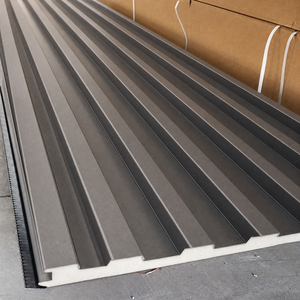
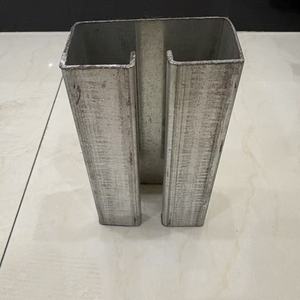
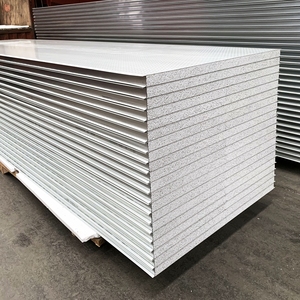
We solve the critical procurement issue of profile mismatching. As an established exporter of PIR, PU, and Rockwool sandwich panels, cold-formed Z & C purlins, metal floor decking, and customized flashings, our translucent daylight sheets are engineered using identical tooling profiles to interlock cleanly with metal sandwich sheets, eliminating on-site leakage vulnerabilities.
International sea freight presents severe transit hazards including condensation, surface scratching, and torsional deflection. Our export packaging features moisture-sealed desiccated wrapping, high-density polyethylene edge protectors, fumigated structural timber cradles, and containerization schematics designed for rapid de-stuffing at PSA Singapore or Jurong Port quaysides.
We work directly alongside Singapore-registered Qualified Persons (QPs), civil engineering consultants, and main contractors. From finite element load-span calculations based on SS EN 1991 wind pressure requirements to third-party mill test certificates (MTCs), our engineering teams supply the technical documentation needed for fast BCA and SCDF tender clearances.
Authoritative technical guidance covering importation, engineering integration, maintenance, and compliance verification for Singapore projects.
Whether you require custom-length corrugated translucent sheets, profile-matched skylights for sandwich panels, or full BCA Green Mark compliance dossiers, our technical export team is ready to assist your project immediately.