
From extreme wind-lock security curtains to continuous structural steel trusses and thermal sandwich panel assemblies, explore our core export-grade products manufactured since 2009.
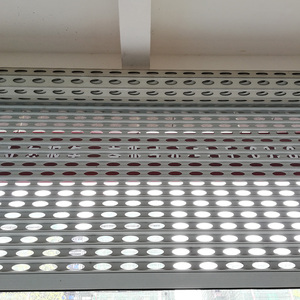
Galvanized continuous micro-perforated steel curtain delivering natural air ventilation, visibility, and EN 12424 wind resistance for coastal Iberian facilities.
View Technical Data →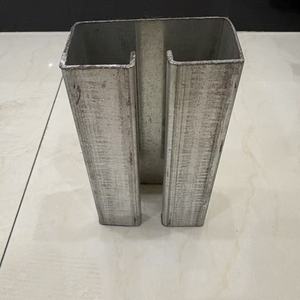
High-yield S350GD/S390GD structural cold-formed steel channels, customized guide channels, and structural wind brackets engineered for severe side loadings.
View Technical Data →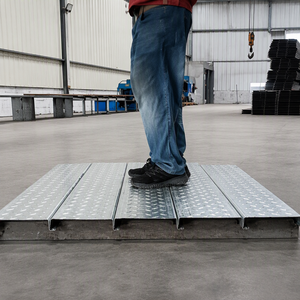
Z275 galvanized high-tensile steel composite decking, eliminating temporary propping for port warehouse mezzanine structures and high-bay distribution floors.
View Technical Data →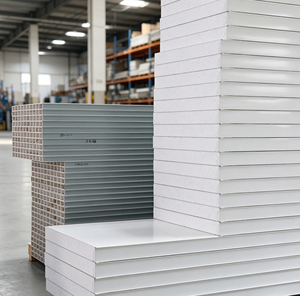
High-density PIR and mineral wool cores for controlled industrial partitions, wine processing cellars, and pharmaceutical manufacturing facilities in Portugal.
View Technical Data →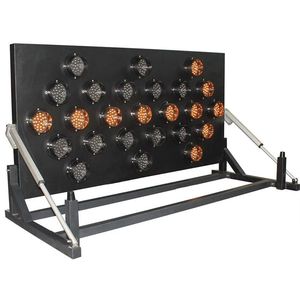
IP66 heavy weather-sealed LED signaling hardware for maritime port maintenance trucks, logistics dispatch bays, and airfield perimeter access monitoring.
View Technical Data →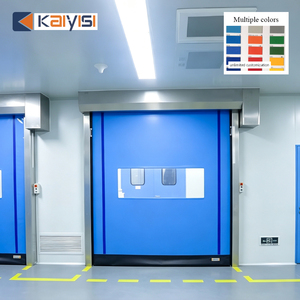
Rapid cycle operating barrier (up to 2.0 m/s) with self-repairing track design, frequently coupled behind exterior windproof steel shutters for temperature retention.
View Technical Data →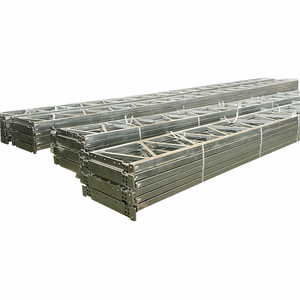
30m+ clear span modular trusses engineered for massive Atlantic port terminal sheds, offering integrated structural lintels for wide-aperture wind resistant doors.
View Technical Data →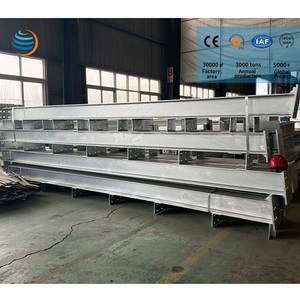
Pre-engineered structural framing systems designed to resist dynamic cyclonic uplifting loads and provide unyielding anchoring points for industrial roller barrels.
View Technical Data →Portugal’s geographical position on the southwestern edge of the Iberian Peninsula exposes industrial real estate, logistics distribution parks, and maritime container terminals to aggressive Atlantic oceanic depressions. Under Eurocode 1 (NP EN 1991-1-4: Actions on Structures - Wind Actions) and the Portuguese National Annex, industrial facilities situated across coastal strips (Zone 1 maritime litoral) frequently encounter basic reference wind velocities ($v_{b,0}$) ranging from $28\text{ m/s}$ to $32\text{ m/s}$ ($100\text{--}115\text{ km/h}$), with localized turbulence factors and gust pressures ($q_p(z)$) surmounting $1.4\text{ to }1.95\text{ kN/m}^2$ ($1,400\text{ to }1,950\text{ Pa}$).
When wide-aperture industrial doorways (spanning $6.0\text{ m}$ to exceed $12.0\text{ m}$) are fitted with standard non-reinforced commercial rolling shutters, severe negative suction or positive kinetic gust pressures trigger significant transverse deflection. If the deflection index exceeds $L/50$, the shutter slats deflect inwards or outwards, dislodging from their vertical side guide tracks—an engineering catastrophe known as "curtain blowout." In critical logistical corridors such as the Port of Sines or the Port of Leixões, a blown-out shutter compromises the internal air pressurization of the entire facility, frequently ripping off lightweight roofing sheets and causing millions of euros in downtime and damaged merchandise.
| EN 12424 Wind Class | Test Pressure $\Delta P$ (Pa) | Equivalent Wind Speed (km/h) | Recommended Application Zone in Portugal | Curtain & Guide Channel Requirement |
|---|---|---|---|---|
| Class 1 | 300 Pa | ~78 km/h | Inland sheltered rural basins (Castelo Branco, Évora) | Standard single-skin 0.8mm curved steel laths |
| Class 2 | 450 Pa | ~96 km/h | Low-density suburban central plateaus (Santarém, Coimbra) | Reinforced single-skin with standard wind guides |
| Class 3 | 700 Pa | ~120 km/h | Industrial parks 5–15 km from coast (Maia, Vila Nova de Gaia) | Double-skin 1.0mm insulated laths + end retainers |
| Class 4 | 1000 Pa | ~144 km/h | Coastal littoral & Estuary zones (Lisbon Tagus, Setúbal, Aveiro) | High-tensile steel S350GD + heavy-duty hook wind locks |
| Class 5 / Custom | > 1200 – 1800 Pa | > 160 – 200 km/h | Exposed marine quays (Sines Port, Leixões, Açores & Madeira) | Cast-steel interlocking claws + deep 150mm boxed tracks |
To eliminate failure risks, our windproof roller shutters are engineered utilizing cold-formed high-strength structural steel coils (grades DX51D+Z and S350GD+Z according to EN 10346). By combining specialized mechanical cross-sectional profiling with solid-cast ductile iron wind lock end clips, our systems translate kinetic wind impact directly into the structural steel columns of the building, preserving smooth operational tolerances even during Atlantic hurricane-force squalls.
Malleable cast-iron or heavy steel claws mechanically riveted to alternate slat ends. Under wind pressure, these claws physically hook into dedicated internal chambers inside the structural guide track, making curtain pull-out impossible.
Fabricated from 2.5mm to 4.0mm cold-formed structural steel profiles with depth profiles reaching 120mm to 160mm. Features multi-lip neoprene or EPDM brush buffers to mitigate wind vibration chatter and coastal air infiltration.
Heavy-gauge carbon steel winding shafts calculated to limit structural deflection below $1/500$ of span length. Equipped with high-torque industrial planetary drives, anti-drop safety brakes conforming to EN 12604, and manual chain overrides.
Specific engineering challenges and structural configurations tailored for regional climatic conditions across the Portuguese mainland and autonomous archipelagos.
Positioned on Portugal's open southwestern Atlantic coast, the Port of Sines faces relentless salt-laden gales and explosive Atlantic storms. Facilities require our Class 5 EN 12424 windproof rolling shutters treated with a minimum 275 g/m² zinc mass plus marine-grade PVDF architectural powder coatings to survive corrosive ISO 12944 C5-M atmospheric classifications.
Northern Portugal's primary maritime gateway encounters extreme winter storms blowing from the North Atlantic. Our dual-skin insulated windproof shutters combine rockwool/polyurethane cores to stop thermal transmission ($U < 1.4\text{ W/m}^2\text{K}$) while heavy-duty storm claws maintain operational readiness during sustained 120 km/h wind shear off the Matosinhos coastline.
Situated in the Tagus River floodplain north of Lisbon, this mega-logistics cluster accommodates massive e-commerce distribution platforms (Amazon, Worten, Jerónimo Martins). Massive 10m x 8m loading dock apertures utilize our motorized rolling shutters equipped with automated PLC controllers and high-speed PVC zipper doors for intense round-the-clock traffic.
Home to the automotive manufacturing ecosystem surrounding Autoeuropa, plant facilities demand massive acoustic dampening and positive air pressure containment. Our structural cold-formed profiles and heavy steel perforated shutters ensure constant ambient interior exhaust while locking the facade tight during Atlantic squall lines coming over the Arrábida hills.
Inland regions experience blistering summer heat up to 45°C contrasted with violent autumn thunder-squalls. Thermal windproof roller shutters prevent internal temperature stratification inside modern barrel storage cellars and packaging facilities, reducing refrigeration compressor runtimes under Portugal's stringent industrial energy codes.
Isolated in the mid-Atlantic, the Autonomous Regions of Azores and Madeira experience sub-tropical cyclonic weather systems, katabatic winds, and continuous salt spray. We engineer specialized reinforced boxed guides with oversized flange plates anchored via chemical bolts to reinforced concrete portals to withstand gust loadings exceeding 180 km/h.
How Portuguese environmental legislation, industrial port expansions, and modern architectural standards are transforming industrial roller shutter specifications.
Portugal’s Regulamento de Desempenho Energético dos Edifícios de Comércio e Serviços (RECS) has enforced stricter thermal transmittance ($U$-value) thresholds on industrial exterior building envelopes. Specifiers are shifting away from traditional uninsulated steel shutters toward continuous insulated laths filled with zero-ODP, low-GWP polyisocyanurate (PIR) and mineral wool, significantly curtailing building energy consumption.
In coastal zones within 500 meters of the Atlantic, standard zinc galvanizing (Z140–Z200) shows white rust formation within 24 to 36 months. Portuguese structural engineers now routinely mandate advanced ternary alloy coatings (Zn-Al-Mg / Magnelis) providing self-healing cathodic protection on cut edges and surviving over 3,000 hours in neutral salt spray testing (ISO 9227).
Driven by the construction of automated high-bay fulfillment hubs (Logistics 4.0), Portuguese plant operators require roller shutters integrated with Industrial IoT control boards, Modbus/BACnet building management systems, optoelectronic safety edges, and dynamic wind anemometer triggers that automatically secure door barriers prior to gale peak arrivals.
Clear, authoritative technical answers to assist Portuguese consulting engineers, EPC contractors, and procurement heads during tender evaluation.
Direct factory manufacturing integrity backing every container shipment dispatched across international commercial sea lanes.
Continuous heavy industrial roll-forming and insulated sandwich panel manufacturing facilities spanning over 50,000 m² of plant operations, delivering total quality control from mother coil slitting to crating.
Raw coil yield testing, spectrometer chemical composition verification, continuous zinc-coating micrometer checks, and full load cycle testing conducted under documented ISO 9001 and CE procedures.
Eliminate project interface risks: Source matching industrial cold-formed purlins, composite decking slabs, long-span structural trusses, and windproof rolling doors from a single integrated producer.
Expertise in international maritime documentation, ocean container stuffing optimization, customized maritime timber palletization, and direct coordination with Portuguese forwarders in Leixões and Sines.